Science & Nature
Tiny Warty Frogfish Was Surprise Birth at Shedd, Is First-Ever Raised in Aquarium
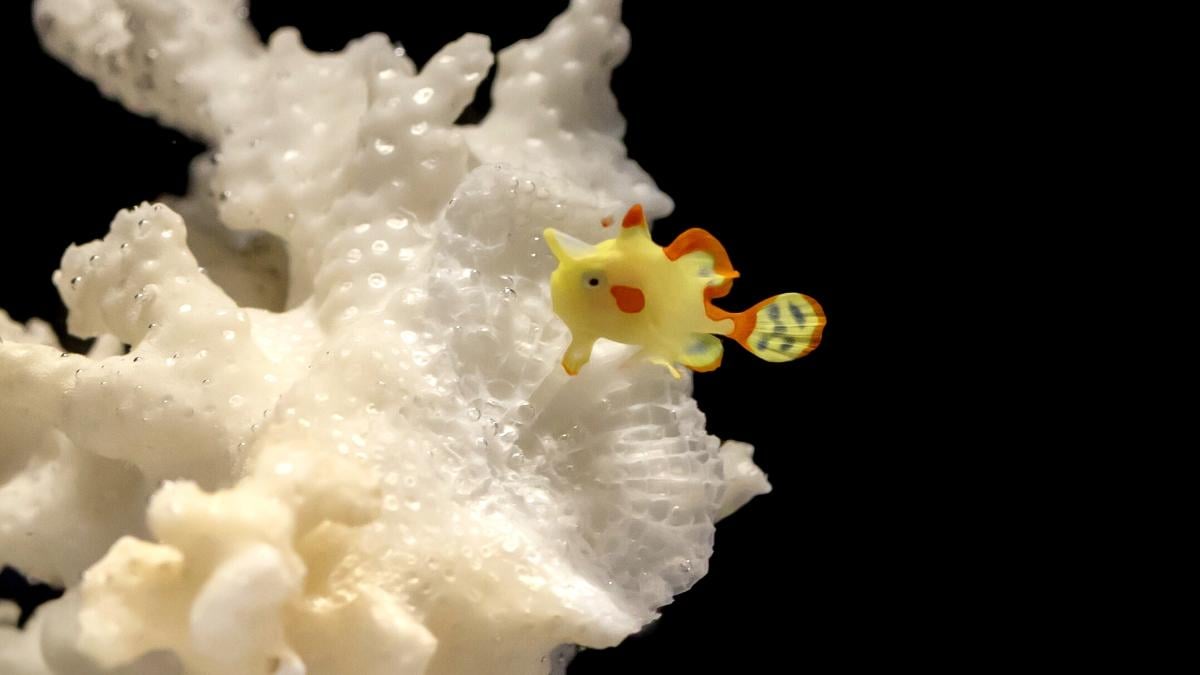 This baby warty frogfish is the first of its kind ever raised from egg to juvenile in an aquarium setting. It is roughly 1 centimeter, or less than half an inch, in size. (Brenna Hernandez / Shedd Aquarium)
Sometimes, Shedd Aquarium is on baby watch and doesn’t even know it.
Last fall, a pair of warty frogfish (Antennarius maculatus) — tropical reef-dwelling members of the anglerfish family — mated in the aquarium’s Wild Reef habitat, something staff only got wise to when they found a floating mass of fertilized eggs.
The eggs were moved behind the scenes and hatched into thousands of microscopic larvae. Now, six months later, Shedd is celebrating the survival of a single juvenile warty frogfish, measuring roughly a centimeter, or less than half an inch. (Mortality rates of larval fish are notoriously high.)
It’s the first such case, to Shedd’s knowledge, of the species being successfully reared by an aquarium.
“This little fish is truly one in a million,” said Jenny Richards, senior aquarist at Shedd. “We’ve been so thrilled to see this little frogfish develop day by day.”
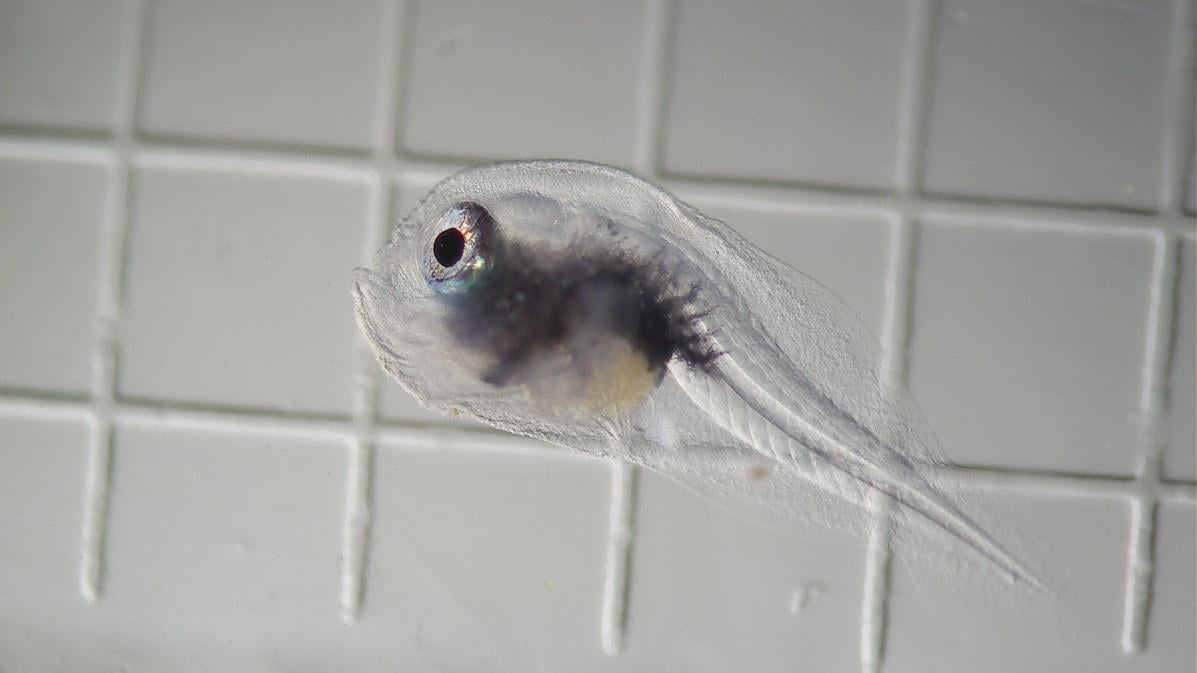 The warty frogfish in its larval stage, raised by Shedd Aquarium staff. The aquarium and its partners have received federal grant dollars to hone their skills in raising larval fish. (Rachel Zak / Shedd Aquarium)
The significance of this pea-sized fish extends beyond Shedd Aquarium. As scientists gain knowledge in breeding and caring for aquatic species like the warty frogfish, they can reduce the pressure on wild populations and build insurance populations.
Shedd is sharing its learnings with peers — things like the best water temperature, light levels and diet for raising warty frogfish larvae. In 2022, Shedd and partner aquariums received a grant from the National Oceanic and Atmospheric Association in support of this work with larval fish.
Caretakers at Shedd said their prized baby is already walking — something adult frogfish do instead of swimming, on modified fins. And, like other anglerfish, the little one is using its built-in lure to ambush prey.
“Which is adorable for an animal that is less than the size of a dime,” said Kayla Melton Rogala, senior aquarist.
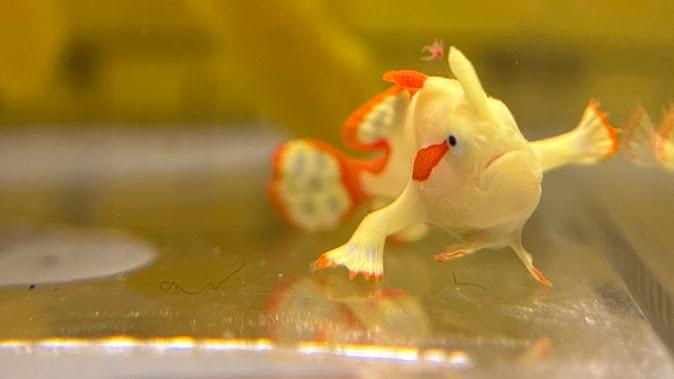 The warty frogfish uses modified leg-like fins to walk instead of swim. Its “lure,” typical of anglerfish, can also be seen bobbing above its head. (Rachel Zak / Shedd Aquarium)
Warty frogfish are most commonly found in the Indo-Pacific region, living in coral reefs and on rocky seabeds. They come in a variety of colors and patterns and get their name from the wart-like bumps on their bodies, which help them blend in with their surroundings.
While Shedd’s baby frogfish remains behind the scenes, adult frogfish can be seen the Wild Reef exhibit, nestled in the rocks.
Contact Patty Wetli: [email protected]
Related Stories