Investigations
A PR Push on the Public Dime: Chicago Police Podcast Records Peel Back Layers of Expanded Communication Costs
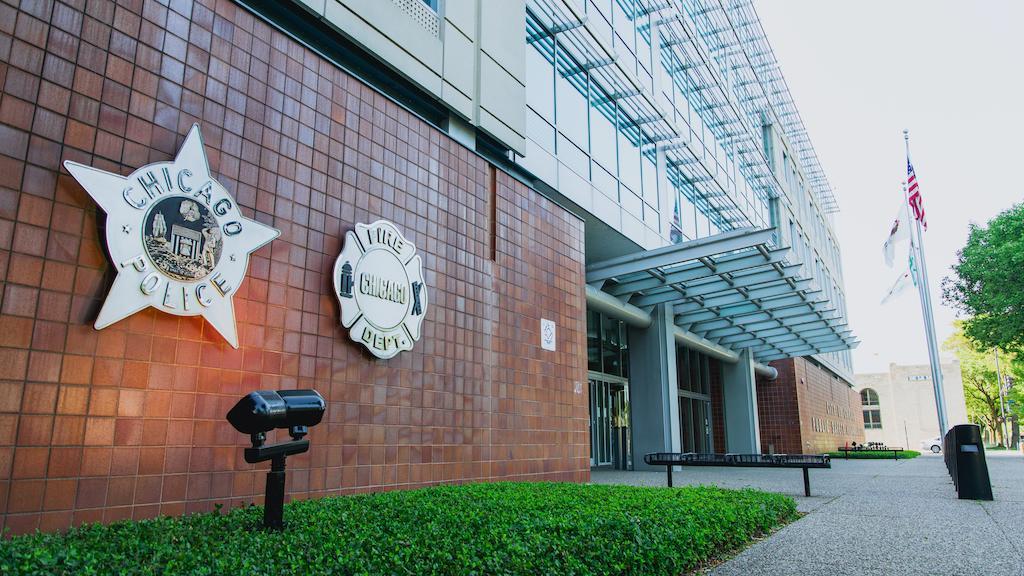 (Michael Izquierdo / WTTW News)
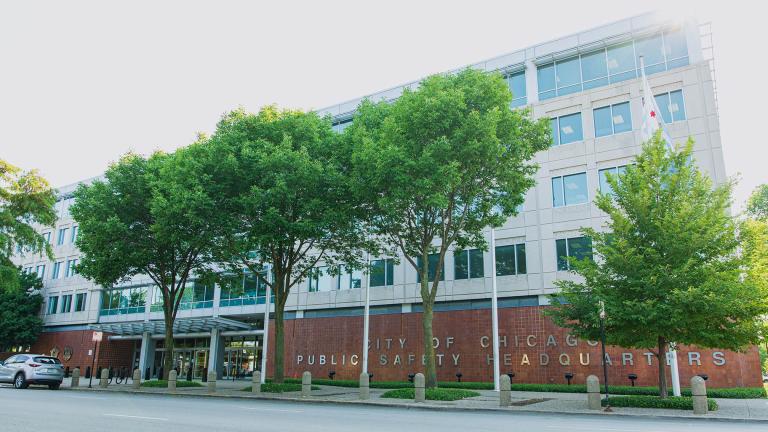
The Chicago Police Department rolled out its new podcast last year as a polished bid to reshape the department’s public image.
Announced in August, the “Roll Call” podcast was launched in an effort to build community ties and inform the public about the lives of law enforcement personnel.
Following the rise of social media, police departments across the country, including in Chicago, have explored avenues of new media, including podcasts, to communicate directly with the public rather than relying primarily on traditional media to convey their message.
Records produced by the department show a total of $3,465 in expenses for equipment, software and services related to the podcast. The department’s purchases included four microphones, four sets of headphones, audio equipment, processing software, cords and a podcast distribution service. Some of the costs are recurring.
It’s a drop in the bucket when compared to the $2.1 billion annual department budget, and the total is a fraction of pension costs and misconduct settlements. At a time when Chicago departments and agencies are fighting for funding, however, taxpayers may question every spending decision.
But the podcast is just part of a larger push in recent years to expand the department’s communications operation.
The department’s office of communication has vastly expanded over the past decade, and costs rose along with it. In 2017, the communication office had four employees who were paid about $340,000, budget documents show. The 2026 budget identified 24 employees with a payroll of more than $2.75 million, an increase of more than 700% over a decade.
CPD’s office of communication did not answer questions about the cost of its communication staff.
Ald. Byron Sigcho-Lopez (25th Ward) is a member of the Committee on Public Safety, and said he believes CPD’s expanded communications operation has not meaningfully improved trust with residents and instead functions largely as a public relations effort aimed at “controlling the narrative.”
He argued the department has a poor record on transparency, made inadequate progress under the federal consent decree and said repeated misconduct cases continue to erode public confidence.
Sigcho-Lopez suggested money could be better spent by “investing in what we know works: mental health and youth employment.”
First requested in August following the launch of “Roll Call,” CPD delayed producing financial records about the podcast. About a month after the request, WTTW News followed up, asking for an estimated completion date for the request. Communication from CPD followed, when an unsigned message read, “Hi, just waiting for a response.”
WTTW News filed an appeal in October with the Public Access Counselor, a position in the Illinois Office of the Attorney General tasked with enforcing violations of the Freedom of Information and Open Meetings acts. CPD never responded to multiple messages via certified mail and email from the PAC office, according to the text of the decision.
The determination by the PAC office Dec. 30 found CPD failed to respond to the FOIA request. A bureau chief in the PAC office wrote in the nonbinding ruling, “CPD should be mindful of its obligation to issue timely responses to FOIA requests.”
CPD finally provided responsive records Jan. 9. While this response cost the department little in terms of time and effort, evidence of the impact of other delayed transparency is evident from the city books.
Since 2015, the Chicago Law Department has paid more than $3.1 million in more than 200 public records litigation cases involving the police department, records show. There were 31 FOIA lawsuits involving CPD that cost the city $750,000 in 2024, the last year with complete data.
‘A Shameful Boondoggle’
Given weeks, CPD did not respond to questions about the intent of the podcast or how the department measured the success of the effort.
Guests have included Supt. Larry Snelling, other CPD employees, staff from the Cook County State’s Attorney’s Office, and R.J. Melman of the Lettuce Entertain You restaurant group. CPD released its latest episode Feb. 11.
Podcast services provide some evidence of the level of engagement generated by the CPD program, which has released eight episodes since August.
One metric to gauge the popularity of a podcast involves ratings and reviews. In theory, the bigger and more engaged the listener base, the higher the number of ratings and reviews will be.
As of Feb. 24, “Roll Call” was rated 3.4 stars out of five with 21 reviews on Apple Podcasts, one of the largest platforms for podcast audiences.
One reviewer from August wrote that as a taxpayer, “This is an embarrassing and shallow PR Stunt to cover from the department’s long history of failing to protect the residents of this great city. A shameful boondoggle, best relegated to the dustbin of history.”
Audience measurement firms that project podcast listenership offer additional insight.
Listen Score, compiled by a service that aggregates podcast data, gave “Roll Call” a listen score of 28 out of 100. The proprietary metric shows the estimated popularity of this podcast compared to other podcasts with a rating from 0 to 100. In general, higher scores indicate a more popular show.
Comparing CPD to others in the state is difficult because it is so much larger than other departments. However, media engagement can help level the playing field.
Elgin Police Department’s entry into the podcast world is “Somebody Knows Something,” which profiles its cold case squad.
The Listen Score for “Somebody Knows Something” is 45. For context, the score for “The Daily,” a popular daily news podcast from the New York Times, is rated 90.
“Somebody Knows Something” has been rated on Apple Podcasts more than 250 times, and has a 4.9 star score. Differences in engagement for the Chicago and Elgin podcasts are similarly evident from Spotify.
‘Good Way to Engage the Community’
Elgin launched its cold case squad in 2024. “Somebody Knows Something” follows the squad, taking a fresh look at unsolved homicide and missing person cases.
Detective Andrew Houghton is a host of the podcast, which is produced in partnership with WRMN radio in Elgin.
The first season of the show followed Karen Schepers, who went missing in 1983 after attending a party with coworkers in Carpentersville.
The podcast generated strong public interest in the case. Elgin police estimated the podcast generated 75 tips from across the country through calls and emails for this case and other area cold cases.
A development in the case thrilled both detectives and the audience after the department was unable to find proper documentation of thorough bodies-of-water searches previously being performed.
Schepers’ yellow Toyota Celica was pulled from the Fox River in 2025, more than four decades after her disappearance. Members of the cold case squad marveled at the years that passed before the case was solved, and the generations of officers who worked on it.
The podcast was launched by Elgin Police Chief Ana Lalley. Houghton said the department explored the best ways to reach people, and to get as much engagement as possible. In the past, he said, police might look to legacy media and billboards in cold case efforts. But podcasts were reaching a new and wider audience.
“We were resistant at first,” Houghton said. “But it’s a good way to engage the community.”
The team was aware that the true crime genre can be exploitative, and said they looked to avoid that trap. They said they wanted the process to be victim-centered.
Lalley estimated the cost to be “a couple hundred dollars per episode.” There are also expenses related to sending staff to conferences for continuing education, she said.
The show generated local and national media attention.
A second season covered cold cases from the 1970s. A third season is in the works with plans to launch as early as March, according to Lalley.
New Media Era
Police communication strategies have evolved over the past couple of decades.
Departments across the country have increasingly adopted more media-like approaches, using features such as live video, reels and stories on Instagram, and podcasts, according to Christopher Mannino, vice president of Julie Parker Communications, a communication firm working with clients including law enforcement agencies.
Mannino was previously the chief of police in Park Forest.
Mannino said larger communication teams are a logical response to public expectations for timely, transparent communication, especially in a large, complex department with many units and frequent high-profile incidents.
About the communication team in Chicago, Mannino said he believes they are putting in a serious effort to connect with the community.
“Any organization is going to have room to grow, and they’re no exception,” Mannino said. “There are things that I can criticize at the end of the day, though I think every organization is doing the best they can.”
When he started working as a police officer, Mannino said newsletters were the way departments reached community members. Mannino saw social media as a real game-changer for police messaging. He said podcasts open up a direct communication channel to an engaged audience.
Comparing Costs of Peer Cities
Beyond equipment and hosting fees, there are other costs to producing podcasts at a police department.
The most obvious is salaries and benefits. The hosts of CPD’s “Roll Call” are Mariam Sobh, public relations coordinator, and Joshua Wallace, police commander. Chief Jon Hein is listed as executive producer.
Records show Sobh, who has more than a decade of previous broadcast experience, was paid about $84,000 in 2024, the last year with complete data on the city data portal. Wallace received more than $193,000 and Hein was paid more than $210,000.
Wallace and Hein are sworn officers and Sobh is not, according to records from the state police licensing agency. The podcast is part of the assignments for these employees, though the department would not confirm how much time staff spent working on “Roll Call.”
An ideal communication team would consist of knowledgeable people trained in media relations and sworn personnel who are subject-matter experts, according to Mannino.
City research and fiscal watchdogs have long criticized the cost of using sworn police employees in roles including communication.
A recently published workforce study required by the consent decree found about 600 sworn Chicago police positions could be civilianized, saying officers are doing work that may not require police authority or training and noting CPD’s civilian staffing rate lags peer big-city departments. Civilian positions usually have lower salary and benefits costs.
Another report estimated a savings of $78.4 million over a decade by adding civilian employees, and characterized it as highly feasible to change.
The office provides updates on major incidents to the media, and issues official city press credentials among other duties.
The expansion came in the wake of the murder of Laquan McDonald as the city battled lawsuits related to the release of records around the case.
Communication roles exist both within and outside the office of communications.
A 2022 analysis by the Better Government Association, an Illinois-based nonprofit that advocates for government efficiency, found the city of Chicago budgeted 163 full-time public relations/communications positions — more than twice Los Angeles (66) and approaching New York City (189). The jump in PR positions in Chicago was driven by the police department, according to the report.
Los Angeles and other cities have recently increased the number of civilian positions in their ranks as a cost-saving measure.
Records from the Office of Inspector General estimated 21 sworn positions in the office of communication in December, down 8.7% from the beginning of the year. The BGA analysis estimated CPD communication staff accounted for $3.85 million in salaries in the 2022 budget.
A January budget report by the Civic Federation, an independent, nonpartisan government research organization focused on Illinois and the Chicago region, also expressed support for the civilianization of CPD as a cost-saving measure.
WTTW News coverage of policing and police reform is supported by The Joyce Foundation.
Contact Jared Rutecki: @JaredRutecki | [email protected]