Crime & Law
Cook County’s Top Prosecutor Unveils Policy Change Aimed at Charging ICE Agents for Criminal Misconduct
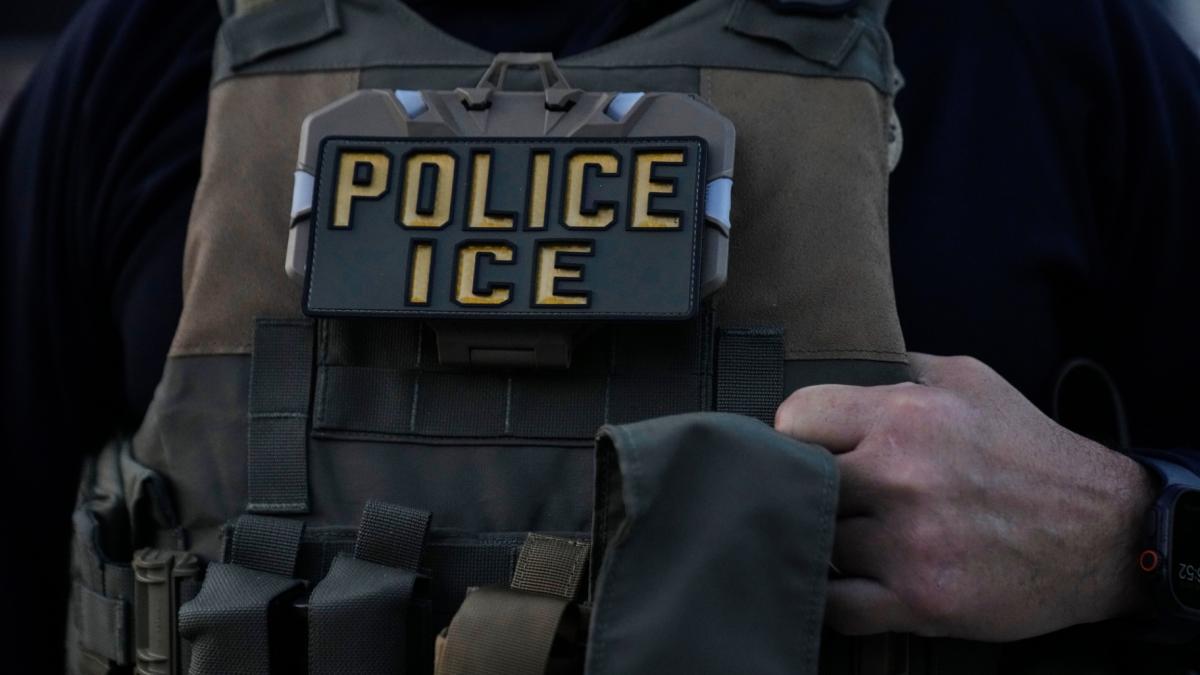 A U.S. Immigration and Customs Enforcement agent takes part in an early morning operation in Park Ridge, Ill., Friday, Sept. 19, 2025. (AP Photo / Erin Hooley)
Cook County State’s Attorney Eileen O’Neill Burke announced sweeping changes that will allow her office to prosecute federal immigration agents in cases where felony charges are deemed appropriate, following widespread calls to hold those agents accountable for their alleged misconduct.
O’Neill Burke said her office on Thursday has implemented a new protocol that calls for the use of all available prosecutorial tools to support law enforcement investigations into the use of force by federal immigration officers.
“No one is above the law — including both ICE agents and prosecutors,” O’Neill Burke said in a statement. “If a federal law enforcement agent commits a crime, my office will not hesitate to act, in accordance with state law. This protocol establishes clear, legally sound guidelines to ensure we have a responsible and effective path to pursue accountability.”
The new protocol applies to cases involving a death, shooting, act of violence, or use of force incident related to federal immigration enforcement.
O’Neill Burke said she directed her office to conduct a “rigorous legal analysis” and codify the procedure after federal agents killed two civilians during an ICE surge in Minneapolis last month.
The policy change comes days after Cook County Board President Toni Preckwinkle called on O’Neill Burke to pursue criminal charges against federal immigration agents for excessive force, and weeks after Mayor Brandon Johnson signed an executive order directing the Chicago Police Department to document actions by agents and attempt to identify those responsible for suspected misconduct or criminal violations.
O’Neill Burke had pushed back against that order, specifically a section requiring CPD supervisors to preserve evidence of suspected wrongdoing by federal immigration agents and “at the direction of the mayor’s office, make a referral of felony matters to the Cook County State’s Attorney.”
Johnson on Thursday said his order and O’Neill Burke’s new policy “are aligned facets of the same public safety framework.” Together, he said, they reinforce one principle: Together, they reinforce a simple principle — that federal agents remain “subject to the law,” and following serious incidents, there must be a “clear, coordinated path to accountability.”
“The City of Chicago remains committed to timely, transparent action that addresses past harms and makes clear that federal agents operating in our city are not immune to oversight and accountability, and that future violations will not be tolerated,” Johnson said in a statement. “Holding violent federal agents accountable when they disregard local law cannot depend on political whims; it must be grounded in the principle that no one is above the law.”
Preckwinkle lauded the new protocol, saying it reinforces “our clear position: federal agents cannot act with impunity in Cook County. They provide prosecutors and law enforcement with the clarity and guidance needed to investigate misconduct and pursue accountability.”
Numerous calls for criminal charges have been made after federal agents killed Silverio Villegas González during a traffic stop in suburban Franklin Park and critically wounded Marimar Martinez in Brighton Park in separate incidents during the Trump administration’s immigration enforcement surge last fall.
No agents have been charged with a crime in either case, though Martinez’s attorney has said a federal criminal investigation is underway in the agent who shot his client.
The announcement comes five months after an Immigration and Customs Enforcement agent fatally shot Villegas González during a traffic stop shortly after he dropped off his kids at day care in suburban Franklin Park.
The new policy has been reviewed by the Illinois Attorney General’s Office and the Illinois State’s Attorneys Association, according to O’Neill Burke, and provides “clear and legally sound guidelines” to law enforcement and prosecutors during the different phases of a potential case, from the investigation to the charging decision.
It also outlines how prosecutors can assist law enforcement agencies in seeking a grand jury subpoena for a victim or witness and includes a process for presenting an investigation to the state’s attorney’s Law Enforcement Review Unit, which will make a charging decision for all felony offenses.
“Law enforcement officers are entrusted with extraordinary authority to serve the public and keep our communities safe,” Illinois Attorney General Kwame Raoul said in a statement. “When that authority is abused or escalates into unlawful violence, prosecutors must take action if the burden of proof can be met. I am proud to stand with State’s Attorney Burke and fellow prosecutors committed to using every lawful tool available to hold this administration accountable consistent with this protocol.”