Education
As Illinois Weighs Joining Federal School Voucher Program, Education Policy Experts Debate the Impact
Illinois is among a handful of states deciding whether to opt in to a new federal school voucher program.
Under the program, donors can give up to $1,700 to scholarship-awarding organizations for K-12 schools and get an equivalent amount back in federal tax credits.
Scholarships can be used to help pay for private school tuition, along with education-related expenses for public school families, like tutoring or after-school programs. Students are eligible to receive the scholarships if their household income is within 300% of their area’s median income.
Those opposed argue the program diverts public dollars to private schools while public schools remain underfunded. Supporters of the program argue that not opting in would leave money on the table that could otherwise go to support students in the state.
Ann Courter, education issues specialist for the League of Women Voters of Illinois, and Austin Berg, executive director for the Chicago Policy Center at the Illinois Policy Institute, joined “Chicago Tonight” to debate what impact the federal program could have on Illinois students.
Courter argued that the federal program would hurt public schools and that the money from the program would largely flow to private religious schools, comparing the program to Invest in Kids, a tax credit scholarship program in Illinois that lawmakers sunset in 2023.
The League of Women Voters of Illinois is among a coalition of groups that signed on to a letter last week asking Gov. JB Pritzker not to opt in to the federal tax credit scholarship program.
“If even a few students leave the public system, schools are left with fixed costs,” Courter said. “They rely on headcount to get federal money and to get state money, and so if they have fewer kids, they get less money from the state and the federal government.”
Berg, whose organization is in support of the federal tax credit scholarship program, said there’s bipartisan interest in the program. He argues it shouldn’t be a red or a blue issue, citing Colorado Gov. Jared Polis, a Democrat, saying he would opt in to the program.
“In no way does it take away money for public schools,” Berg said. “It’s not money coming out of the federal education grants that go to states. … In essence, it’s only a positive impact because this is money that otherwise would go to other states through the scholarship program. It would flow to Illinois, so more families get more access to more educational resources.”
Twenty-eight states have opted in to the federal school voucher program so far, most of which are Republican-led, according to Education Week. The four states that have said no to the program — Wisconsin, New Mexico, Oregon and Hawaii — are all led by Democratic governors.
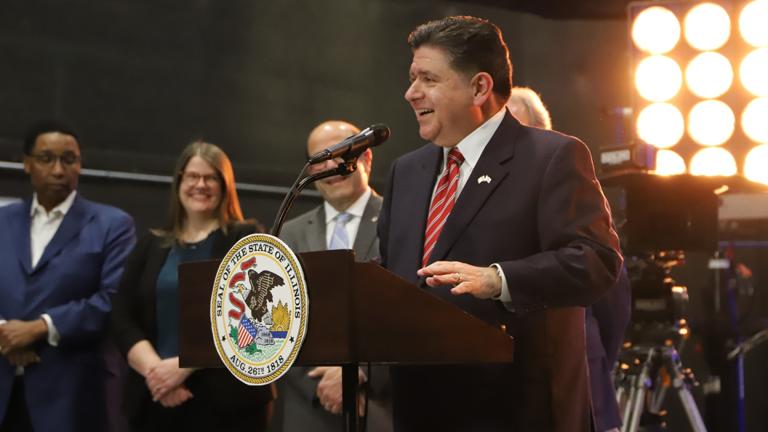
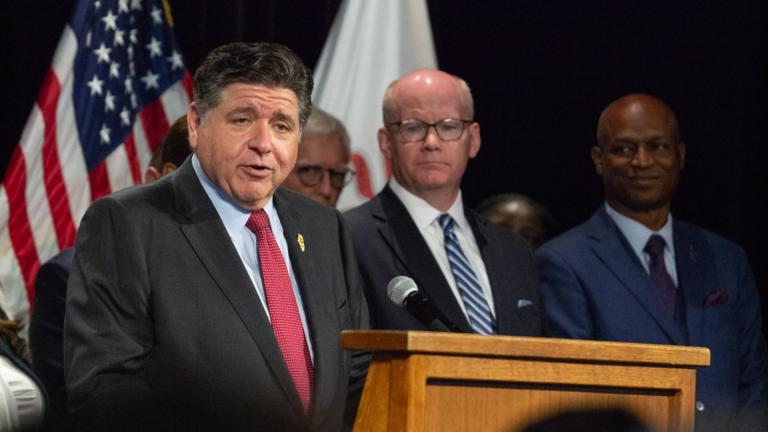
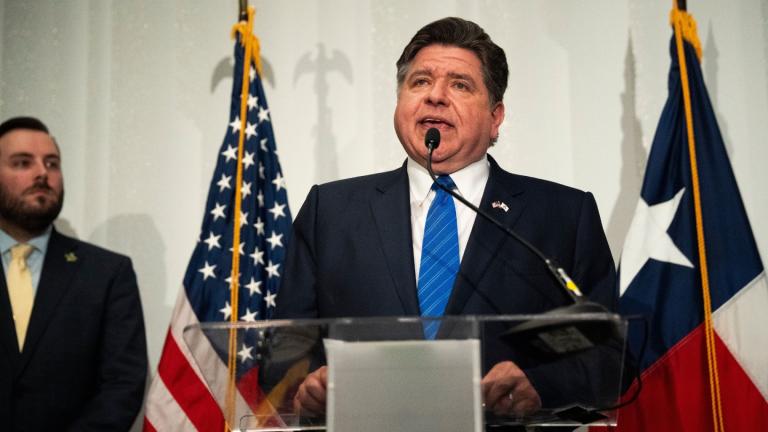
Pritzker has not yet decided whether to opt in. A spokesperson with the governor’s office said in a statement Monday that the office would evaluate the issue through a lens of “affordability for working families” and “what best supports Illinois students, families, and public schools.”
Last week, Pritzker said he was still waiting on program rules from the federal government. The U.S. Treasury Department is expected to share more specific regulations governing the program.
“Just on its face, the question is, is this just a repeat of trying to take money out of public schools and move it into private schools, which is what the Trump administration, generally speaking, has been in favor of, or is this something that could be useful?” Pritzker said last week during an unrelated news conference. “But we just don’t know because there are no rules around it right now.”
The federal school voucher program was passed by Congress and signed into law last year by President Donald Trump as part of the “One Big Beautiful Bill” Act.
Donors can begin claiming federal tax credits in January 2027.
Contact Eunice Alpasan: [email protected]