Politics
Alderpeople Say COPA Should Investigate Chicago Police Conduct During Immigration Raids, Protests
The Chicago City Council will vote Feb. 18 on a proposal that would allow the Civilian Office of Police Accountability to investigate whether CPD officers have violated city law by helping federal immigration agents.
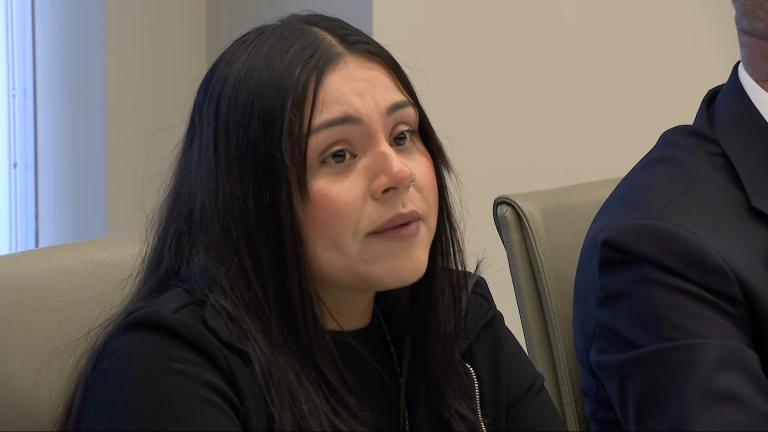
COPA’s newly appointed chief administrator, LaKenya White, told a joint session of the Immigrant and Refugee Rights and Police and Fire Committees last week that her office is prepared to investigate 40 complaints filed against the Chicago Police Department over its interactions with federal agents since June.
Chicago’s Welcoming City Ordinance prohibits all city employees from helping federal agents enforce immigration laws in nearly all cases.
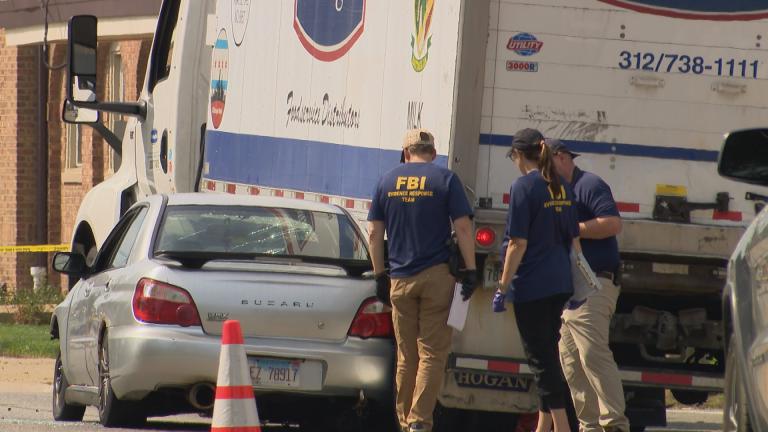
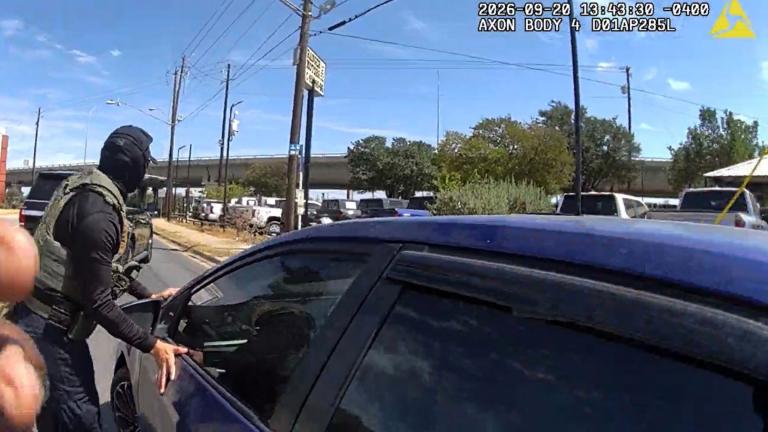
Elected officials, residents and immigrant rights advocates have said they repeatedly witnessed CPD actively helping ICE agents detain dozens by clearing the way for agents to make arrests by blocking streets, protecting ICE vehicles and “escorting” ICE agents to their destinations.
More than 2,000 Chicagoans signed a petition demanding that the Community Commission for Public Safety and Accountability hold a hearing about the issue and start drafting new rules to hold officers accountable for aiding Immigration and Customs Enforcement and Customs and Border Patrol agents.
Better known as the CCPSA, the board has the power to set CPD policy.
During that hearing, dozens of Chicagoans pleaded with the board to order CPD to stop federal agents from “terrorizing our neighborhoods.”
Unwilling to wait for the CCPSA to act, Alds. Andre Vasquez (40th Ward) and Jessie Fuentes (26th Ward) proposed an amendment to the 2017 ordinance that created the Civilian Office of Police Accountability to allow it to probe alleged violations of the city’s Welcoming City Ordinance.
Fuentes and Vasquez joined “Chicago Tonight” to detail the proposal.
WTTW News: Why do you think this amendment is necessary?
Fuentes: On June 4 of last year, we had an incident where it was the first escalation of Border Patrol and ICE agents escalating in their violence and their detainments at an ISAP office, where they baited individuals with text messages. That day, we had alderpeople and organizers there that were mishandled by violence by Border Patrol and ICE agents. And what we’re seeing is very clear characteristics and activities by local law enforcements, by providing ICE and Border Patrol a perimeter, working inside of the ISAP office to coordinate how they were getting out of the building with individuals they have detained. That is clear activity, for us, that folks are helping coordinate and violating the Welcoming City Ordinance.
The Welcoming City Ordinance was created in 2012, and COPA in 2017. Why didn’t COPA already have this authority? Why does it need to be explicitly given by ordinance?
Vasquez: What we’re trying to identify is who had the responsibility to investigate. So COPA, for example, can take it on itself, route it to the inspector general or the Bureau of Internal Affairs at CPD. But because there was some ambiguity there as to who should take it on, what the ordinance that Ald. Fuentes introduced clarifies that. That way, there’s less ambiguity, and the department is then charged with doing the investigation, and COPA, out of the three bodies, is the one that provides the most transparency.
Police Supt. Larry Snelling and Mayor Brandon Johnson have said that CPD officers have operated in compliance with the Welcoming City Ordinance. Do you believe that to be the case?
Vasquez: It might be the case that they believe that to be true. But when we looked at some of the footage we received after we pushed the issue in the hearing that we held, we saw explicit moments where, really, leadership of CPD was talking to ICE agents about where they should move their car to have less people block, to come in and park in private areas as opposed to public, so they’d have an easier time transporting people, kidnapping them as we now know, and taking them other places.
Doesn’t CPD have a responsibility to answer and respond to 911 calls, no matter who makes them? At the same time, they have a duty to de-escalate situations when they can. Are we asking a lot of our officers here?
Fuentes: Absolutely. Providing safety and security for all residents of the city is no easy task, whether it’s federal enforcement or real concern around gun violence in Chicago. The role of a police officer is difficult. They have the responsibility to make sure that all residents are safe, despite documentation status. And you’re right, no matter what the 911 call is, it is the role of CPD to respond. It is also the role of the responding commander to assess that situation and make clear to his local officers the next steps that are going to keep those residents safe. … It is the commanding officer that needs to make decisions on whether or not officers are going to put themselves in a position in which they are engaging with ICE officers and supporting their enforcement in our city.
If this amendment does pass the full City Council, has COPA given you any idea how soon we might see investigations?
Fuentes: Some of the cases have already been referred out, and where they’ve been referred to, those bodies now have jurisdiction to investigate those cases. Any cases that are still in the jurisdiction of COPA will be investigated immediately.
Should the city be doing more to address the challenges of mass migration and what it means to be a welcoming city?
Vasquez: We are seeking to address gaps that the federal government has not addressed in what I would say is 30 years. … What we’re doing as a city is working in our confines of what we can do legislatively to make sure that we’re holding officers accountable. And I would say this, for our colleagues, for the officers who believe they are doing the right thing, if they don’t know what the rules are, we don’t have order. So being able to draft legislation that clarifies that, also helps the officers that are trying to do their best in this situation do the right thing. That’s not being punitive, that’s being clear.
Heather Cherone contributed to this report.