Crime & Law
Judge Who Set Restrictions on Immigration Agents’ Use of Force Will Now Oversee New Lawsuit on ‘Illegal’ Enforcement Tactics
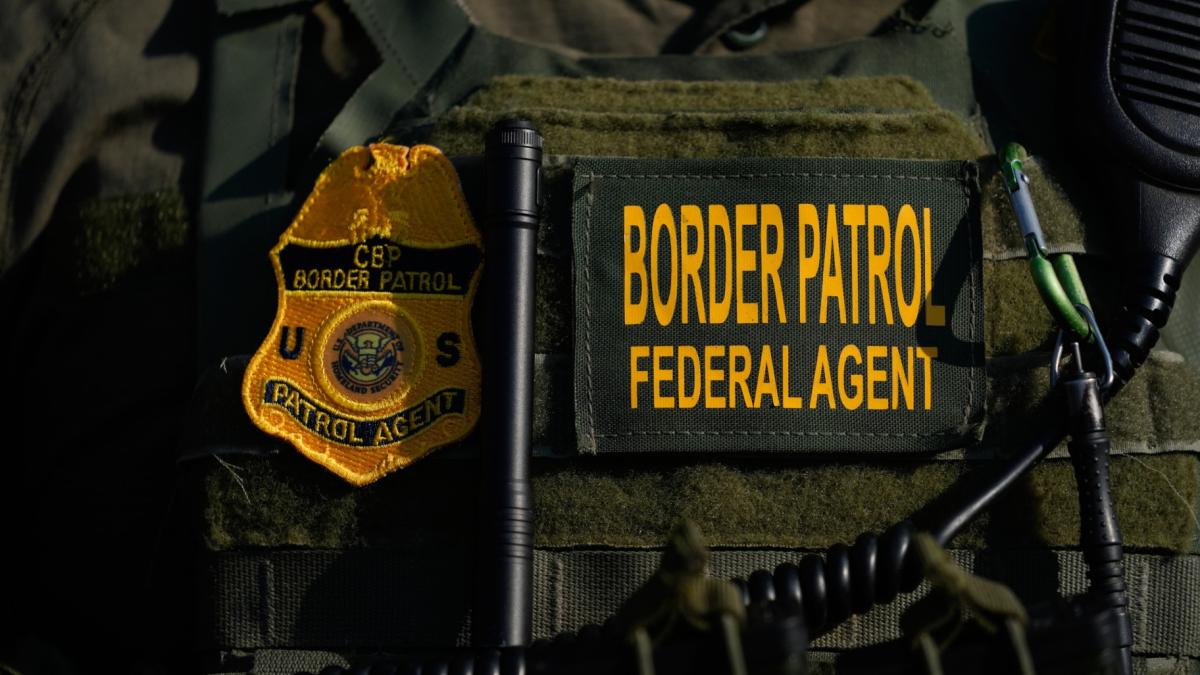 A Border Patrol agent’s badge is seen near an Immigration and Customs Enforcement facility in Broadview, Ill., Oct. 3, 2025. (AP Photo / Erin Hooley, File)
A federal judge who implemented a sweeping injunction limiting federal immigration agents’ use of force will now oversee a new lawsuit brought this week by the city of Chicago and state of Illinois over the government’s allegedly illegal immigration enforcement tactics.
U.S. District Judge Sara Ellis on Thursday granted a motion from city and state attorneys who sought to reassign their case — which was slated to be heard by Judge Georgia Alexakis — to Ellis, given the case’s extensive similarities to another lawsuit in her courtroom brought by the Chicago Headline Club.
“Both of these cases involve many of the same issues of fact and law and they grow out of the same transaction or occurrence,” Ellis said at a hearing Thursday.
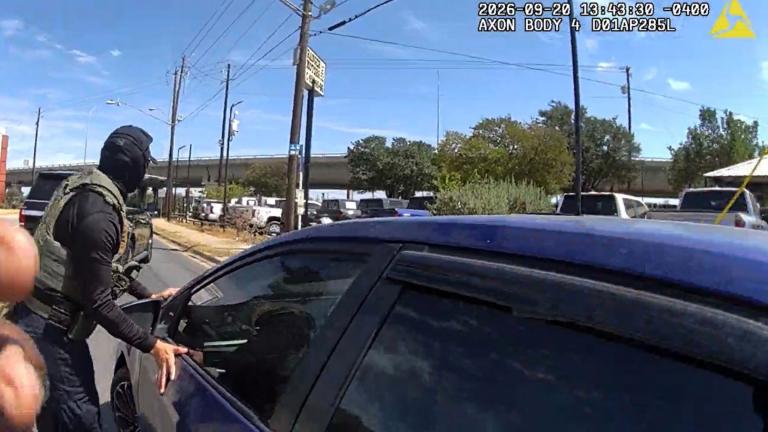
The new lawsuit includes broader claims than the Headline Club case, which largely centered on First Amendment violations by federal agents who deployed tear gas, pepper balls and other weapons against journalists and protesters during the Trump administration’s “Operation Midway Blitz” immigration enforcement operation.
The sweeping 103-page lawsuit claims that Border Patrol and Immigration and Customs Enforcement agents — who have conducted numerous aggressive raids in and around Chicago since “Midway Blitz” began in September — have acted as “occupiers” rather than law enforcement.
But the two cases do include many of the same use-of-force incidents, and Ellis on Thursday noted that she’s already spent “countless hours” holding hearings and reviewing videos and transcripts covering the same issues.
In the Chicago Headline Club case, Ellis issued an injunction that limited agents’ use of force. But that injunction was put on hold by an appeals court, and attorneys representing the plaintiffs in that case have since moved to voluntarily withdraw their lawsuit.
A spokesperson for the U.S. Department of Homeland Security, which is named as a defendant in both lawsuits, previously slammed that injunction as an “extreme act” and labeled Ellis as an “activist judge.”
That process is not yet finalized, but the case could be withdrawn as soon as next week.
Peter Goldstone, an attorney for the federal government, argued that the two lawsuits are premised on significantly different theories, causes of action and legal bases, adding also that the cases themselves are at “diametrically opposite phases” of their litigation life cycle.
He said Thursday that state and city attorneys had not met their burden to move the case.
But Vikas Didwania, an attorney for the state of Illinois, said the two lawsuits featured significant overlap, as they both arose after federal agents “lawlessly ramapaged” through streets of Chicago.
He said that because Ellis is already intimately familiar with these incidents from “Operation Midway Blitz,” it would be a matter of improving “judicial economy” by reassigning the case to her courtroom.
Ellis agreed, over objections from the government.
“In other words,” she said, “the court is already up to speed on many of the facts and issues that will arise in the state and city case.”
Attorneys for the Chicago Headline Club did not oppose the motion to reassign the case. Ellis is expected to rule on their motion for voluntary dismissal at a Jan. 22 hearing.