Politics
Budget Committee Chair Says Negotiations Over Spending Plan Are At ‘Impasse’
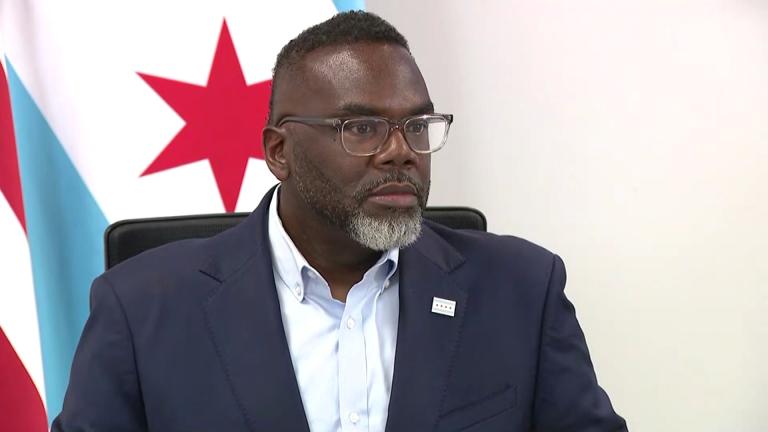
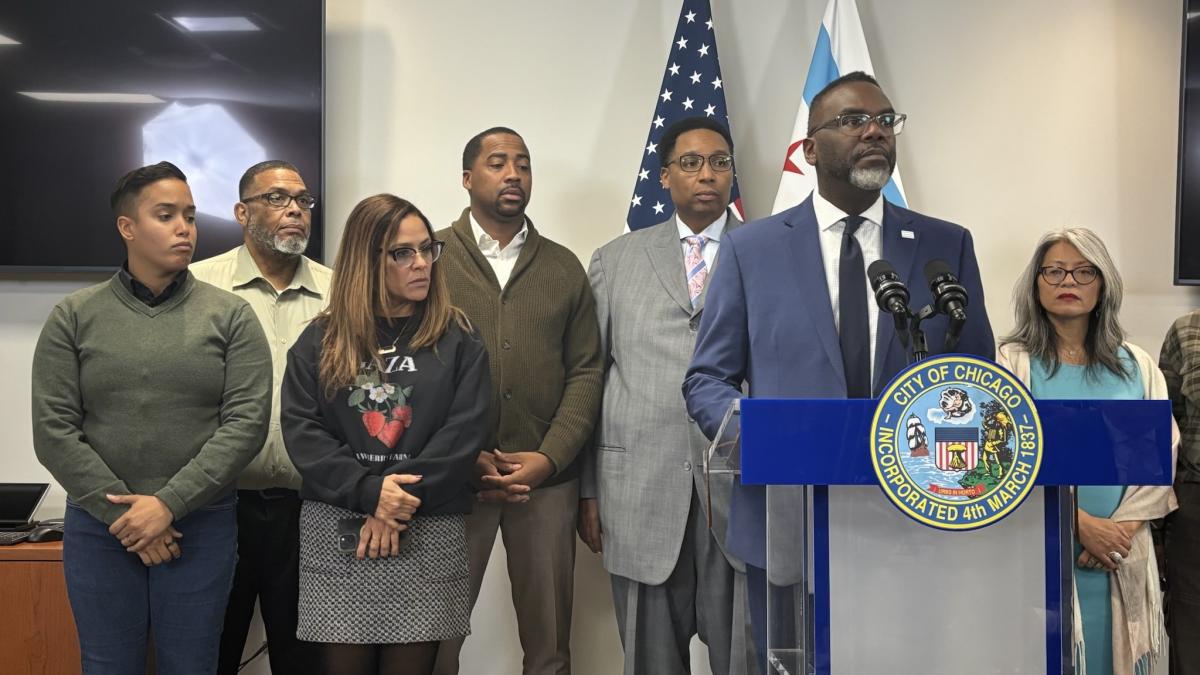 Mayor Brandon Johnson addresses the news media on Monday, Nov. 17, 2025, as Ald. Jason Ervin (28th Ward) stands behind him and alongside other allies of the mayor. (Heather Cherone / WTTW News)
Negotiations over Mayor Brandon Johnson’s $16.6 billion proposed spending plan for 2026, which eliminates a $1.19 billion projected shortfall, have reached an impasse, Budget Committee Chair Ald. Jason Ervin (28th Ward) said Wednesday.
Two days after the City Council’s Finance Committee refused to advance Johnson’s proposed spending plan to the full City Council, Johnson’s proposal to impose $623 million in new taxes on the wealthiest Chicagoans and largest firms remains in purgatory, with no clear path to a deal with just 41 days left before the deadline to avoid an unprecedented shutdown of city government.
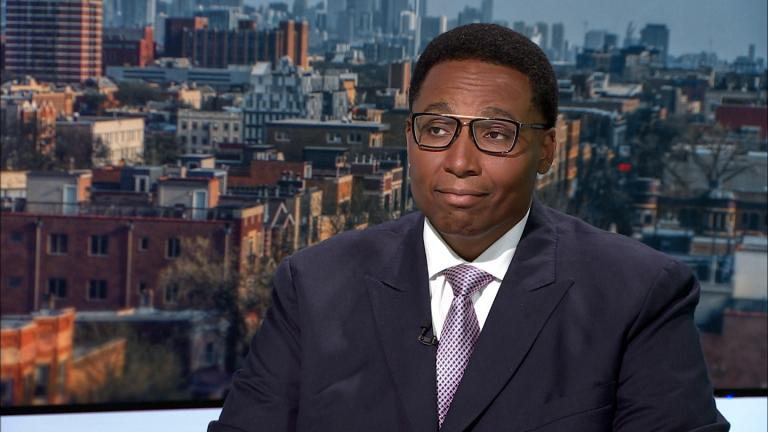
“This is a classic case of an impasse,” Ervin said during a panel hosted by the City Club of Chicago alongside Ald. Matt O’Shea (19th Ward), Ald. Samantha Nugent (39th Ward) and Ald. Jessie Fuentes (26th Ward). “We have a body of individuals who support the budget, and we have a body of individuals who do not support the budget.”
If the City Council and mayor cannot craft a budget deal by Dec. 30, the city would find itself in an unprecedented crisis.
Officials cannot pass a short-term ordinance to keep City Hall functioning while negotiations continue, officials said. That means without a budget agreement, more than 30,000 workers will not be paid and city services will stop.
“We will not allow the government to shut down,” Ervin said, predicting a mid-December vote to approve the budget.
The city’s 2025 budget narrowly passed on Dec. 16, 2024.
Much of the debate over Johnson’s spending plan has centered on his proposal to impose a $21 per month per employee tax on large companies with more than 100 employees to generate $82 million for violence prevention and youth employment programs along with $18 million for small business grants.
That deadlock has not changed in the more than a month since the mayor introduced his spending plan for 2026.
Nugent and O’Shea said they are implacably opposed to the so-called head tax, which they called a “job killer.” However, both Fuentes and Ervin, who represent West Side neighborhoods home to a majority of Black and Latino residents, said the city has no choice but to ask the biggest firms that call Chicago home to pay more in taxes.
O’Shea said city officials should ask the unions that represent 90% of the city’s employees to reduce their workers’ pay and benefits. No other alderperson has echoed that call, which would trigger fierce opposition from organized labor in Chicago.
“We are at a financial crossroads for the future of our city,” O’Shea said.
Both O’Shea and Nugent have called for the city’s budget to be balanced with additional cuts, while Johnson has repeatedly asked members of the City Council who don’t like his spending plan to provide alternatives.
O’Shea and Nugent, who represent neighborhoods on the Far Southwest and Far Northwest sides that are home to many White city workers, called again for the mayor to implement more changes outlined in a consultant’s analysis of the city’s finances. The Ernst & Young report, which cost the city $3.2 million, identified between $530 million and $1.4 billion in potential savings and new revenue.
But Johnson’s spending plan includes just $80 million in cuts identified by the report, with the bulk of those savings coming from a year-long hiring freeze to be imposed on every city department except for those focused on public safety or revenue collection.
Budget Director Annette Guzman has repeatedly told the City Council that additional cuts or changes cannot be made quickly enough to have a significant impact on the city’s 2026 budget, which remains structurally unbalanced, with expenses outpacing revenues, as officials scramble to pay soaring pension bills and find an additional $100 million to cover the cost of employee health care.
O’Shea and Nugent, along with other frequent critics of the mayor, have refused to take Guzman at her word, contributing to the gridlock facing the City Council.
Johnson has promised to veto a budget that reimposes the grocery tax or increases garbage fees or property taxes. The mayor also promised to reject a spending plan that cuts the $2.1 billion proposed budget for the Chicago Police Department, noting that would result in layoffs of police officers.
Even though a task force charged by Johnson with finding solutions to the city’s fiscal crisis urged the City Council to automatically hike property taxes annually to keep pace with inflation, Johnson ruled out such a proposal and no one on the City Council has proposed reviving it.
Unless the city’s largest revenue source starts to keep pace with inflation over time, officials will have no choice but to cut city services or hike other taxes, according to the interim report from the Chicago Financial Future Task Force.
Ervin said the city will have no choice but to eventually raise property taxes.
“We’ll either take an escalator or an elevator, and we have consistently taken an elevator,” Ervin said, referring to the $588 million property tax hike pushed through by former Mayor Rahm Emanuel in 2016.
Chicago’s finances remain out of whack, pinched by soaring pension costs, spiraling personnel costs and a massive amount of debt. The city’s financial condition has worsened in recent years because corporate taxes that are imposed by the state and flow to the city have dropped significantly in recent years, Ervin said.
“The city has lost $400 million from the state in the past couple of years without any explanation,” Ervin said, calling the head tax a partial replacement for that revenue. “(The state) had budget holes, but now they don’t.”
Contact Heather Cherone: @HeatherCherone | (773) 569-1863 | [email protected]