Politics
Mayor Brandon Johnson’s 2026 Spending Plan Fails to Advance, Signaling Steep Climb
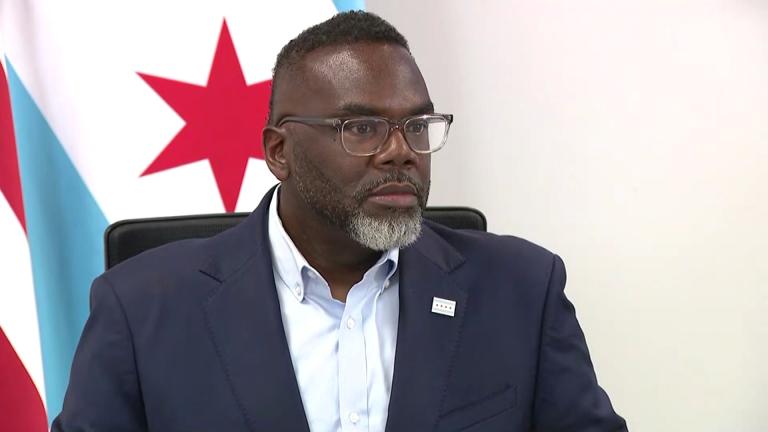
Mayor Brandon Johnson’s $16.6 billion proposed spending plan for 2026, which eliminates a $1.19 billion projected shortfall, failed to advance Monday, signaling it faces a steep climb to win the support of a majority of the Chicago City Council before the end of the year.
The refusal of the City Council’s Finance Committee to advance Johnson’s proposed spending plan to the full City Council is another sign the bulk of Johnson’s proposal to impose $623 million in new taxes on the wealthiest Chicagoans and largest firms faces intense opposition that has shown no sign of waning.
Ald. Pat Dowell (3rd Ward), the chair of the Finance Committee, tried to prevent a vote on the budget until Dec. 3, a move that was rejected by an overwhelming vote by the committee. More than an hour after the meeting was scheduled to start, Budget Director Annette Guzman introduced the revised version of the mayor’s spending plan.
Much of the debate over Johnson’s spending plan has centered on his proposal to impose a $21 per month per employee tax on large companies to fund violence prevention and youth employment programs.
Originally, the tax would have applied to all firms with more than 100 employees, but Johnson revised it to apply to firms with more than 200 employees. That would have generated $82 million in 2026, according to budget projections.
But Guzman said Monday morning the proposal had been revised, again, to apply to all firms with 100 employees to once again generate $100 million. The violence prevention and youth employment programs would get $82 million, with the remaining $18 million funding small business grants.
After two hours of debate, Ald. Jason Ervin (28th Ward) tried again to recess the meeting, and the effort resulted in a tie vote, with 18 alderpeople against and 18 in favor.
A vote to advance the part of the mayor's budget that generates all of the city’s revenue for 2026 failed on a vote of 10-25, leaving the budget proposal in limbo and all but assuring that the debate over the spending plan will continue into December.
Led by Ald. Brendan Reilly (42nd Ward), opponents of the mayor insisted on the vote in an effort to publicly demonstrate the mayor’s inability to push through his proposal after more than a month of debate.
Ald. Raymond Lopez (15th Ward), flanked by 13 members of the City Council, after the vote that served as a public rebuke of Johnson and his administration, said he hoped the head tax proposal was dead.
Shortly after the defeat, Johnson attempted to reframe the debate over the budget as a contest between “working people” or the “ultra rich” and said he would not withdraw his proposal for the head tax.
There is no “magic third option between cuts to core services and layoffs,” Johnson said. “Anyone who wants to pretend otherwise is being disingenuous.”
Johnson promised to veto a budget that includes a reimposed grocery tax or increases to garbage fees or property taxes.
Ald. Jason Ervin (28th Ward) canceled a meeting of the Budget Committee, which had been scheduled for 2 p.m. Monday to consider the ordinances that would allow that revenue to be spent.
The revised budget proposal would boost the tax levied on software licenses, cloud services and other digital goods from 11% to 15% to generate $416 million, according to the proposal. The mayor has touted that as a tax hike on “big tech.”
Johnson has steadfastly campaigned for the so-called head tax, noting that business leaders have told him his highest priority should be public safety. Johnson has said it only makes sense for Chicago’s largest companies to “put more skin in the game” in order to allow the city to “double down” on efforts that are working.
The mayor has also downplayed the size of the head tax, noting that it is the equivalent of big firms buying their employees lunch once or twice a month.
The head tax proposal has triggered outrage in the city’s business community, which blasted that proposal as a job killer.
Johnson has repeatedly told reporters it was time for members of the City Council who don’t like his spending plan to make the case for their own budget proposal.
“If alders have other ideas, it is time to bring them forward so we can debate them,” Johnson said.
Johnson has not proposed reducing the $2.1 billion proposed budget for the Chicago Police Department in 2026. CPD’s budget accounts for one-third of the city’s $6 billion corporate fund, which the City Council has wide discretion to spend.
Johnson said he would veto any spending plan that cuts CPD’s budget, noting that would result in layoffs of police officers.
Johnson’s budget relies on $157.6 million in TIF surplus to help fill the city’s budget gap. An additional $550 million would flow to Chicago Public Schools, which is also facing its own financial crunch.
The CPS budget approved by the Chicago Board of Education for the 2025-26 academic year counted on getting $379 million in TIF funds in order to close a $734 million budget gap.
That means the surplus declared by the mayor will give CPS an additional $173 million, enough to cover the $175 million payment that Johnson has asked the school district to make into the pension fund controlled by the city that pays for the retirement of some CPS employees.
The Chicago Board of Education approved a measure to make that payment for 2025, assuming the TIF surplus is approved by the City Council.
That would close the $146 million deficit the city is facing by the end of 2025, officials said.
Alderpeople have also questioned Johnson’s plan to generate $31 million by taxing social media companies with a tax of 50 cents per month for every active user after the first 100,000 users, under the city’s amusement tax authority.
That money would be used to fund the city’s public mental health clinics and crisis response program, according to Johnson’s proposed budget.
Several alderpeople said they were skeptical that the first-of-its-kind tax, assessed under the city’s amusement tax authority, would withstand a legal challenge, but lawyers for the city told alderpeople they were confident it would be upheld.
Chicago’s 2026 budget does not count on that tax immediately flowing into the city’s coffers, anticipating a legal challenge, officials said.
The spending plan would also borrow $283.3 million to cover the massive cost of resolving police misconduct lawsuits, records show. That debt will be paid off during the next five years, at a cost of approximately $52 million in interest, Chief Financial Officer Jill Jaworski said.
The city will also borrow $166 million to pay Chicago firefighters and paramedics what they are owed after working without a contract for four years. That debt will be paid off over three years and cost the city $30 million in interest, Jaworski said.
In all, the spending plan proposes borrowing a total of $1.8 billion to cover those expenses and fund the city’s infrastructure program for 2026 and 2027, which includes $144.6 million to repair bridges and viaducts, $174 million for street resurfacing and $173 million to replace lead service lines.
The revised spending plan would also hike the congestion surcharge for all rides to and from an expanded area downtown to generate $17 million. Johnson’s original plan would have generated $65.4 million, but faced intense opposition.
The budget still calls for the city to impose a local tax on online wagers to generate $26.2 million, but would no longer seek to tax the sale of intoxicating hemp products.
S&P, one of a handful of major ratings agencies, revised its credit rating outlook for Chicago from stable to negative earlier this month.
The ratings agency was alarmed by Johnson’s decision to make an additional payment of just $120.8 million to the city’s four underfunded pension funds. That additional payment is more than 55% smaller than the additional payment made in 2025, records show.
In August, the city had planned to make an additional payment to the city’s four pension funds of $219.4 million, records show.
The city now plans to make an additional pension payment of $130 million in 2026, Jaworski said.
The city faces a nearly $2.76 billion pension bill in 2026 in order to comply with a state law that requires two of Chicago’s pension funds be funded at a 90% level by 2055 and the other two by 2058.
Contact Heather Cherone: @HeatherCherone | (773) 569-1863 | [email protected]