Politics
Federal Judge Orders Broadview ICE Detention Center to Improve Conditions, Access to Food and Water
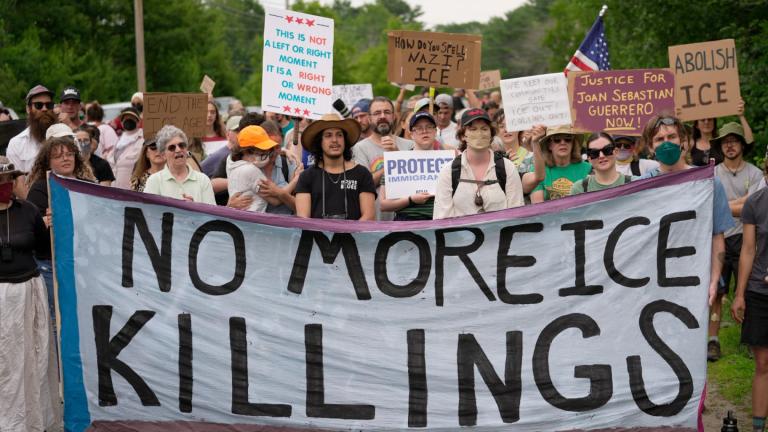
 Protesters gather outside an ICE processing facility in the Chicago suburb of Broadview, Ill., Saturday, Nov. 1, 2025. (AP Photo/Alex Brandon)
A federal judge is ordering Trump administration officials to address “unacceptable” conditions at the Immigration and Customs Enforcement processing facility in Broadview after hearing hours of testimony from detainees who complained detailed overcrowding, a lack of bedding and inadequate food and water.
U.S. District Judge Robert Gettleman on Wednesday granted a temporary restraining order requiring ICE and the Department of Homeland Security to provide clean bedding mats, toiletries and at least three full meals per day to detainees.
“The court finds that plaintiffs and members of the putative class have suffered, and are likely to suffer, irreparable harm absent the temporary relief granted herein,” Gettleman wrote in his order.
The order was issued as part of a lawsuit brought on behalf of former Broadview detainees Pablo Moreno Gonzalez and Felipe Agustin Zamacona by the MacArthur Justice Center and the ACLU of Illinois. They claim ICE officials have “cut off detainees from the outside world” by preventing them from making confidential phone calls to their lawyer or a prospective lawyer.
The temporary restraining order, which will remain in effect until at least Nov. 19, also requires ICE to provide showers for detainees at least every other day, a bottle of water with each meal and upon request, and clean hold rooms and toilet facilities.
In addition, ICE is required to provide telephone services for each detainee to communicate with their attorneys in private and without cost.
“We are asking for some pretty basic fixes here at this point,” said Alexa Van Brunt, director of the MacArthur Justice Center’s Illinois office and lead counsel on the suit, after Wednesday’s hearing.
The ruling comes after a daylong evidentiary hearing Tuesday in which multiple former Broadview detainees shared their experiences in the facility. Each told the court they were crammed into overstuffed holding rooms with dozens of others, had difficulty contacting their families and weren’t able to shower or change their clothes sometimes for multiple days.
Some detainees testified they were coerced into signing voluntary deportation forms after being lied to or threatened by federal agents.
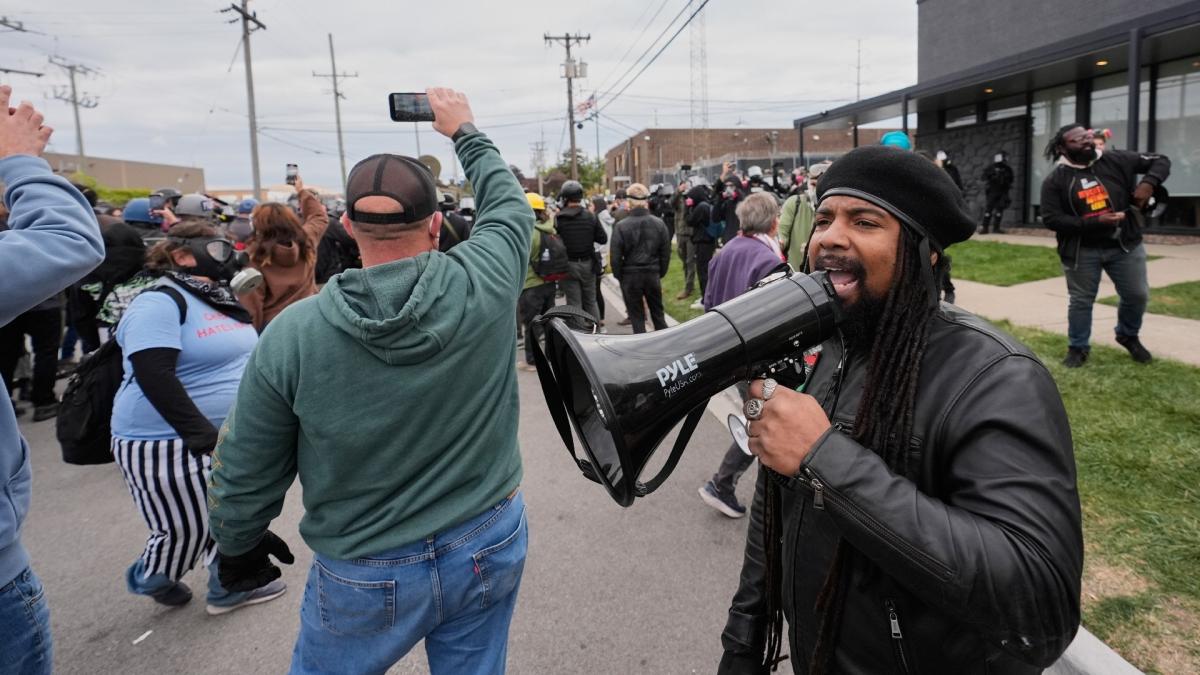
The Broadview facility has been the site of repeated protests in recent months as the Trump administration has rapidly escalated its immigration enforcement efforts in Chicago and the surrounding suburbs.
The site operates as a processing facility — where detainees are expected to spend a matter of hours before being moved to a detention center — but the lawsuit claims people have been kept in Broadview for “up to a week or more.”
But on Tuesday, Gettleman said the evidence presented was “pretty strong” in showing the Broadview facility is no longer simply operating as a temporary holding center.
“It has really become a prison … it is no longer just a processing center,” he said.
He called the sleeping conditions “unnecessarily cruel” and said the government’s claims that detainees are allotted water on demand and that there are benches for people to sleep have been contradicted repeatedly by Tuesday’s testimony.
“It’s just unacceptable,” Gettleman said.
According to the lawsuit, as of June 4, the median time a detainee was held at Broadview was nearly 48 hours — already four times longer than the supposed 12-hour limit for detainees.
But by mid-June, ICE data showed the median detention time at Broadview had risen to three days, the lawsuit states, adding that the facility does not “have the capacity or capability to hold the number of detainees" currently being held.
Assistant U.S. Attorney Jana Brady argued Tuesday that if the plaintiffs’ restraining order were to be approved, it could effectively halt the government’s ability to execute immigration laws in the state of Illinois.
She denied anyone’s constitutional rights have been violated in Broadview and instead claimed any issues at the facility are the result of an ongoing “learning curve” in which staff are figuring out how to deal with a massive influx of detainees in recent months.
Brady acknowledged in-person attorney visits have been “somewhat restricted” in part because they slow down the processing and force detainees to be held at the site longer. She also blamed “disruptive protesters,” who have been a regular sight near the facility, claiming their presence has periodically forced ICE to strictly limit access to the facility in order to “protect the safety of detainees and officers.”
The temporary restraining order will remain in effect until Nov. 19, when there will also be a status hearing.
Related Stories