Politics
Health Insurance Costs Could Soar If Congress Doesn’t Extend Subsidies. Here’s What to Know
Open enrollment for health insurance in Illinois through the Affordable Care Act begins Nov. 1 and ends Jan. 15, with special enrollment for pregnant people available at all times during the year.
Monthly premiums for 2026 plans are expected to be higher for those enrolling in ACA exchange plans because COVID-era subsidies are expiring.
Originally established in the 2021 American Rescue Plan Act, these subsidies were used to lower costs for ACA plans. The Trump administration has sought to cut the subsidies to reduce federal spending.
One of the major issues behind the current government shutdown is that Democrats want to preserve the subsidies to ensure that millions across the nation continue to be insured.
The Illinois Department of Insurance has released estimates around what might happen if the subsidies expire and what that could mean for residents who are insured through Affordable Care Act exchange plans.
What are the ACA tax credits and who do they help?
Nearly 550,000 Illinoisans are enrolled in ACA exchange plans through Get Covered Illinois, the state-run marketplace for health insurance. The goal is to create an accessible platform for residents to buy and compare plans best suited for their needs.
Of the more than half-million people enrolled in ACA exchange plans in Illinois, 91% benefit from the subsidies as recipients of enhanced premium tax credits. Eligibility for these tax credits was temporarily expanded to include households with income over 400% above the federal poverty level.
This allowed more people who earn too much for Medicaid but are too young for Medicare to enroll in ACA plans at reduced monthly premiums.
What is at risk if the subsidies expire?
The Illinois Department of Insurance estimates monthly premiums will skyrocket if subsidies expire.
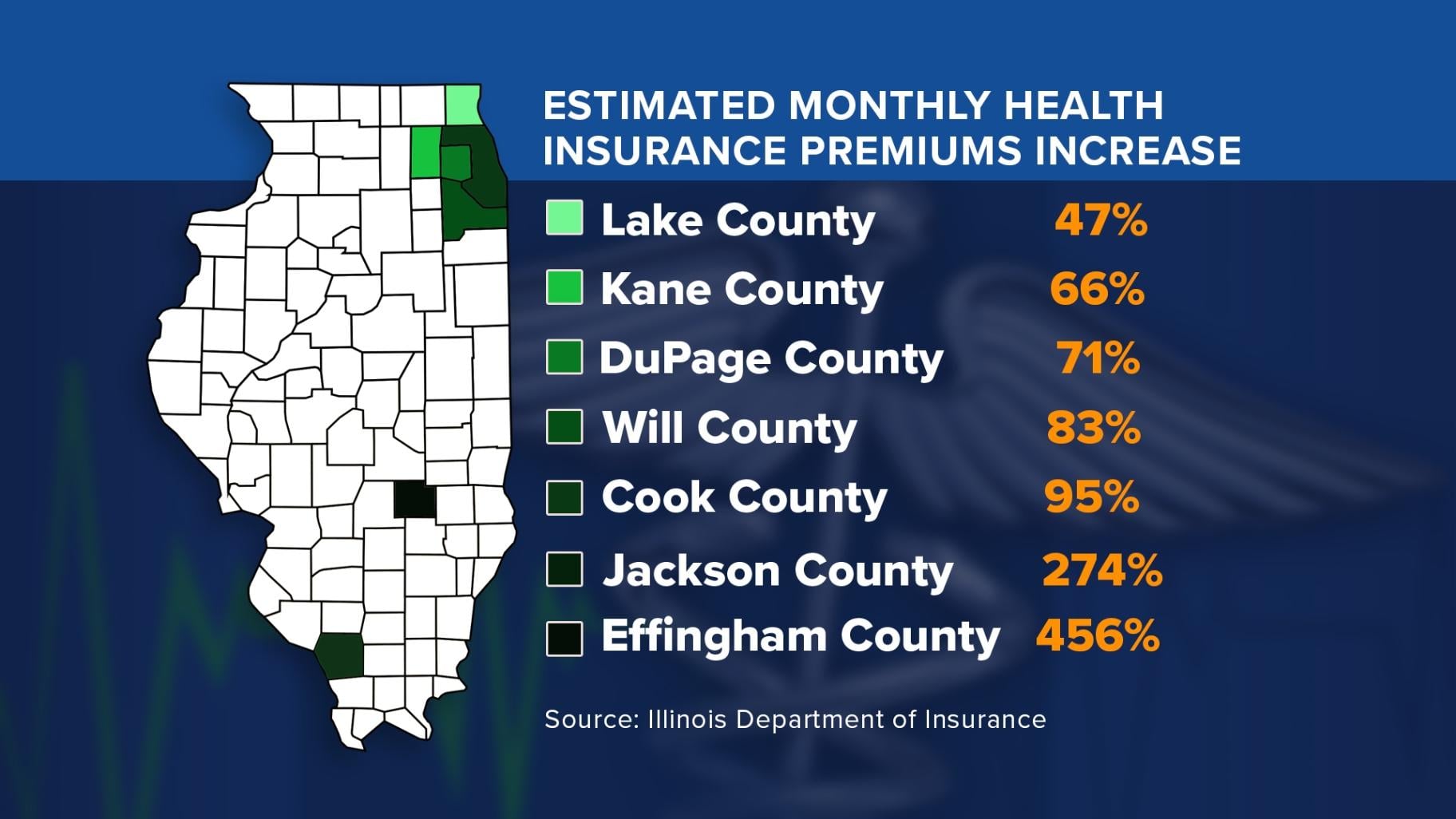
Residents enrolled in ACA exchange plans are expected to pay, on average, nearly 80% more for health insurance. Estimates show that Lake County will expect to have a 47% increase in monthly costs, Kane County 66%, DuPage County 71%, Will County 83% and Cook County 95%.
The estimated price hikes are more heavily going to impact rural Illinois, with an estimated 274% increase in monthly premiums for Jackson County and 456% in Effingham County. This could potentially raise monthly payments for Jackson County residents to $1,000 a month.
Ann Gillespie, director of the Illinois Department of Insurance, warned that if subsidies are not extended, some 30,000 residents in Illinois may lose coverage entirely.
Why are prices rising?
These estimates show price increases for residents insured under ACA exchange plans, but Gillespie notes that losing the subsidies will likely also increase prices in the commercial insurance market.
Gillespie said the Trump administration’s policies to cut Medicaid spending, eliminate subsidies and establish higher tariffs are “already causing ripples throughout the health care market, including in the commercial market, because as people are preparing — particularly providers, hospitals and physicians — for the big drop in revenue they’re going to have with the hits, they’re reexamining their rates that they charge commercial carriers.”
“Many of the carriers added a 3-4% increase in their rates just for the impact of the tariffs on pharmaceuticals,” she added.
Gillespie also warned of a 30-35% anticipated drop in health care enrollment, which would decrease revenue for insurance companies and could lead to the companies raising prices on top of growing inflation.
Gillespie said hospitals are going to see a rise in uncompensated care. By law, hospitals are required to treat anybody who comes into an emergency room.
“We’re going to see people delay important health care procedures because they can’t afford it,” Gillespie said. “It’s really going to have a devastating impact on people’s health.”
Where can you get connected with care?
Despite the scary numbers, Gillespie urged residents of Illinois to still enroll in health insurance using the Get Covered Illinois marketplace.
“We don’t want people to walk away, because the risk of going without health insurance, as you know, is great,” Gillespie said. “You never know when something is going to happen.”
Morgan Winters, director of Get Covered Illinois, said, “We really are a one stop-shop for folks to go understand their options and pick a plan that works with them.”
He said the platform allows residents to choose from different plans that accommodate their needs and budget. A benefit of the platform, Gillespie noted, is that it’s state-run and will continue to be available during open enrollment even amid the government shutdown.
“Reach out to one of our 1,500 brokers, or our navigators, because they’re really going to work for you to try to find some way for you to stay covered,” Gillespie said. “So don’t take the risk on not having insurance. Let us see how we can help you find something different.”