Crime & Law
Order Barring National Guard Deployment in Illinois to Remain in Place With Supreme Court Decision Looming
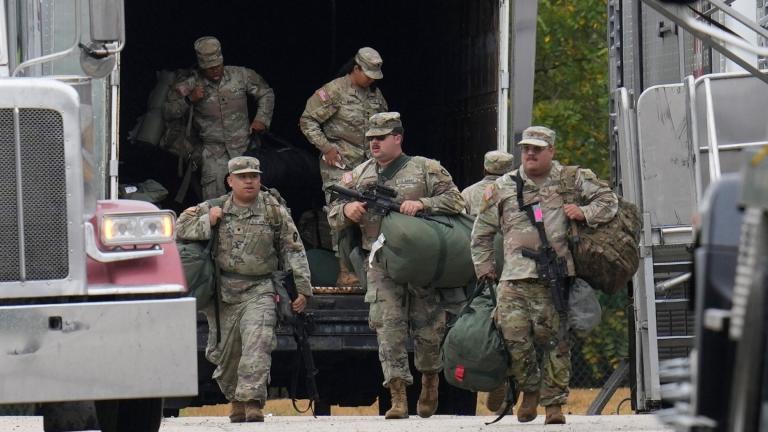
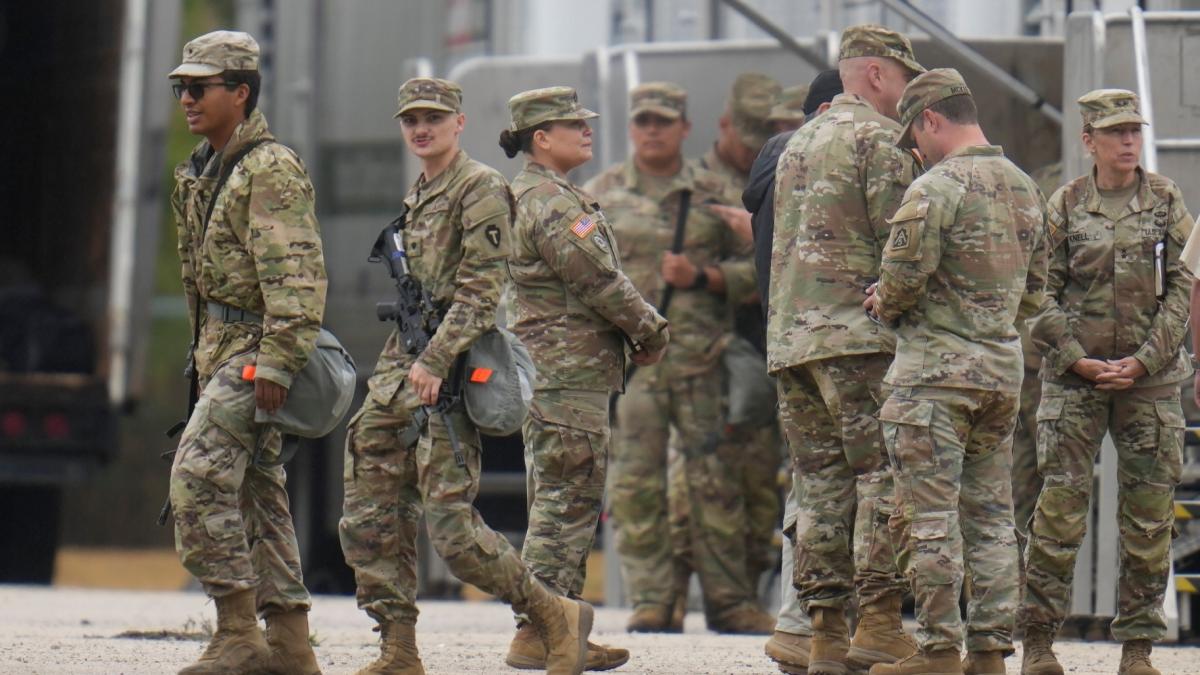 Military personnel in uniform, with the Texas National Guard patch on, are seen at the U.S. Army Reserve Center, Tuesday, Oct. 7, 2025, in Elwood, Ill., a suburb of Chicago. (AP Photo/Erin Hooley)
The Trump administration and attorneys for the state of Illinois agreed to extend an order banning the deployment of some 700 National Guard troops statewide, but that decision could be upended at any moment by an ongoing appeal to the U.S. Supreme Court.
In a phone hearing Wednesday, attorneys for both sides said they had consented to extend a temporary restraining order halting that deployment sought by President Donald Trump until a final judgment is issued in a lawsuit brought by Illinois and Chicago officials.
But regardless of that extension, the order, also known as a TRO, could be overturned at any point after the Trump administration asked the Supreme Court to throw it out. The high court is expected to rule in the coming days.
The initial TRO, filed earlier this month, was set to expire Thursday.
In a status report filed Tuesday, attorneys for the Trump administration said they initially agreed to extend that existing order by an additional 30 days through Nov. 24. But in court Wednesday afternoon, they proposed leaving the TRO in place until “final judgment” in this case.
They did so, according to the report, in order to “facilitate the Supreme Court’s review of defendants’ stay application” after the Trump administration appealed to the high court in an effort to overturn the TRO.
U.S. District Judge April Perry — who issued the TRO — acknowledged Wednesday morning this case is moving “very quickly,” and while a 30-day extension of that restraining order would provide “a little extra breathing room,” it wouldn’t be “a ton.”
Because that TRO can only be extended one time, Perry said that whatever extension is ultimately agreed to “has to be the right one.”
She also recognized the proceedings could be radically altered or rendered moot by the Supreme Court’s pending ruling.
“Of course I will follow the instructions of any higher court that weighs in, in the meantime,” Perry said.
In their appeal, attorneys for the Trump administration argued the president’s decision to federalize National Guards troops is “unreviewable.” They also claimed the Department of Homeland Security and other federal law enforcement agencies have been forced to operate “under the constant threat of mob violence” in Chicago and at an Immigration and Customs Enforcement processing center in suburban Broadview amid their escalated enforcement efforts across the state.
The emergency appeal came eight days after a federal judge temporarily blocked “the federalization and deployment” of 300 members of the Illinois National Guard, 200 members of the Texas National Guard and 14 members of the California National Guard into Illinois.
Attorneys representing Illinois called on the Supreme Court to deny the administration’s “dramatic step” of deploying National Guard troops over the state’s objection, claiming the Trump administration “cannot show that such extraordinary relief is warranted.”
That ruling could come as soon as Wednesday, Perry said, but it could also take the court until sometime next week. And each day that passes without a decision further compresses the already expedited schedule facing all sides in this case.
Illinois attorneys said that, if the Supreme Court overturns the restraining order, they would be requesting some form of “accelerated proceedings” toward a trial on the merits of the TRO that would include live witnesses and written transcripts.
But DOJ attorneys on Wednesday again urged the court to hold off on making any decisions about the future of this case until the Supreme Court rules on Trump’s appeal.
The same team of DOJ lawyers handling this case are set to go to trial next week in Oregon in a similar case involving the potential deployment of troops there, and attorney Jody Lowenstein said Wednesday that meeting a proposed discovery schedule laid out by Perry would be a “Herculean task” that would be “extremely difficult” to meet.
Christopher Wells, an attorney representing the state of Illinois, noted the time crunch facing the DOJ, but also added that “the urgency is something their client created.”
Heather Cherone contributed to this report.