Politics
Chicagoans’ Right to Compost Could Get a Boost From City Council
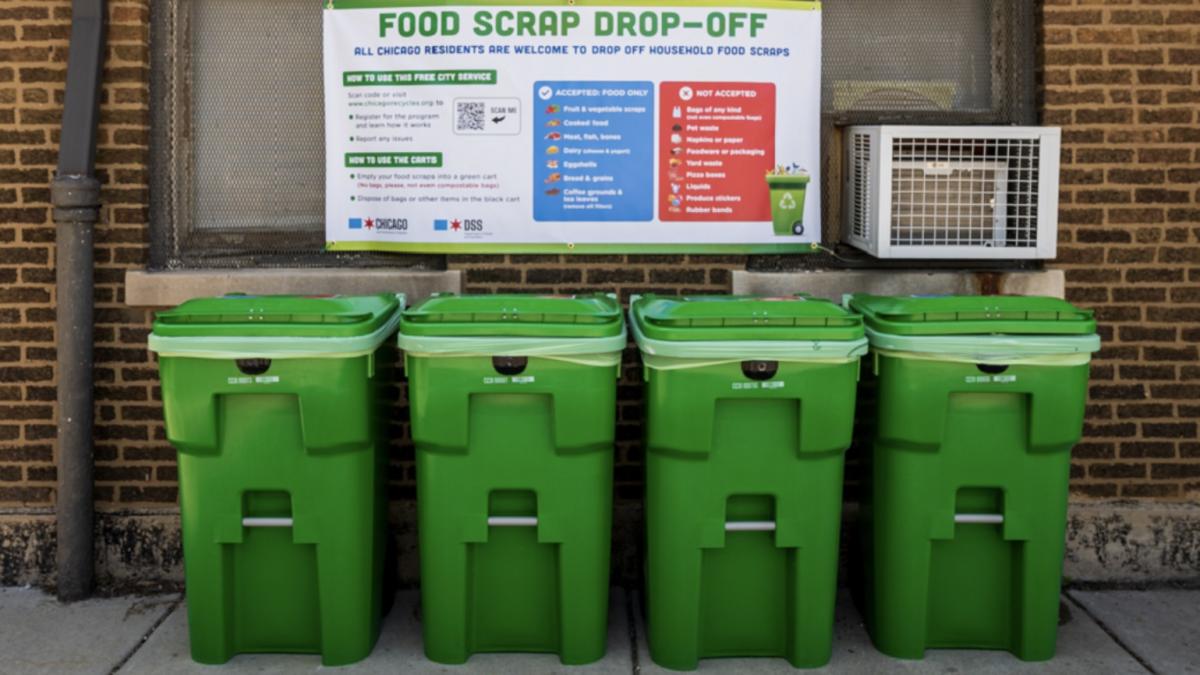 Chicago launched a compost pilot in 2023 that now includes 20 sites. (Credit: City of Chicago)
Want more local nature coverage? Sign up for WTTW News’ weekly Urban Nature newsletter.
In the two years since Chicago launched a composting pilot program, some 7,500 households have signed up to participate. At least twice as many households subscribe to private compost services, and the Chicago City Council could make it easier for people to keep organic waste out of landfill.
“Getting into organic collection is where we need to go,” Chris Sauve, deputy commissioner with the Department of Streets and Sanitation, said during Monday’s meeting of City Council’s Committee on Environmental Protection and Energy.
Sauve was on hand to lend his department’s support for a proposed amendment to the Chicago Municipal Code that would remove at least one barrier people face when it comes to composting: pushback from landlords or homeowner associations.
“We had heard from a number of residents as well as providers there were times where an individual was not able to use composting services … with little to no reason given,” said Ald. Matt Martin (47th Ward), who introduced the amendment, which would prohibit unreasonable restrictions on composting.
Specifically: HOAs and landlords can’t adopt or enforce rules that effectively ban someone from collecting organic waste for drop-off or contracting with a third party to collect and process their food waste.
“At the end of the day, I think our need around composting is going to grow, not shrink,” Martin said. “We all know that our city has one of the worst recycling rates, … but about 20% of our waste stream can be composted.”
Composting food scraps and other organics is not only eco-friendly, he said, but it’s also good for the city’s bottom line, saving on landfill costs.
But as composting gains in popularity, it also suffers from outdated misconceptions regarding cleanliness. And it’s these presumed nuisance issues that often spawn rules barring composting.
Ald. Ray Lopez (15th Ward) voiced some of those very concerns.
“It’s human nature. One of these is going to overflow,” Lopez said of compost containers. “An industrious composter, … they will overload it.”
The truth is the opposite, said Liam Donnelly, CEO and founder of WasteNot Compost, who spoke to the committee on behalf of his peers.
People who sign up for a compost service typically do so because of its cleanliness, Donnelly said.
“It’s why we have airtight lids,” he said of the 5-gallon buckets WasteNot provides to customers.
These buckets are kept inside customers’ homes, often in the kitchen. “We haven’t had overflowing,” Donnelly said. “Our subscribers don’t want to invite that" into their living space.
The language of the ordinance states that all waste must be generated onsite and completely contained within a “vessel.” It can’t attract insects, rodents or other pests. Violations of those specifications would be grounds for “reasonable” restrictions.
Lopez remained concerned that landlords could end up being ticketed or fined for a tenant’s mess — a mess that the ordinance forbids landlords from prohibiting.
Ultimately the committee voted to pass the amendment and send it to the full City Council for a vote on Thursday, with Lopez providing the only dissenting vote.
Contact Patty Wetli: [email protected]