Arts & Entertainment
Long-Shuttered Uptown Theatre Marks Centennial With New Book, Renewed Momentum for Restoration
Chicago’s landmark Uptown Theatre opened its doors in August 1925 with much fanfare. Like a lot of 100-year-olds, the building’s got some aches and pains — but it’s also got a dedicated community hoping to see the long-vacant movie palace restored and brought back to life.
Dave Syfczak is chief among them. He’s been coming to the 46,000-square-foot theater since he was a kid. Now, he’s the building’s caretaker, coming in daily to check the premises and perform any necessary work to preserve the building.
“The idea of the theater was to make the common man feel like a king or a queen, like he was visiting Europe or old Spain, as the design of the building indicates,” Syfczak said on a recent tour. “This building is Spanish Baroque in design with a little bit of French, some heraldry, some Gothic thrown in here and there.”
The Uptown Theatre boasts more than 4,300 seats, gorgeous architectural details everywhere you turn, and not one but three lobbies, including a cavernous showstopper of a main entrance.
The main staircase “has been described as one of the grandest staircases ever in a movie palace,” Syfczak said. On the second level of the lobby is the promenade, “an area where museum quality oil paintings hung in the wall spaces. A little trio would play upon entry … to entertain the folks while they first came into the lobby.”
The building also featured state-of-the-art heating and cooling, a nursery for mothers and beautiful mood lighting inside the auditorium that could change from scene to scene.
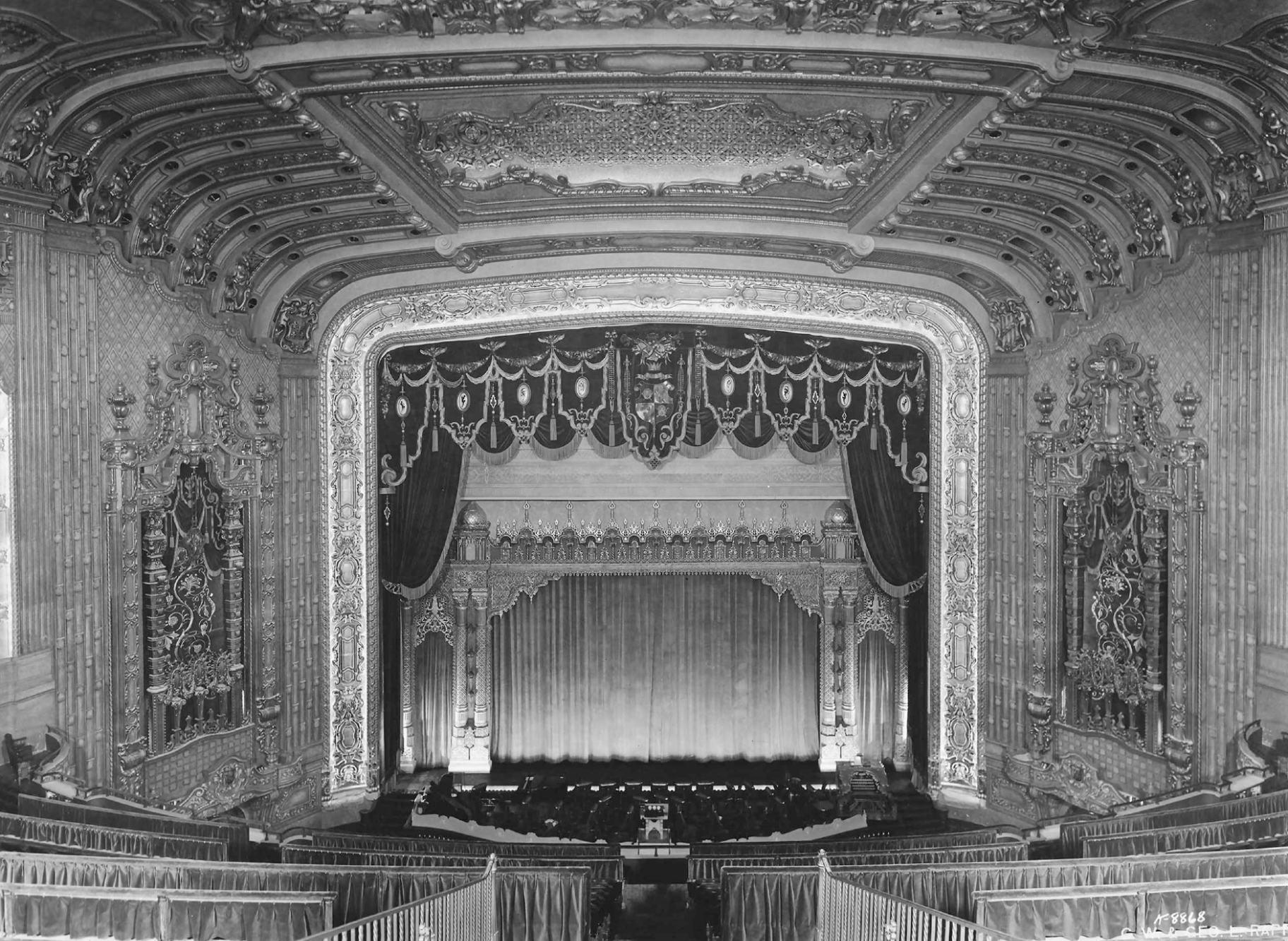 (Chicago Architectural Photographing Company)
The theater’s centennial is being celebrated with the just-released book “The Uptown: Chicago’s Endangered Movie Palace.”
“I have lived in the Uptown neighborhood for almost 20 years now,” said co-author Robert Loerzel. “I’ve walked past this building many times without going inside, and I could only imagine what is inside that huge hulking building. … If you’ve read about the theater or seen photos of its interior, none of that can quite prepare you for what you see when you step inside.”
The book is a treasure trove, tracing the development of the theater, its many lives and the ongoing preservation and restoration efforts.
“These immense spaces have so many details of architecture and art,” Loerzel said. “Little faces on the columns, sculptures, little flares of architecture. Pretty much every corner of the building has something like that to grab your attention.”
Syfczak echoed that, joking that despite his decades inside the building, every day he meets “a new friend, a face somewhere in the plasterwork.”
Loerzel’s co-author, Andy Pierce, said the theater’s many decades are one of the reasons he wanted to put the book together.
“This is the moment where we can bridge the generations,” Pierce said. “We’ve got people in their late 50s, 60s, 70s, 80s, 90s, who remember going there and can share their experience and why it’s important to them. The rest of us see the opportunity and the potential.”
Over the years, the Uptown went from a grand movie palace to a concert venue. Longtime concert promoter Jerry Mickelson of Jam Productions started booking shows there in 1975.
“This was the place that everybody wanted to play and will be again the place that everybody wants to perform at,” Mickelson said.
And when Mickelson says everybody, he means everybody: “Grateful Dead, Bob Marley, Frank Zappa, Genesis, Electric Light Orchestra, Peter Gabriel, John Mellencamp, Prince, Rick James, … Springsteen, a number of times. (They) just loved it.”
But Mickelson said he watched as the building’s owner at the time let it fall into disrepair. It closed in 1981. Mickelson bought it in a foreclosure auction in 2008 and says he’s determined to see it reopen.
“As I like to say, we’re not chasing a dream, we’re building a plan,” Mickelson said.
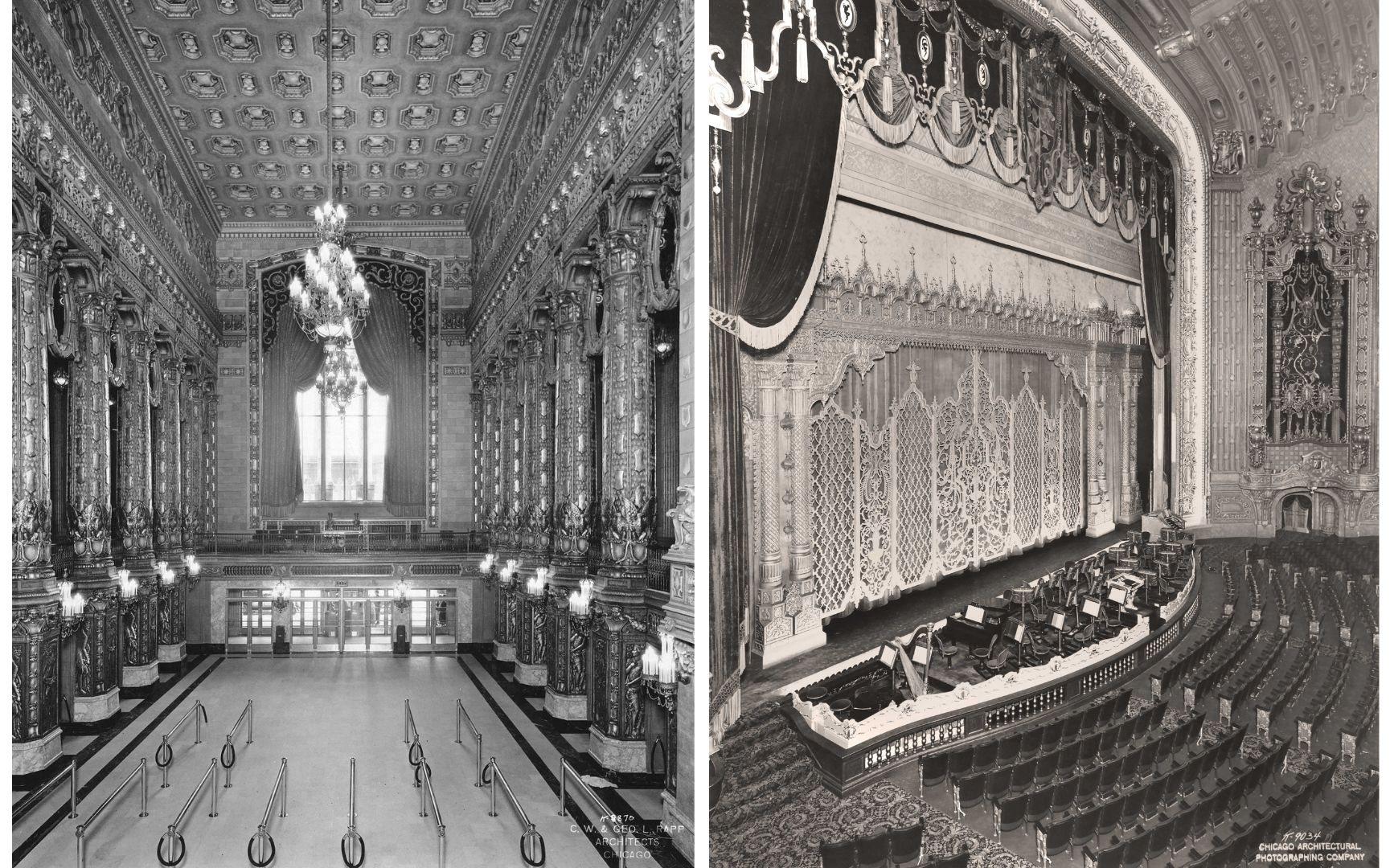 (Chicago Architectural Photographing Company)
For years, Chicagoans have been working to preserve and restore the city’s historic theaters. Last year, the Ramova in Bridgeport reopened its doors after a $30 million overhaul. But the massive scope of the Uptown — not to mention decades-old water damage — means a much bigger price tag: about $190 million, according to Mickelson’s team.
“This has to be a public-private partnership,” Mickelson said. “It’s an asset to the city of Chicago, and most importantly Uptown.”
The COVID-19 pandemic scuttled an earlier renovation effort, backed by public funding. Mickelson is confident he can pull together a mix of public and private support to bring the Uptown back to life. He’s been in conversations with key city officials, including 46th Ward Ald. Angela Clay.
Clay agrees the Uptown should be preserved and restored, to serve as both a concert venue and a community hub. As long as there’s sufficient private investment and benefits for the neighborhood, Clay is open to supporting the renovation with public funding — potentially from a TIF district in which the theater sits.
“I think that that’s the only way that you get this done, and I think that the communal benefits are also equally important from such a huge private business,” Clay said. “Obviously, the TIF is not solely for the Uptown Theatre, and that has been very explicitly shared with all parties involved. However, we do think that that is a potential benefit and source of revenue that we can use to get this theater back up and running.”
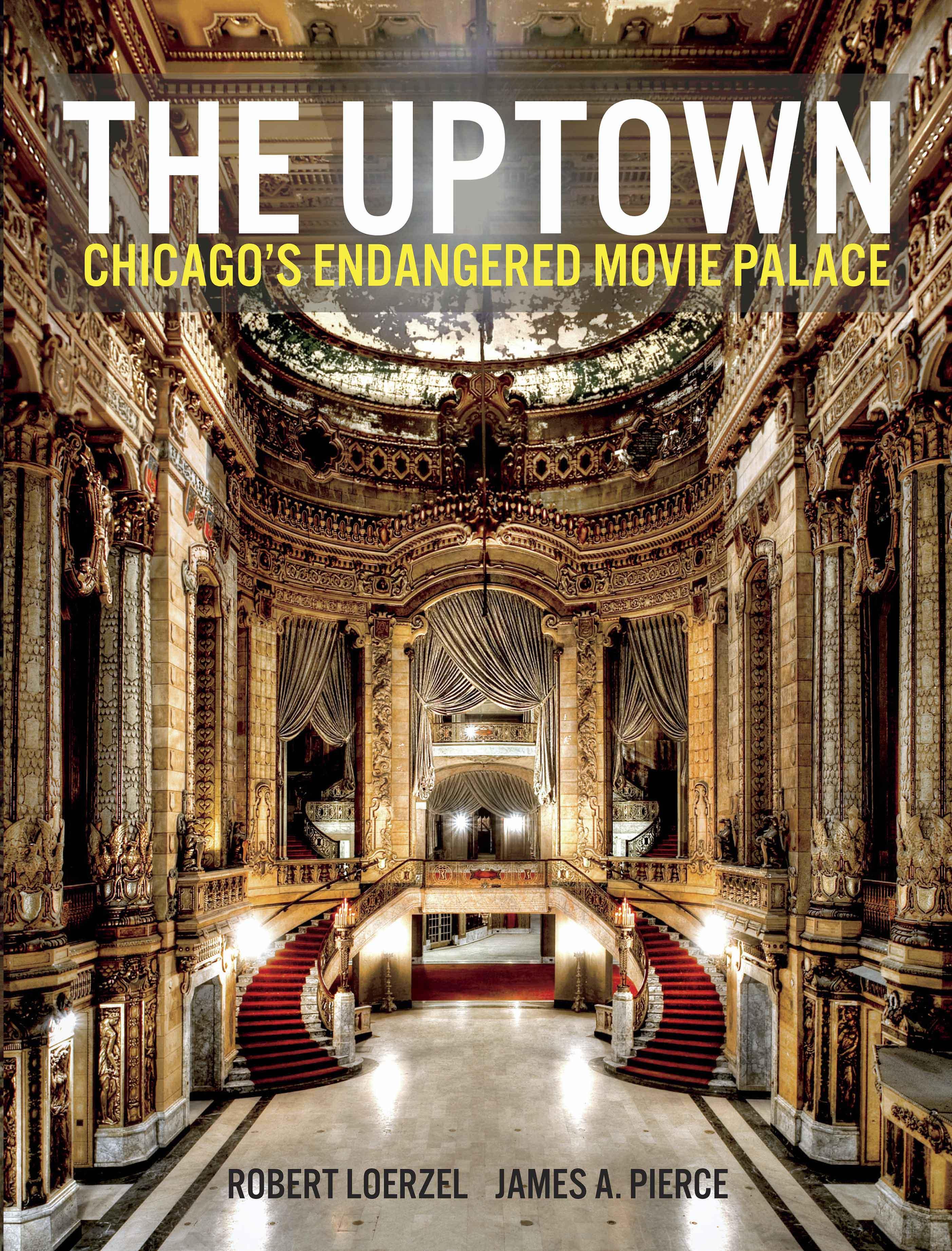 The cover of the new book “The Uptown: Chicago’s Endangered Movie Palace.”
Clay applauded Mickelson’s investment in the building to prevent it from falling into disrepair. She wants Mayor Brandon Johnson to tour the building during an upcoming day in the ward, and she hopes to get the city’s Planning and Development commissioner in for a tour as well.
“Our community is super hyped behind it,” Clay said. “We’re looking forward to the acts. We’re looking forward to the jobs. We’re looking forward to the revenue. We’re really excited about it.”
In the meantime, Pierce and Loerzel’s new book can not only give you a look inside, but a trip back in time. So too can a pop-up exhibit at the Chicago History Museum, where the authors did extensive research.
“I can’t stress enough the importance of those archives to understand the building and see it new,” Pierce said. “We could confirm different entertainers who appeared there, such as the Marx Brothers and Duke Ellington and others. We had this oral history, … and we were able to verify that through records and then share it.”
In August, neighbors and supporters of the theater crowded the street and sidewalk in front of the Uptown for the latest in a series of community portraits celebrating the theater’s anniversary. It’ll soon join its place alongside previous portraits at the Chicago History Museum pop-up, which runs through Jan. 4.
“It’s just heartwarming and it’s reassuring to see that support (for renovation),” Pierce said. “We just have to figure out how to do it.”
Contact Nick Blumberg: [email protected] | (773) 509-5434 | @ndblumberg