Science & Nature
Chicago’s Mushroom Club on Mission to Spread the Wonders of Fungi
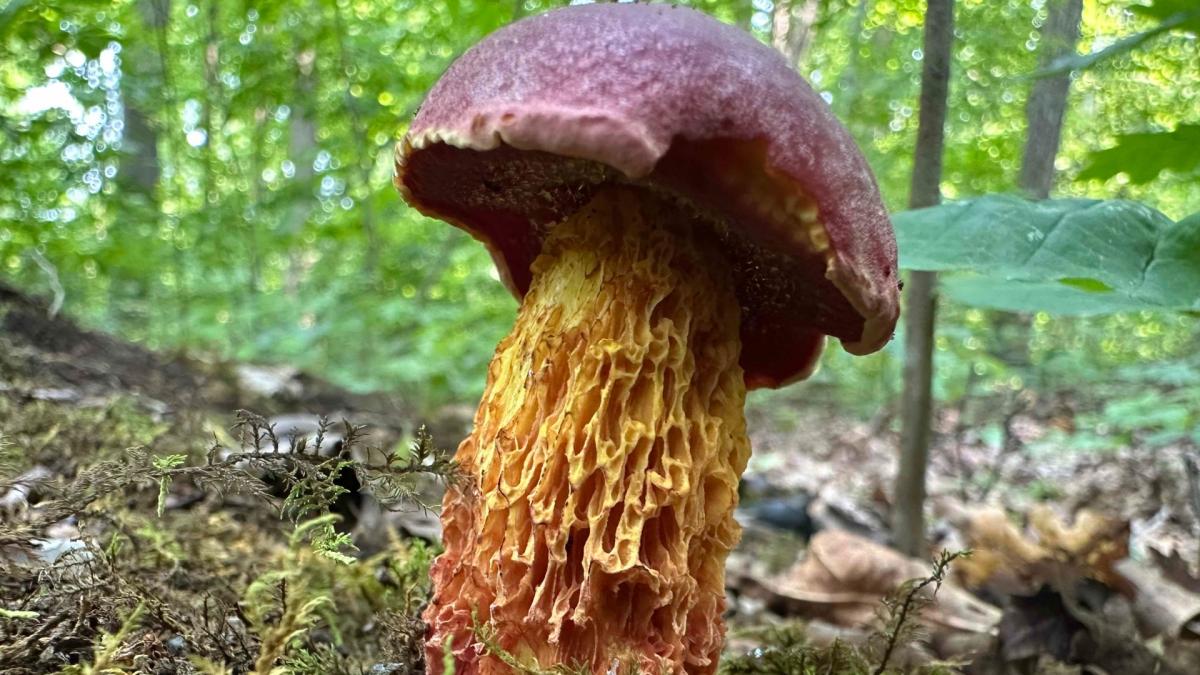 The Illinois Mycological Association will display fungi foraged in the region’s forests at the group’s annual show, Sunday, at the Chicago Botanic Garden. (Courtesy of Kate Golembiewski)
Depending on how you look at things, fungi is either the third-best or third-least known of the kingdoms of life.
There’s plants and animals, or animals and plants, in the top two spots with fungi trailing in the distance (never mind the two or three other kingdoms biologists don’t even totally agree on).
“Fungi have gotten the short end of the stick,” said Kate Golembiewski, a science writer who works in public relations at the Field Museum. “Compared to animals or even to plants, fungi have just been kind of pushed aside for a really long time.”
The Illinois Mycological Association (IMA), a group of fungi-philes of which Golembiewski is a board member, has been working for decades to give mushrooms’ public image a boost.
On Sunday, the organization will host its annual mushroom show at the Chicago Botanic Garden, where locally foraged fungi will take center stage in all their fascinating, weird, beautiful-ugly forms.
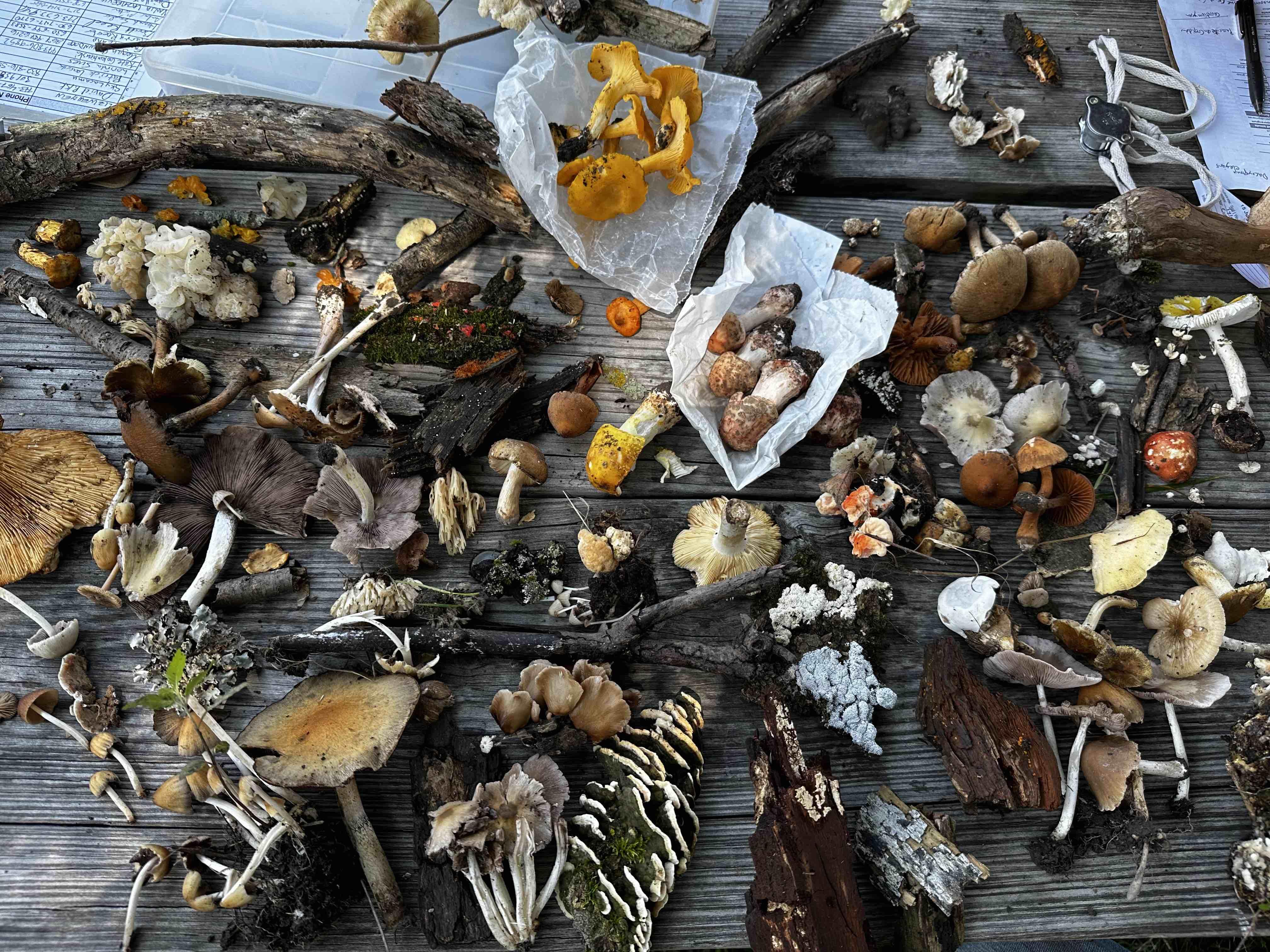 This amazing array of mushrooms barely scratches the surface of the estimated 1,500 species identified in the Chicago region. There are an estimated 1 to 5 million species of fungi globally. (Courtesy of Kate Golembiewski)
The event is also IMA’s largest recruitment effort. The organization promises fun with fungi but engages in serious business, too, namely a project to document all of the estimated 1,500 fungi species in the Chicagoland region and perhaps identify some new ones.
The group’s not in it just for bragging rights but to help fill major gaps in the scientific record.
Because, as a discipline, mycology — the study of fungi — has some catching up to do. Actually a lot of catching up to do.
“There’s a lot of really basic science that hasn’t been done yet,” said Wyatt Gaswick, assistant collections manager for fungi and lichens at the Field Museum, and a science adviser to IMA. “The distributions (of fungi) aren’t really well understood, and there are undescribed species all over the place.”
Picture a birder in Chicago heading out to a nature preserve with a field guide. Any species they spot will be contained in that guide, Gaswick said, but not so for mushroom hunters.
“There’s no mushroom guide that has all the mushrooms that you would find in Chicago,” he said. “People just haven’t done that research.”
The Field Museum has upwards of 350,000 species of fungi (including lichens) in its collection, a fraction of the estimated 1 to 5 million species thought to exist worldwide. The kind of exploration conducted in the 1700s on plants and animals is only now happening with fungi.
It’s an exciting time to be a mycologist, Gaswick said, “but also we feel the shortcomings of our field at the same time.”
The first step in ramping up discovery is simply getting more eyeballs on the ground.
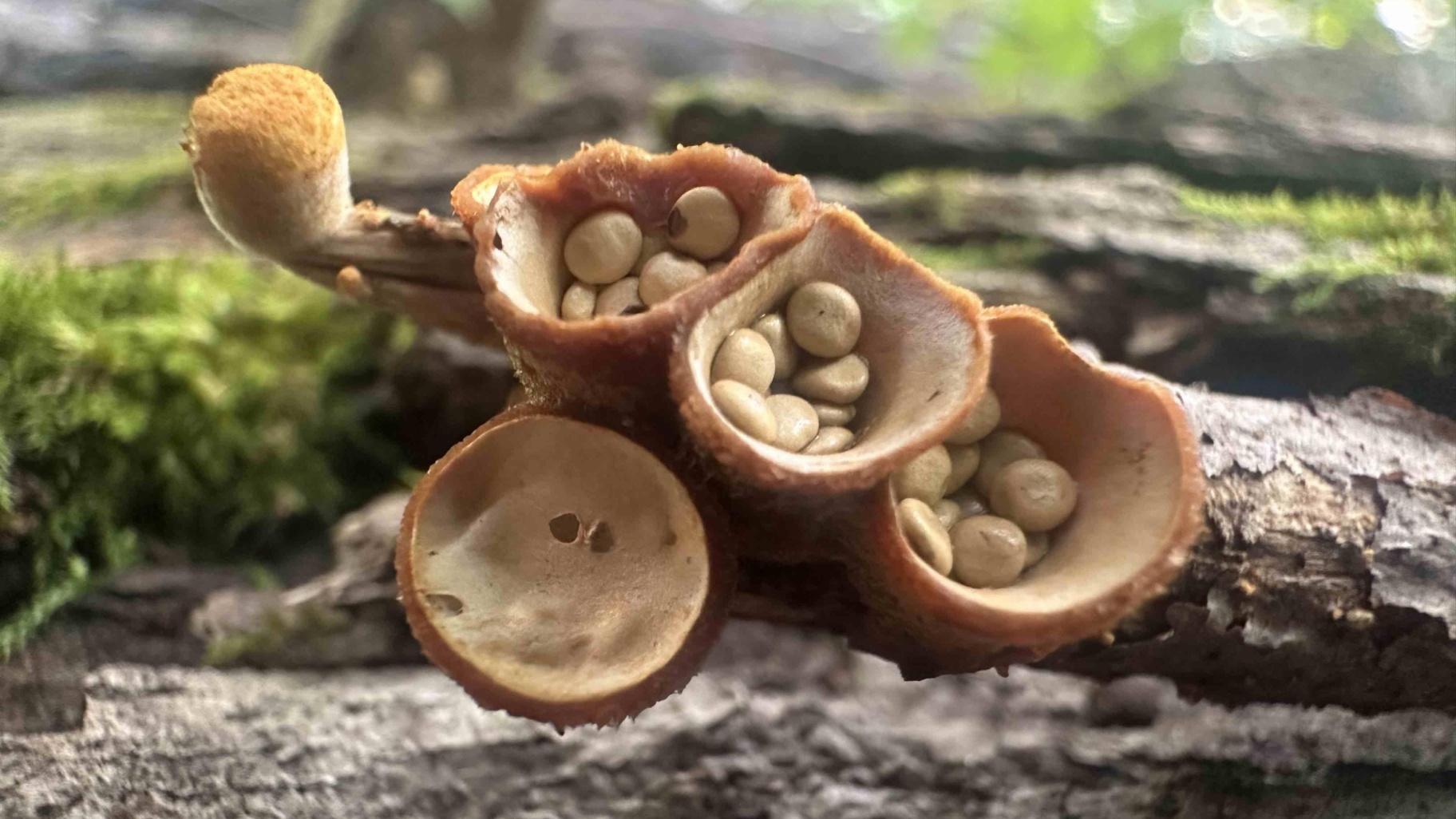 The bird’s nest fungus is named for the tiny cups that contain little packets of spores that look like miniature nests with eggs. (Courtesy of Kate Golembiewski)
It was at the IMA exhibit a couple of years ago that Golembiewski became hooked on mushrooms (the fruiting bodies of fungi), after being shown the charismatic bird’s nest fungus (Nidulariaceae).
“They’re these tiny little cups that contain little packets of spores that look like a tiny little nest with little eggs in it. … Fancying myself as someone who kind of knows some stuff about nature, I was like, ‘I’ve never heard of any of this,’” she said.
“Until you start knowing to look for it, you are blissfully oblivious. And then once someone tells you, ‘Hey, look, this stuff is here,’ it’s like those ‘I Spy’ books when you’re a kid,” Golembiewski continued. “I cannot stop looking for them and finding them. It’s truly incredible how much has been there the whole time and I just never noticed it.”
Hers is a common tale among converts to the wonders of fungi — the realization that a diverse array of wild mushrooms exists under our noses day after day, waiting to be seen.
“I started as a botany major and took a mycology class kind of as a joke because I was like, ‘Can there really be an entire course on mushrooms?’” Matt Nelsen, a senior researcher at the Field (and past president of IMA), recalled. "And I fell really, really hard for it. They were just so bizarre and different from everything else I’ve learned about. ... And then they’re just also really pretty and wild looking.”
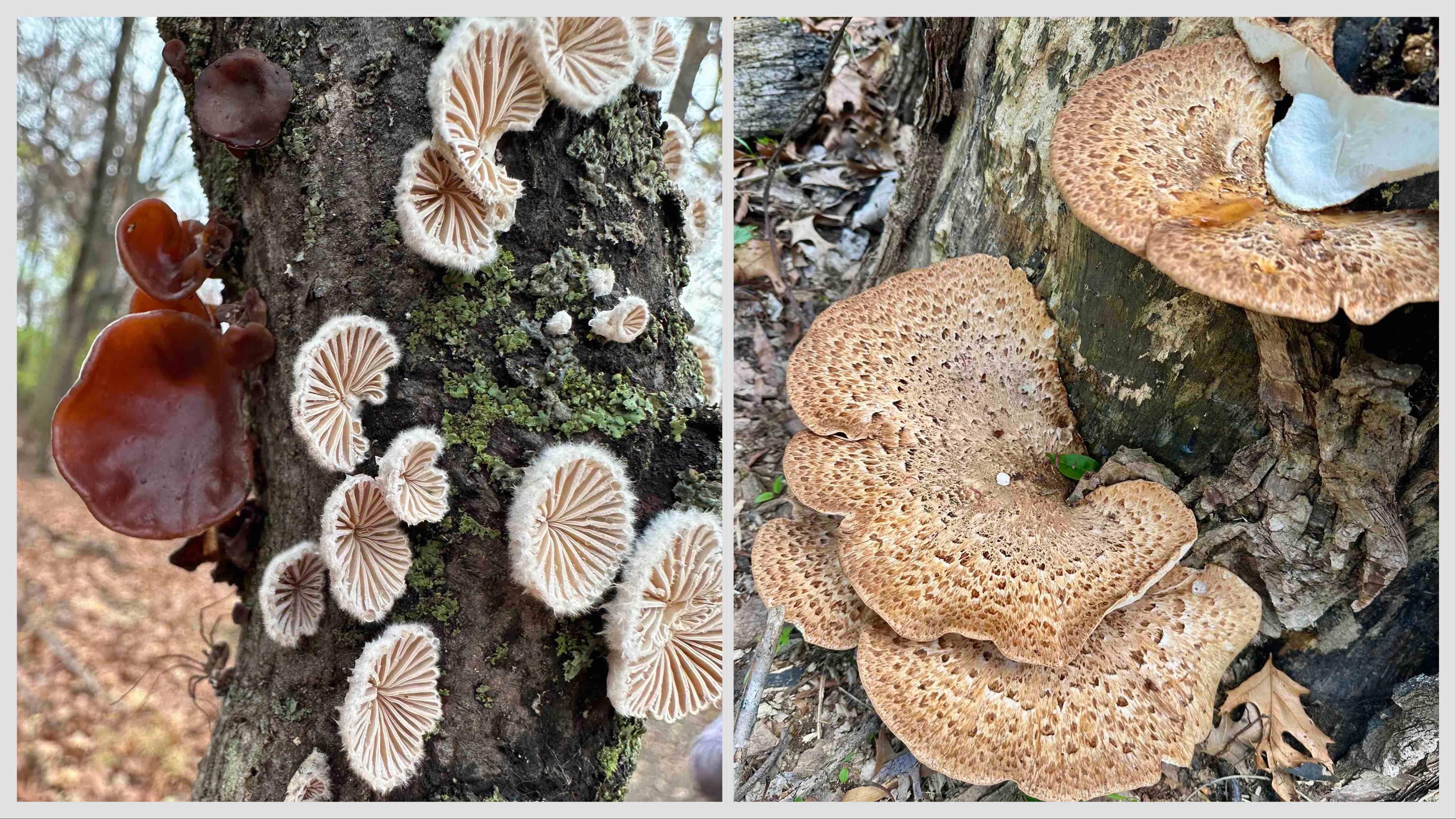 “They’re just fascinating, beautiful, ugly little weirdos,” Liz Weinstein, president of the Illinois Mycological Association, said of her obsession with mushrooms. (Courtesy of Kate Golembiewski)
For Nelsen and so many other fungi enthusiasts, superficial attraction was the gateway to obsession.
Photographer Liz Weinstein, the human behind the @mushroomphotography Instagram handle, became enamored with mushrooms on hikes and camping trips, and what started as a hobby has turned into a vocation.
Weinstein, now president of IMA, is in her third year of surveying, photographing and collecting fungi and lichen on Isle Royale in Lake Superior, a project undertaken in conjunction with the National Park Service and the Field Museum.
“We’ve been finding some pretty rare stuff up there,” Weinstein said. “Whenever I’m out in the field, it’s like, ‘What are we gonna find next? Is it gonna be something new? Is it gonna be something that we’ve seen before in the same place?’ (Mushrooms) are just totally full of surprises.”
This sense of participating in nature’s scavenger hunt runs strong among members of IMA, including people like Lorinda Sues, who joined the organization 17 years ago and is the club’s treasurer.
“Even after 17 years, every year I find new fungi that I’ve never seen before,” Sues said. “It’s just an ongoing cool thing that I really enjoy.”
That delight also underlies a deep appreciation for fungi’s ecology and ecosystem services, including their relationships with plants and the role they play in soil health, decomposition and carbon storage.
“A lot of people think that when things die that’s the end, but it’s actually the beginning for mushrooms and fungi,” said Abi Thomann, a relative newcomer to IMA. “They really are one of the biggest drivers of carbon cycling and other nutrient cycling. ... They make everything go around.”
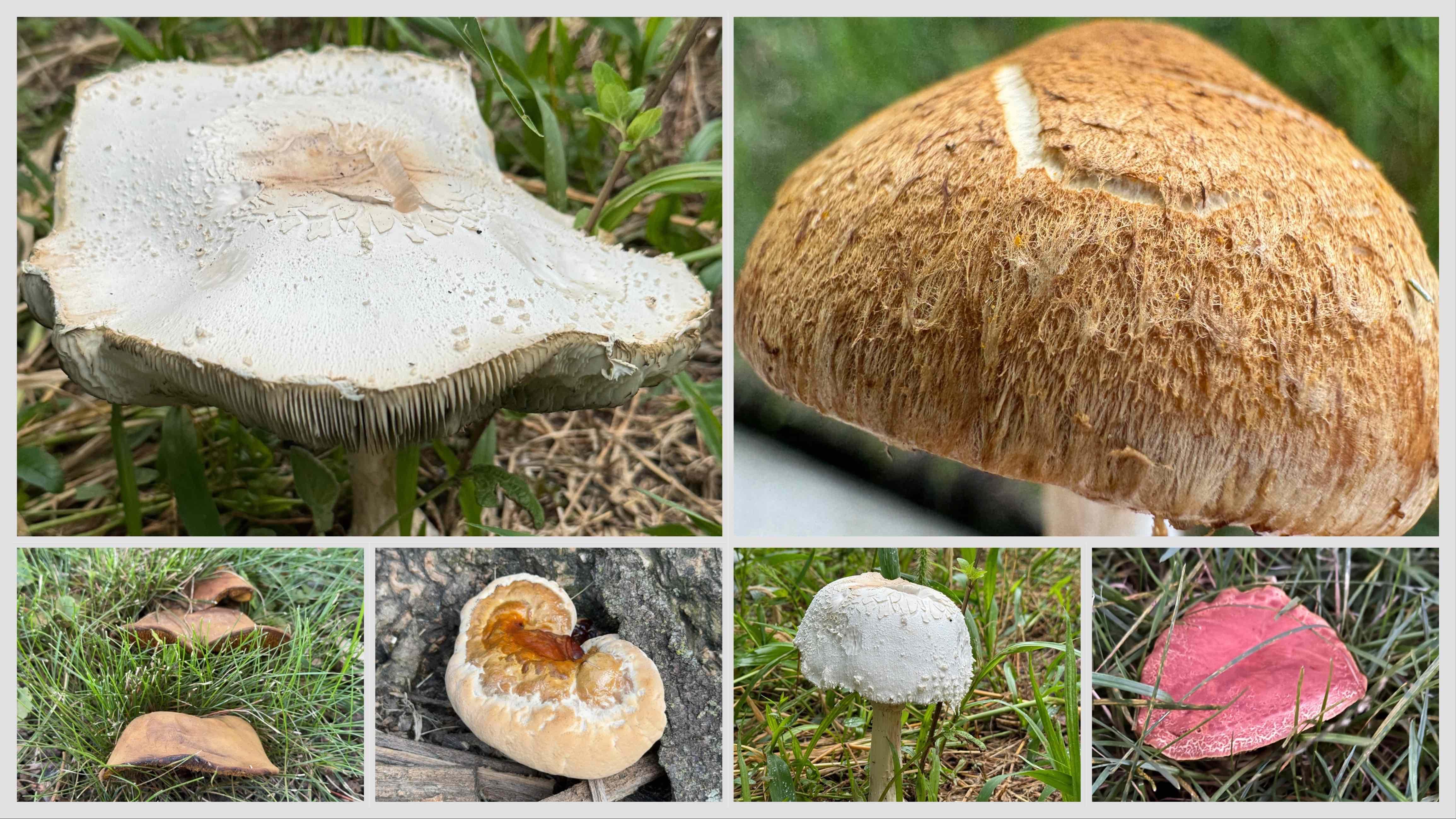 There are plenty of fungi species in Chicago. All of the mushrooms pictured were spotted in the city’s parkways. (Patty Wetli / WTTW News)
If fungi are so vital to life on earth, why are they still so poorly understood?
Part of the problem is the very trait that makes hunting for mushrooms so appealing — their elusive, ephemeral nature — also makes it challenging to study them.
“Sometimes you’ll find a mushroom in a spot and then you won’t see it there until 10 years later when the conditions are just right for it to come up again,” Gaswick said. “You just can’t go out and look and find all the fungi in an area without going out for years and years and years and years. You’re never going to find everything.”
Teaming up with IMA has enabled researchers at the Field Museum to cast a wider net and gather vastly more information than the institution could accomplish on its own, said Nelsen.
“This is a really great opportunity to work with community scientists to try to increase our understanding and knowledge,” he said.
People’s contributions can be as simple as photos uploaded to the iNaturalist platform, which provides GPS coordinates on where a fungus is located and when it’s fruiting (i.e., sprouting a mushroom). IMA members also take part in regular foraging trips into local forest preserves, with the proper collecting permits, Weinstein emphasized. (It’s illegal to collect from forest preserves, otherwise.)
“Novices like me are often learning alongside people who are experts with Ph.D.s,” said Golembiewski. “Anybody, regardless of how much or how little you know about mushrooms, you could still be playing a pretty important part in the work that scientists are doing to figure out what the heck these things really are.”
 Members of the Illinois Mycological Association, along with researchers from the Field Museum, identify mushrooms collected during a field trip. (Courtesy of Kate Golembiewski)
During these trips, the collected mushrooms are pooled together and identified. Some of the specimens will be taken back to the Field Museum for further analysis or preservation. And not just the rarities.
“Of course, everyone likes the big prize or something that you haven’t seen before,” said Gino Albert, IMA secretary. But for scientists and researchers, he added, it’s just as valuable to have common mushrooms in museum collections.
“It gives us a baseline of what’s there,” Albert said. “What if it’s not common in 10 years? Maybe something has changed in the environment, or whatever the fungi are feeding on has been affected. … Just because (a mushroom) is normal and you see it all the time doesn’t mean it’s not important."
A case in point is the common white oyster mushroom (Pleurotus ostreatus), found statewide in Illinois. Research published this summer suggests this native fungi is being displaced by the invasive golden oyster mushroom (see sidebar below).
But in the absence of centuries’ worth of comprehensive surveys — the baseline that Albert referenced — the impact of something like an invasive species is difficult to gauge, Gaswick said.
Future scientists will have the benefit of not only the old-school collecting and observational activity being done by IMA in tandem with the Field Museum, but new-fangled techniques such as DNA analysis as well.
The team is working on a DNA barcoding project that could eventually produce a unique DNA sequence for every species of fungi in the Chicago region. And that genetic data could then, in turn, be compared with soil and air samples to identify the presence of spores.
“That’s a pie-in-the-sky goal,” Nelsen said, but already DNA has led to the reclassification of some fungi species and the discovery of new strains and species, including the 2016 ID of a new chanterelle, Chicago’s own fungus, Cantharellus chicagoensis.
If nothing else, the members of IMA and scientists like Nelsen and Gaswick are setting the table for the researchers who come after them.
“We’re getting so many more observations. There’s a lot more data to work with these days,” Gaswick said. “As long as the data gets preserved, there’s going to be a lot of bigger base of knowledge moving forward for future scientists.”
To Eat or Not To Eat
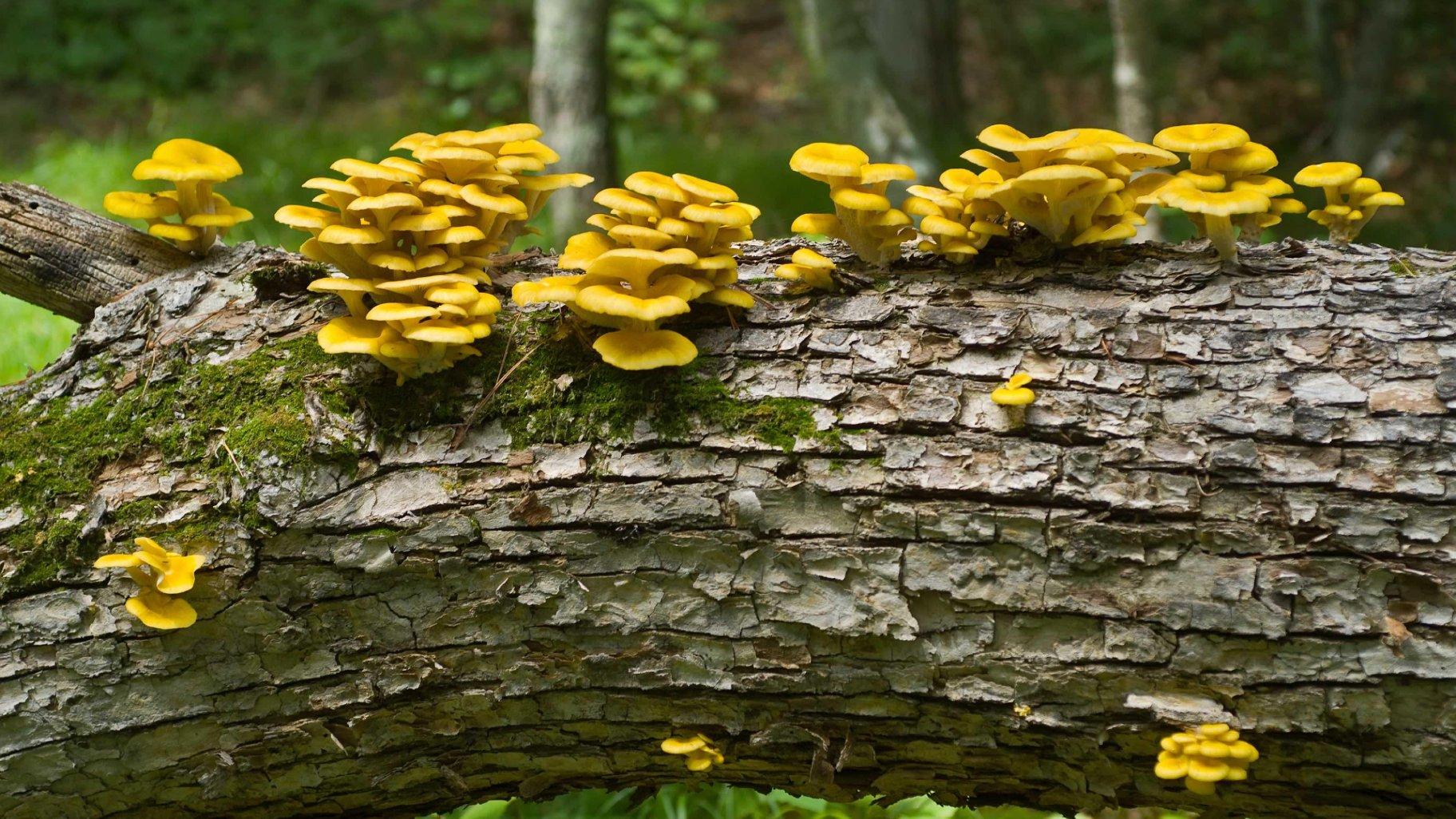 The non-native golden oyster mushroom is popular with home growers. It’s escaped cultivation — either accidentally or on purpose — and is now growing wild in forests, becoming an invasive species. (KirsanovV / iStock)
If mushrooms have flown under the radar from a scientific perspective, the same can’t be said of popular culture, particularly foodie culture, where foraging for mushrooms has its own devotees.
While “foraging for the table” isn’t part of Illinois Mycological Association’s primary mission, its members do get asked, fairly often, about whether a given mushroom is edible.
Because, not to beat around the bush, a lot of mushrooms are poisonous. The green-spore parasol (Chlorophyllum molybdites), commonly found in Chicago’s parkways, is nicknamed “the vomiter” for good reason.
“But there are plenty of poisonous, harmful plants out there that people don’t seem to pay too much attention to,” said Gino Albert, IMA’s secretary. “You don’t go out just eating any plant you find, right?”
When friends ask him “Will this hurt me?” or “Will I have a bad reaction?”, Albert responds with the first rule of mushroom club: Don’t eat it.
Second rule of mushroom club: Never consume a wild mushroom raw, even if it’s edible (See: Morels, 2023 outbreak).
You can handle a mushroom, by the way, even if it is poisonous. Just don’t ingest it, Albert said.
Some people think that foraging for mushrooms is harmful to the environment, but what’s actually been more problematic has been the proliferation of kits for cultivating mushrooms at home.
It’s believed that’s how the non-native golden oyster mushroom wound up escaping into the wild, where it’s since become invasive.
Contact Patty Wetli: [email protected]