Politics
Pritzker Signs ‘Sonya Massey’s Bill’ Into Law, Requiring Stricter Background Checks for Police Hiring
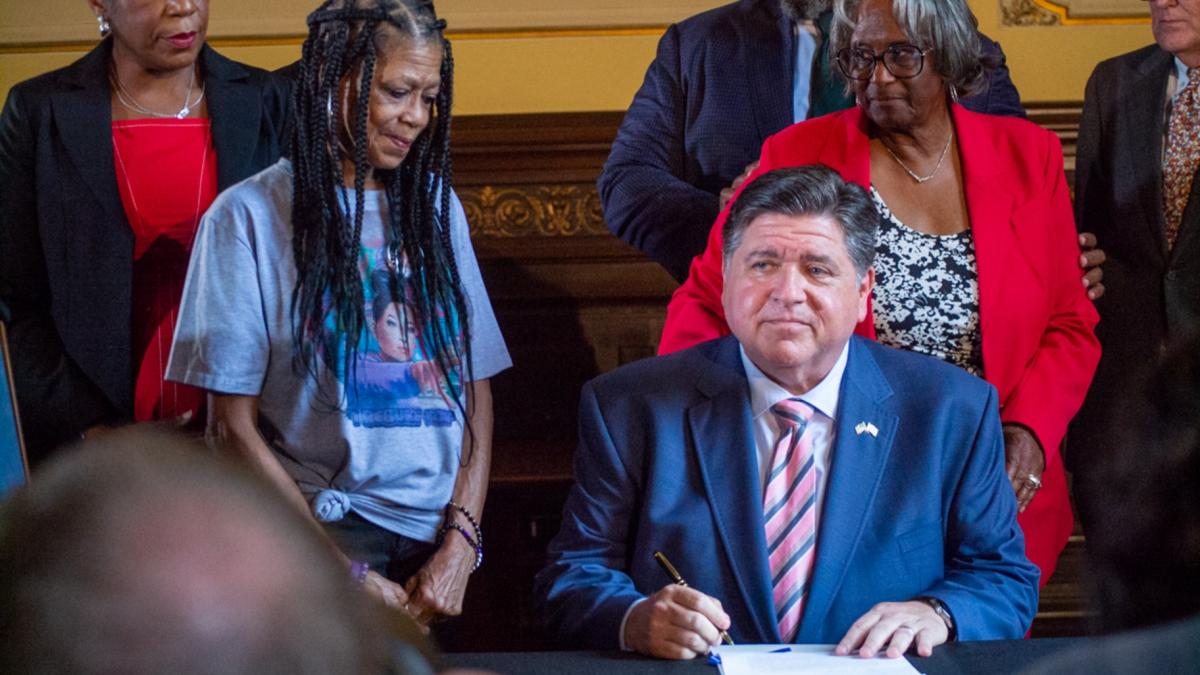 Gov. JB Pritzker signs Senate Bill 1953 into law on Tuesday, Aug. 12, 2025. (Jerry Nowicki / Capitol News Illinois)
Illinois will be strengthening its background checks for police officer hires made statewide through a new bill signed more than a year after a Sangamon County sheriff’s deputy fatally shot Sonya Massey inside her downstate home.
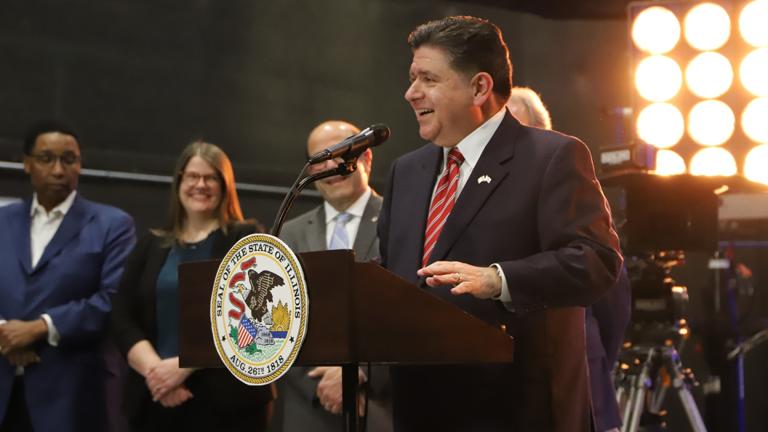
Gov. JB Pritzker on Tuesday signed into law SB1953, also known as Sonya Massey’s Bill, which will require law enforcement agencies to enact stricter hiring processes in response to Massey’s fatal shooting in July 2024.
“She loved and she was loving, taken from us far too soon,” Pritzker said. “What happened to her was the very definition of injustice. We can’t bring her back, but we can let her spirit guide us to action.”
The new law requires law enforcement agencies across Illinois to review all aspects of a person’s background and employment before offering a position as an officer, including physical and psychological fitness-for-duty exams, work performance records, investigations involving the applicant and any prior arrests or criminal convictions.
Pritzker said Illinois is setting a “national example” with this legislation.
Former Sangamon County sheriff’s deputy Sean Grayson faces first-degree murder and other charges in Massey’s killing.
On the night of her death, Massey, 36, had called 911 on suspicion of an intruder. One of the responding officers, sheriff’s deputy Sean Grayson, shot her three times after Massey, at his instruction, went to the stove to deal with a boiling pot of water.
Grayson was hired by Sangamon County despite troubles at past police agencies and two drunken driving convictions, a Capitol News Illinois investigation found. In one instance while working for Logan County, Grayson was told he needed “extensive” training after not listening to a supervisor’s orders to terminate a police chase. But when Grayson was hired by Sangamon County, the investigations in Logan County ended.
Grayson also served short stints at other central Illinois policy agencies, including Auburn, where the police chief complained Grayson was often too aggressive about drug busts and bragged about them on social media.
“When Sonya Massey feared for her safety, she did what anyone would do — she called for help,” Pritzker said. “That became a death sentence for her.”
The legislation also lowers the population requirement for counties to create police merit boards and commissions from 1 million down to 75,000, which the governor’s office said will help increase accountability statewide.
Pritzker said the legislation came from the significant community outpouring following the shooting, which led to the creation of the Massey Commission — a citizens’ commission that intends to issue recommendations to address systemic racism and mistrust in law enforcement.
State Sen. Doris Turner (D-Springfield), who helped launch that commission, said she’s been friends with Massey’s mother, Donna, since childhood and was also close with Massey, who referred to Turner as “auntie” and had visited with her just a week before she was killed.
Turner on Tuesday recalled getting the call from Donna about her daughter’s death, saying a shooting like that “is something that happens on television shows or something we hear about on the nightly news, not in my hometown and certainly not involving someone that is an integral part of my life.”
Turner said that her efforts in fighting for this bill were “the least political thing I’ve ever done,” but also “the most important thing I’ve ever done.”
“When we call law enforcement, it’s never a good day, and the expectation is that the responding officer will live up to the motto, protect and serve,” Turner said. “With Gov. Pritzker’s signature on this legislation today, I feel confident that going forward and over time, our communities and law enforcement will have built a trusting relationship.”
Capitol News Illinois contributed to this report.