Science & Nature
The Perseid Meteor Shower Is Peaking in the Next 2 Days. Here’s How To Get a Decent View
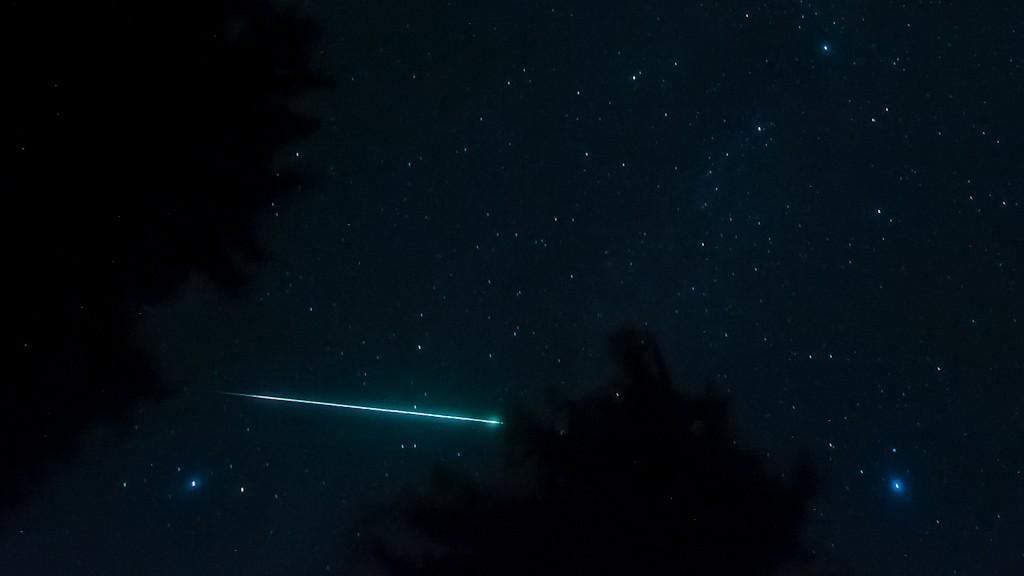 A Perseid captured in 2012. (Sky Schemer / Flickr Creative Commons)
The Perseid meteor shower is one of the biggest and most eagerly anticipated celestial events of the year.
Someone forgot to tell the moon.
The annual shower will hit its peak in the early morning hours on Tuesday and Wednesday, as Earth passes closest to the core of the comet debris field that generates the meteors. Under optimum conditions, people have observed 60-90 colorful Perseids per hour, but the glow of the moon is likely to cut that number at least in half, according to NASA.
Optimists say that just means the faintest Perseids will be hard to see, leaving the best and brightest.
For those who would be excited to spot a single meteor, here’s how to maximize your chances.
When
— The best time for viewing is between midnight and dawn, with the hour between 2-3 a.m. potentially seeing the most activity.
— Pro tip No. 1, from the American Meteor Society: Though the early mornings of Aug. 12-13 will see the highest number of meteors, the Perseids will still be streaking across the sky for several more days, granted with diminishing returns. Try Thursday or Friday morning, when there will be less interference from the moon as it continues to wane.
— Pro tip No. 2: There’s a type of Perseid, called an “earth grazer,” that skims across the upper regions of Earth’s atmosphere. They’re rarer and stretch lower along the horizon, but they last longer and for folks who have to work in the morning, they show up at a decent hour. Look for earth grazers before the moon rises, sometime between 9:30-10 p.m.
Where
— Find the darkest place possible. Tip: The more stars that are visible in a given location, the greater the chance of seeing a meteor. While that’s a bummer for city dwellers, Joe Guzman (aka the Chicago Astronomer) said he’s observed some “pretty cool lookin’ Perseids” from his “inner-city back yard.”
— Scan the northeastern sky. The meteors will appear to “radiate” from the constellation Perseus (hence the name), but locating the constellation Cassiopeia (roughly forming a “W”) is also helpful. The radiant will rise higher and higher in the sky overnight.
— Pro tip: Perseid meteors can be seen in all portions of the sky. Some people prefer to fixate on the radiant so they can watch Perseids fan out. But the meteors travel in all directions, and facing away from the radiant can offer views of longer Perseids and their trains.
How
— Turn your back on the moon, or use something like a building or tree to block its light.
— Be patient. Experts say to allow a minimum of one hour for meteor watching. Set up a chair, slather on the bug spray and kick back while scanning the skies. The Perseids will not be rushed.
Contact Patty Wetli: [email protected]