Science & Nature
Chicago Park District Mowed Down a Thriving Natural Area. Mistake? Nope. Just ‘Systemic Failing’ to Communicate
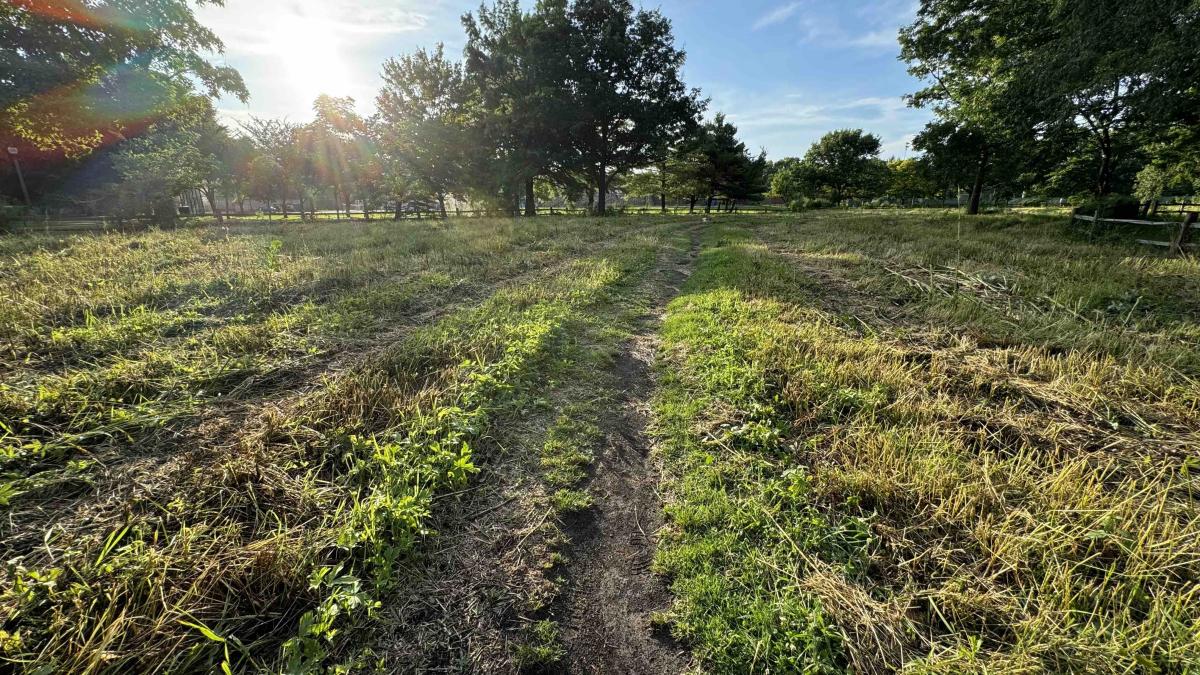 A natural area in Winnemac Park that had been blooming with native plants has been mowed down without any warning to volunteer stewards, the park advisory council or community at large. (Patty Wetli / WTTW News)
Amy Williamson’s phone started blowing up Wednesday morning with urgent texts from neighbors.
“Come quickly!” they said. There was an emergency at Winnemac Park in the Lincoln Square community, where Williamson serves on the advisory council and is the lead volunteer steward for the park’s natural areas.
“What are we talking about here?” Williamson wondered as she read the cryptic notes. “Are you finding bodies?”
When she arrived at the park, it did resemble a crime scene, of sorts. Thousands of plants in one of Winnemac’s sizable prairies had been mowed to the ground. An acre of blooming bee balm, Culver’s root, spiderwort, dogbane, cup plant and milkweed had all been chewed up and matted down while neighbors watched in horror.
And the contractor responsible for the deed — on instructions from the Chicago Park District — was preparing to do the same throughout the park.
Williamson pressed pause on the operation and dialed the Park District, asking for an explanation.
What she was told, she said, made sense: After a controlled burn in Winnemac’s prairies late last fall and the subsequent reseeding of the natural areas, the next step in managing the prairies was to follow up with a big mow so that new seedlings don’t have to fight with larger, established plants.
“While mowing can be jarring to see, the overall goal is to increase the odds of success of native plants to improve the long-term ecological quality of an area,” the Chicago Park District told WTTW News in an emailed statement.
“The rationale made perfect sense to me in terms of what was best for the plants,” Williamson said.
But while she’s not questioning the ecological science behind mowing, Williamson is questioning the timing — when many of the flowers are not only at their most beautiful but most beneficial to pollinators — as well as the scale of the mowing and, perhaps most importantly, the lack of communication.
“My problem is that there was never any conversation about what was best for the community,” Williamson said.
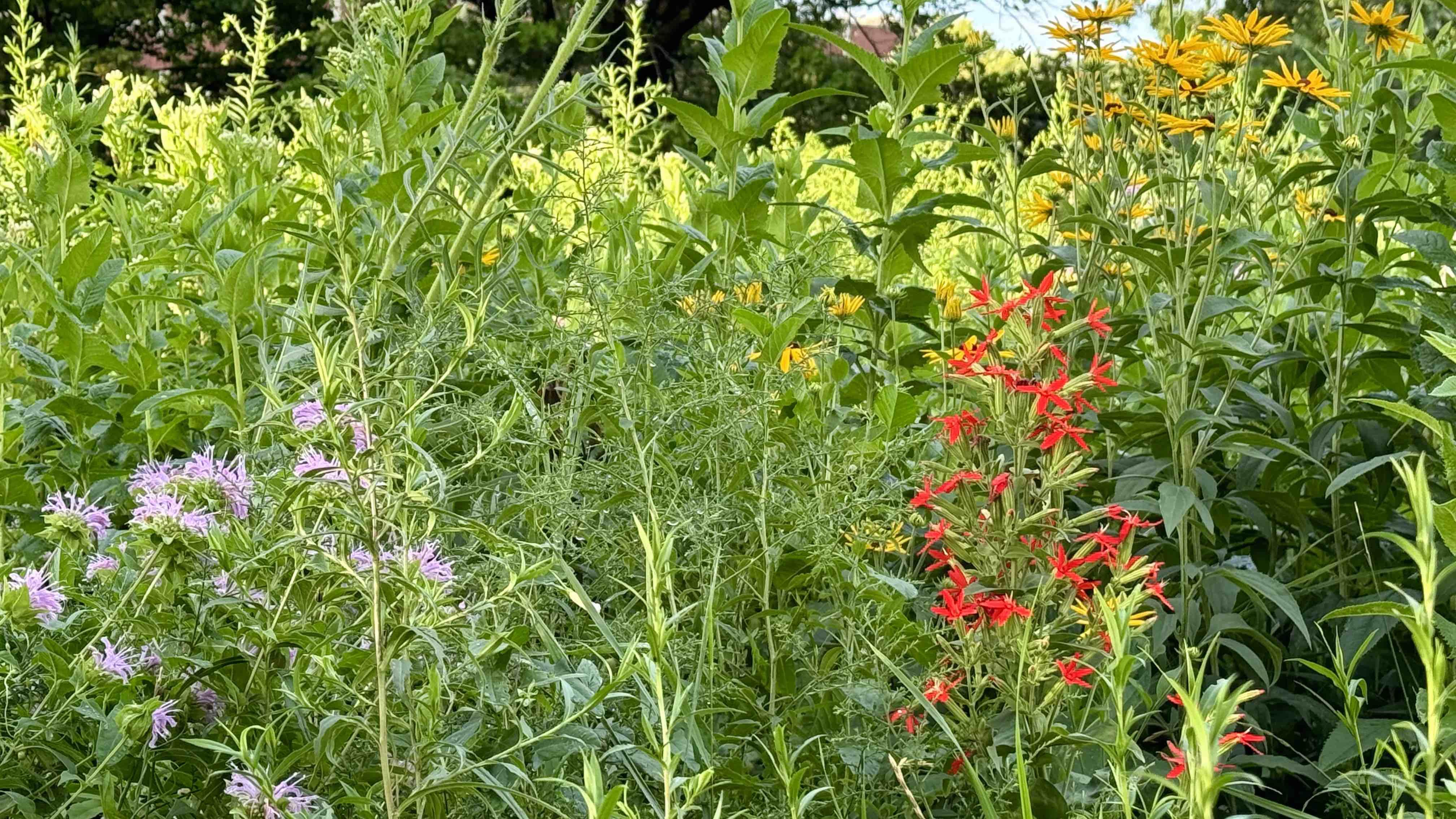 Community members kept the Chicago Park District from mowing other areas of Winnemac Park. This section is still in full bloom. (Patty Wetli / WTTW News)
The only notice she had received prior to Wednesday was an email from the Park District saying to expect mowing of “select” areas. That didn’t set off any alarm bells, Williamson said, because it’s not unusual for the district to mow some areas of the prairies to control invasive plants or even aggressive native species like goldenrod.
But what happened went far beyond the definition of “select” areas, she said.
“All three of the big prairie areas were scheduled to be mowed at the same time on the same day. And that was very shocking," Williamson said.
Winnemac, she noted, is a quirky park, cobbled together 30-some years ago by combining Park District acreage with the grounds of two Chicago Public Schools — Chappell Elementary and Amundsen High School. There’s no fieldhouse, no bathrooms, no programming. What defines the park are its prairies, she said.
“It was not an overnight sensation, but now of course it is spectacular and beloved,” said Williamson, who’s lived in the neighborhood long enough to remember when the park was reconstituted in its current configuration.
“People in the community really feel a sense of ownership for these natural areas,” she continued. “We have Missouri ironweed that’s 14 feet tall in August and September, those beautiful purple blooms. We have paths where you can walk through and there’s all these different flowers and grasses and birds. It’s peaceful and it’s cooler on a hot day when you walk in there. … It just makes you feel like you’re not in the city for a few minutes.”
In a matter of hours, it would have all been gone had neighbors not all but thrown themselves in front of the mower.
“That would completely change how the park looks and how people use it, in one fell swoop, without any notice or any conversation about that. And that was very upsetting to the community,” Williamson said.
‘Lack of Respect’
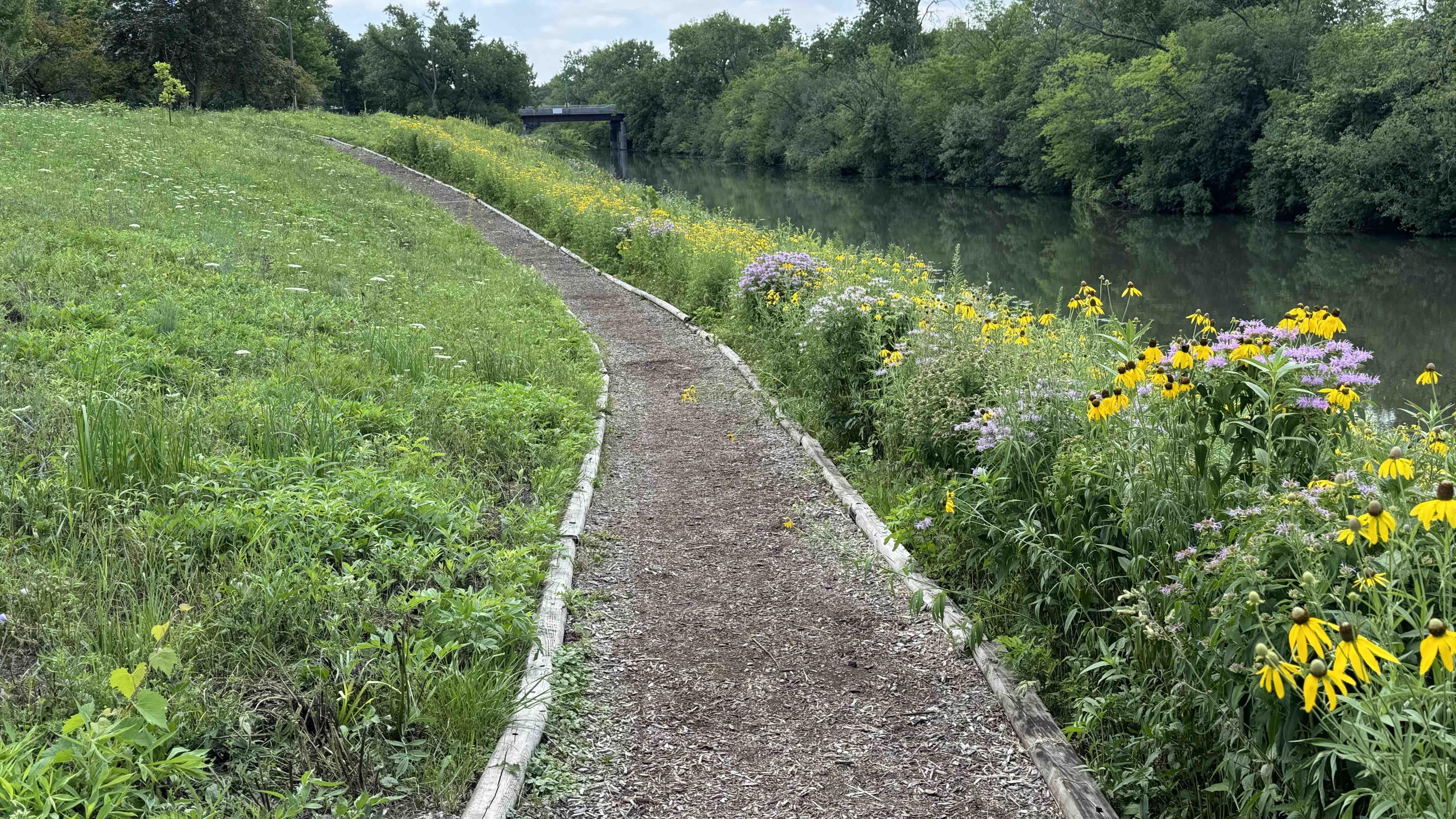 In June, the Chicago Park District mowed part of the natural area (left side of trail) in Legion Park on the North Side. There’s no advisory council or volunteer steward at Legion, though WTTW News did, back in June, ask the Park District to explain the mowing. The district didn’t provide a response. (Patty Wetli / WTTW News)
This is not the first time stewards have been blindsided by Park District activity in natural areas.
At the May meeting of the district’s board of commissioners, Carol Johnson, lead volunteer steward of the Garfield Park natural area, recounted a situation similar to what Williamson experienced.
In August 2024, Garfield Park’s entire natural area was mowed with “no communication with us at all,” Johnson said.
She asked commissioners to address what she called a “lack of accountability and lack of respect for the stewardship program.”
“It doesn’t make sense that everything done in the Garfield Park natural area bypasses me, and I’ve been the lead volunteer steward for over five years,” Johnson said. “And the community is really, really upset about that. … We want better communication, period, overall.”
The Park District did not make anyone available to WTTW News for an interview to discuss stewards’ concerns.
‘Systemic Failing’
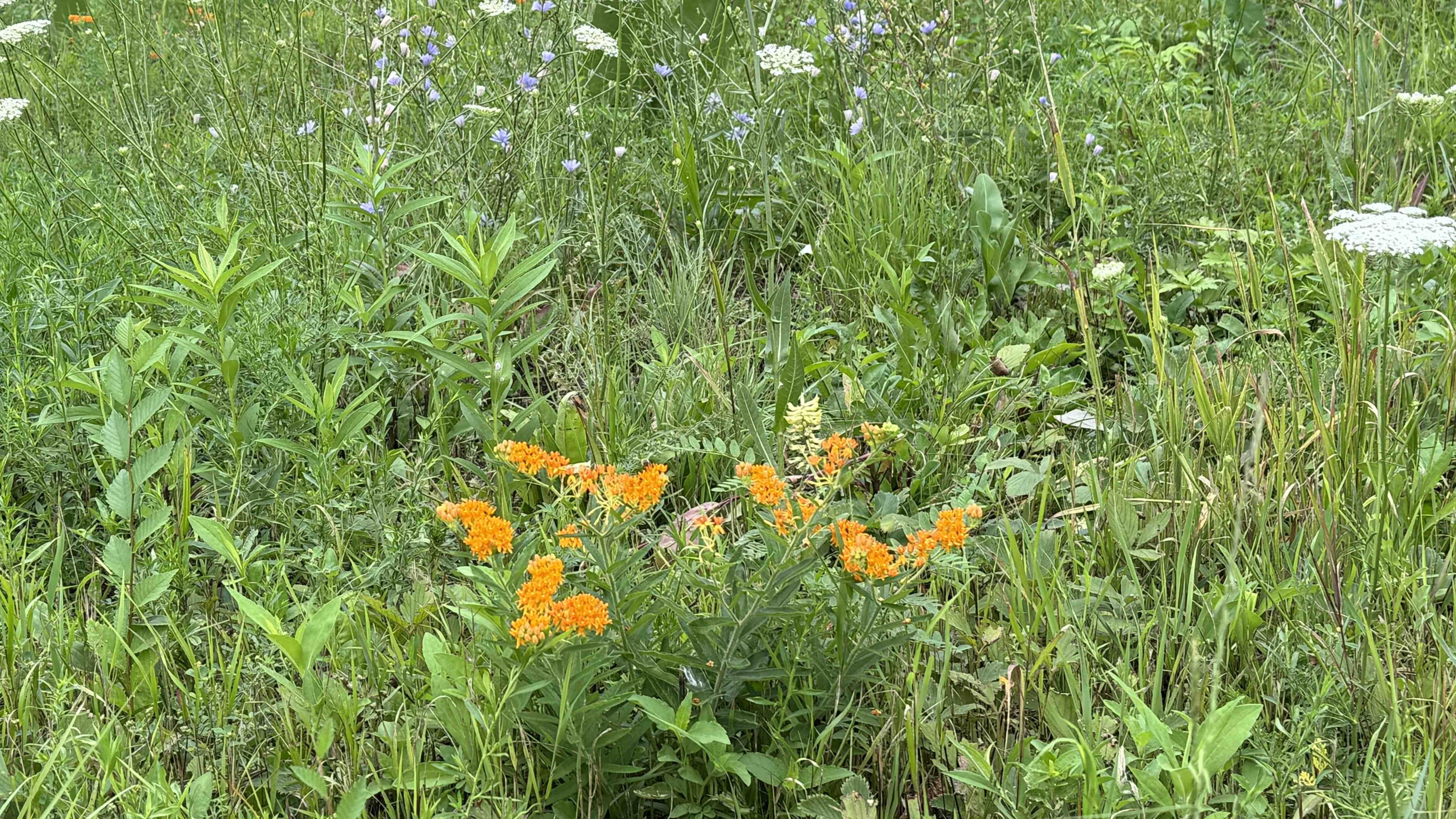 The Park District said mowing suppresses weeds and invasive species, helping natives establish a foothold in natural areas. In Legion Park, native butterfly weed is thriving in the mowed section, but so is chicory and Queen Anne’s lace. (Patty Wetli / WTTW News)
With some 2,000 acres of natural areas spread across more than 90 parks, the Park District, by its own admission, relies on volunteers to assist with habitat restoration, cleanups and community engagement.
It’s stewards like Williamson and Johnson who organize work days, put in hours of grunt work and serve as champions of their natural areas.
Their relationship with the Park District is meant to be collaborative, according to the district’s Community Stewardship Program guidelines. And it often is, said Williamson, who had nothing but kind words for the district’s natural areas staff.
But, she added, there has also been a “systemic failing in terms of how they choose to communicate with the community.”
The district wants strong advisory councils, Williamson said. “Guess what? You have a robust council (at Winnemac) that’s very unhappy.”
If there’s a silver lining to be had, it’s the outpouring of support the advisory council and natural area volunteers have received from neighbors in light of the unexpected mowing.
In a social media post to the community, the council stated its intention to halt any additional mowing this summer and vowed to “continue to work to make sure your voice is heard by the city.”
Contact Patty Wetli: [email protected]