Science & Nature
4 Piping Plover Chicks Just Landed in Waukegan. Ecologists Released the Captive-Reared Fledglings in Hopes of a New Generation
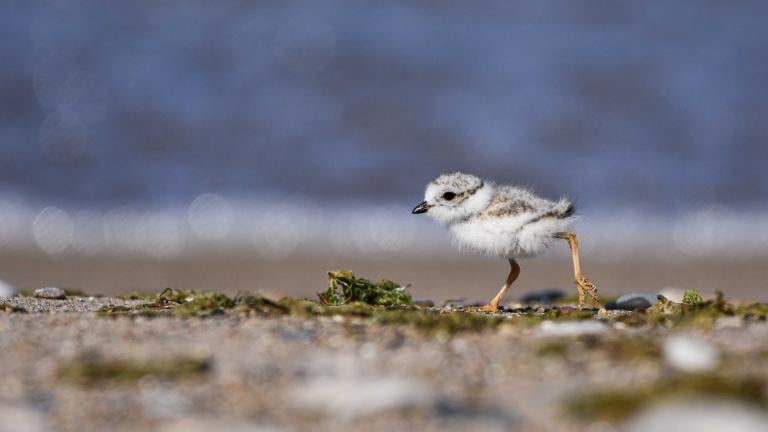
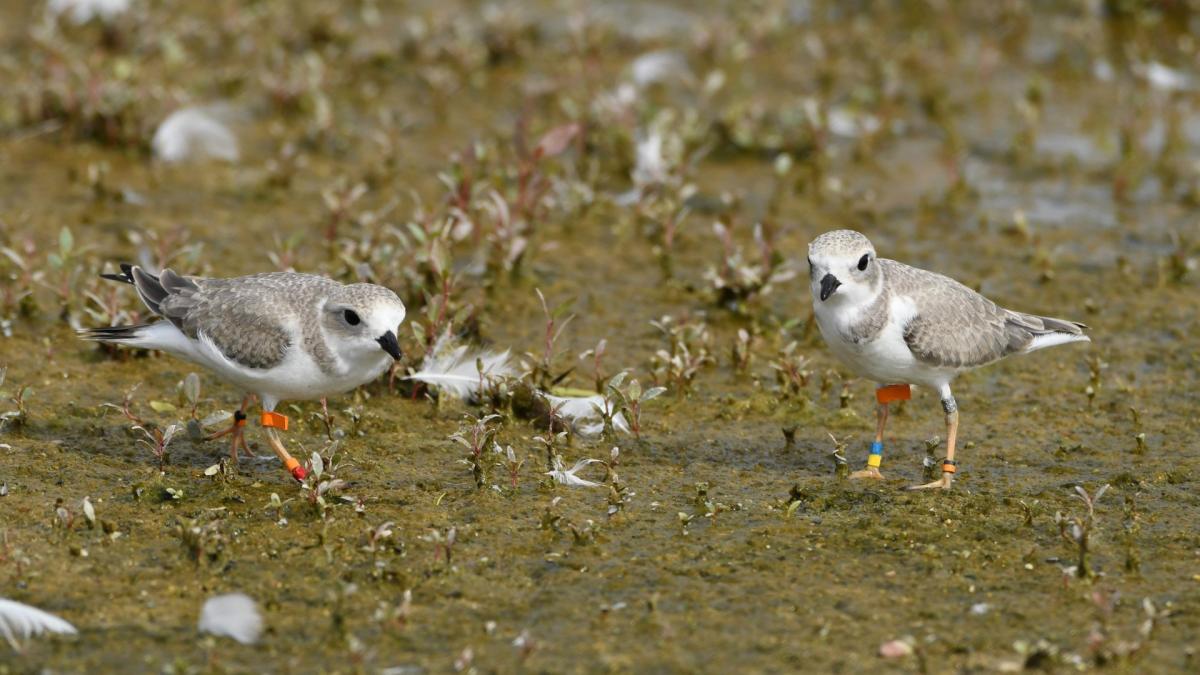 Two of the captive-reared plovers released in Waukegan, July 21, 2025. (Oliver Slater / Sharing Our Shore-Waukegan)
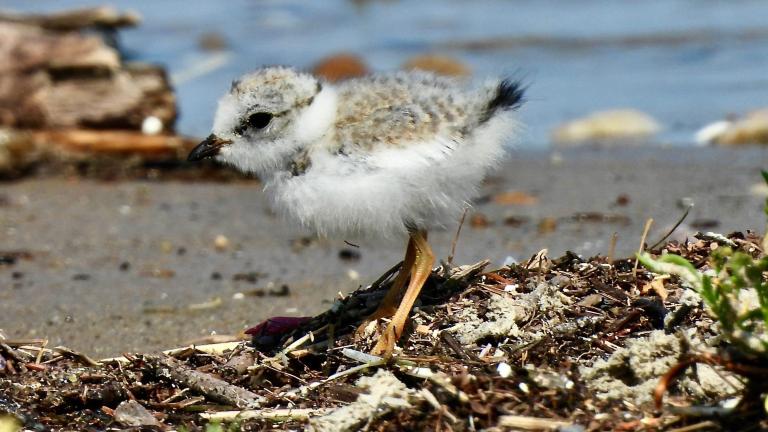
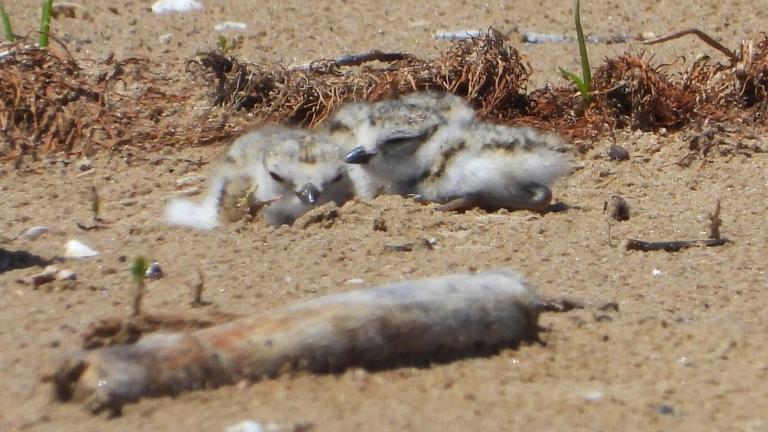
Just as piping plover season was beginning to wind down, volunteer monitors in Waukegan have been called back into action, with four captive-reared chicks released on a Lake County beach earlier this week.
When Carolyn Lueck, co-leader with Matt Tobin of the Sharing Our Shore–Waukegan plover monitors, announced the release to her team via Zoom, the response was immediate.
“They were competing to see who could come out first,” said Lueck, who is also president of the Lake County Audubon Society.
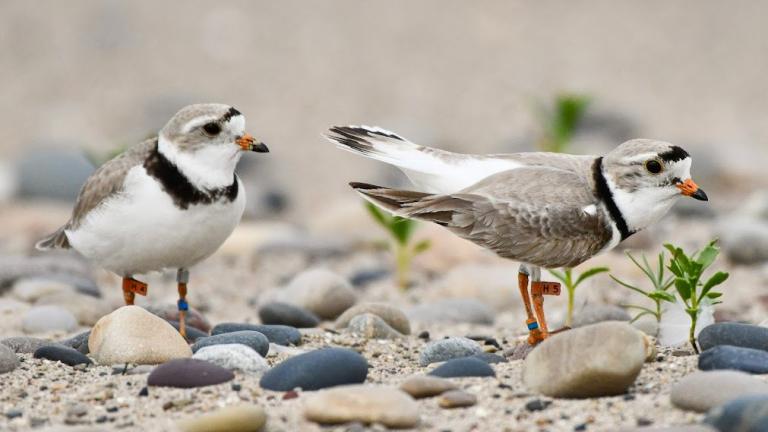
The arrival of the four chicks — two males and two females — was a much-needed morale boost for monitors after Waukegan’s piping plover mates, Blaze and Pepper, lost three of their four hatchlings this summer. It was a stark contrast to the pair’s first charmed breeding season in 2024, when they successfully reared three chicks.
Their lone survivor in 2025, the newly named Aster, has immediately taken to the newcomers, Lueck said.
“All five of them were together,” she said. “It was magical.”
The chicks will spend the next two to three weeks gaining weight and honing their flight skills as they prepare to migrate south.
Even though Aster had the advantage of being schooled by Blaze and Pepper (who’ve flown the coop on their own migrations), Lueck said it’s been amazing to see how, even without the benefit of parental guidance, the captive-reared plovers have demonstrated survival instincts.
“If a helicopter flew overhead, they knew to crouch down,” she said.
Waukegan’s fab four are among 33 chicks raised this year at a captive rearing station in Michigan. The Illinois Department of Natural Resources and the U.S. Fish and Wildlife Service coordinated the Waukegan release, in the hopes that the birds will return to Lake County in 2026 and add to Illinois’ growing piping plover population.
It’s a strategy that’s been successful so far: Blaze and Pepper were captive-reared and released in Waukegan in 2023 and have returned to breed two years running. One of their 2024 chicks, Sage, found a mate this summer and fledged three chicks on Michigan’s North Manitou Island.
Sea Rocket, another captive-reared piping plover, was released at Chicago’s Montrose Beach in 2023 and has also returned two years in a row to breed with wild-born Imani at Montrose.
Lake County’s vast expanse of protected shoreline makes it an ideal site for additional plover nests, Lueck said, and historically, the area has supported greater numbers of the birds.
“Chicagoans used to take the train (here) to view plovers and prairie chickens,” she said, in the decades before the Great Lakes population dwindled to the point of being an endangered species.
In an interesting twist, the sex of the captive-reared plovers was determined by taking blood samples from their eggshells — a test that isn’t possible with wild-born chicks, whose sex remains a mystery until their first breeding season.
Waukegan’s two males were rescued from the same nest in northern Michigan and the females came from a nest in the Upper Peninsula, ensuring genetic diversity if members of the foursome pair off, Lueck said.
The city has been reveling in its status as a hub for the endangered piping plovers, even going so far as to put an image of the birds on Waukegan’s city sticker.
Building those connections with city officials and Waukegan residents will be key for the plovers if their habitat is to be preserved, Lueck said.
Because if piping plovers breeding on a crowded Chicago beach seems a precarious choice, Blaze and Pepper’s nesting site is even more so: It’s an EPA superfund site.
Waukegan’s plovers have been thriving on a stretch of restricted beach that’s part of the Johns-Manville property, a former manufacturing plant and disposal area for waste including asbestos. Operations ceased in 1998 and extensive cleanups ensued.
Per the EPA: “Most of the site is a landfill with waste buried under protective covers that can’t be disturbed. However, efforts to clear portions of the site could provide a pathway to partial redevelopment of the site.”
The question on Lueck’s mind is what “redevelopment” could entail. “Can this be redeveloped for industry?” she wondered.
Given that Illinois Beach Nature Preserve immediately borders Johns-Manville to the north, the presence of the plovers helps make the case to extend the preserve.
But those are conversations for another day.
Waukegan monitors currently have their hands full keeping track of five active plover fledglings, and Lueck is also on pins and needles waiting for news of Blaze and Pepper from her contacts down south.
Her involvement with the plovers has been nothing short of life-changing, Lueck said. “I keep coming back to the word ‘magical.’”
What’s in a name?
Without further ado, the four captive-reared Waukegan plovers are:
— Ray (male), named for Waukegan native, author Ray Bradbury.
— Benny (male), for Waukegan native, entertainer/comedian Jack Benny.
— Dandelion (female), for Bradbury’s semi-autobiographical novel, “Dandelion Wine.”
— Genesee (female), for Waukegan’s historic Genesee Theatre.
Contact Patty Wetli: [email protected]