A Safer City
Research Project Tries to Reimagine Chicago’s Approach to Public Safety
 (Michael Izquierdo / WTTW News)
New research suggests Chicago is hampered by a lack of both political will and the capacity to serve the public in matters including mental health crises and other emergencies. It offers alternative solutions to policing that would better serve the public and free up police to investigate more serious crimes.
It comes at a critical juncture in the federal consent decree process involving the Chicago Police Department. The city is in full compliance with just 7% of the consent decree, a federal court order requiring the CPD to change the way it trains, supervises and disciplines officers.
Researchers from the Policing Project at New York University School of Law’s Reimagining Public Safety Initiative suggest police are called into many situations for which they lack the necessary training or skill set — including situations involving drug use, homelessness and noise complaints — and that an overreliance on police leaves serious problems unaddressed.
This report used interviews and community conversations with nearly 70 Chicagoans about their personal experiences with policing and public safety. The project also had more than two dozen meetings and interviews with current and former Chicago municipal officials and Chicago Police Department contractors and consultants.
The research suggests expanding upon existing alternatives to traditional policing, and that CPD needs to build a comprehensive community policing strategy to build connections with the people it serves.
Researchers acknowledged the work involving Chicago’s existing alternatives to traditional policing. These programs include the Crisis Assistance Response and Engagement Program (CARE), gun violence efforts and the Chicago Neighborhood Policing Initiative (CNPI).
The report found Chicago residents, particularly in marginalized neighborhoods, feel unsafe and distrustful of both the police and the local government. Racial bias, slow response times and ineffective crime prevention efforts were major concerns.
Some respondents expressed empathy for the police but criticized systemic issues within the department.
The project calls for expanding CARE to cover more areas and hours, incorporating non-police responders for various 911 calls and improving community policing.
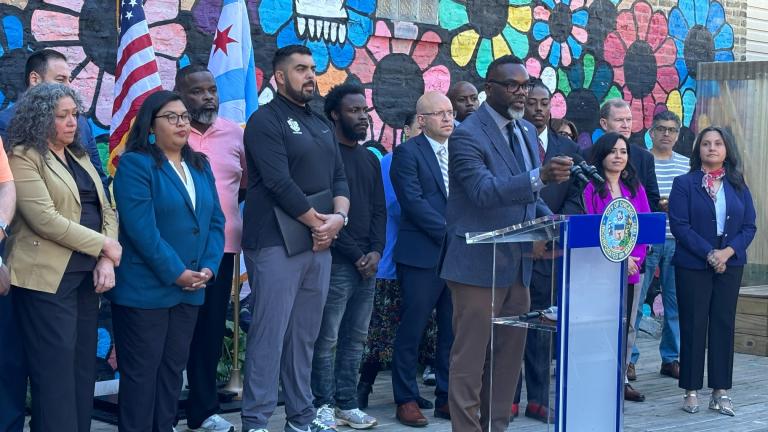
Gaps in mental health services have been a critical issue for years in Chicago. Mayor Brandon Johnson in May announced plans to reopen Roseland Mental Health Center by the end of the year, in addition to opening two other mental health service sites.
Researchers also suggested reducing the reliance on unnecessary and pretextual traffic stops and integrating new mediation response teams to resolve nonviolent disputes.
Researchers quoted Chicago residents who struggled even to describe public safety, saying they had never experienced it. Their neighborhoods were impacted by poverty and crime, and they have a very pessimistic view of the government and its capacity to provide public safety.
Municipal officials in the study discussed a variety of challenges within and related to CPD, from mismanagement to dated data systems that served as obstacles to advancing public safety.
Researchers previously studied programs in Denver, San Francisco and Tucson. The report, written by Barry Friedman, was released Monday.
Contact Jared Rutecki: @JaredRutecki | [email protected]