Health
All 34 Chicago Hospitals Could Get COVID-19 Vaccine Next Week, Lightfoot Says
Video: Chicago’s public health Commissioner Dr. Allison Arwady talks about Chicago’s COVID-19 vaccine plan.
The first doses of a COVID-19 vaccine could be distributed by city health officials to all 34 Chicago hospitals by the end of next week, Mayor Lori Lightfoot said Wednesday, which would allow hospitals to start immunizing the first group of health care workers.
That timeline relies on federal officials granting Pfizer an emergency use authorization for its vaccine after a meeting scheduled to take place on Thursday, officials said. Federal officials could grant Moderna an emergency use authorization after a meeting on Dec. 17.
Lightfoot said the vaccine will be distributed “as efficiently and safely as possible through an equity lens.”
Officials with the Chicago Department of Public Health are expecting the first vaccine shipment to Chicago to include 23,000 doses. Weekly shipments of vaccine are expected to follow, said Dr. Allison Arwady, the commissioner of the department.
“The situation is very fluid as we don’t know how many [doses] we’ll be getting from week to week, and that will require us to be nimble in how we respond,” Arwady said. “We are ready.”
If both the Moderna and Pfizer vaccines are approved as expected, Chicago could get between 100,000 and 150,000 doses during December in a best-case scenario, Arwady said.
“We’re ready for twice that amount, or half that amount,” Arwady said.
Each vaccine will require two doses to be fully effective, and will be free for Chicagoans.
City officials are planning to carefully distribute the Pfizer vaccine, which has to be kept in ultra-cold storage and must be used within five days of being defrosted, Arwady said, adding that the city has ample supplies to administer and store the vaccine.
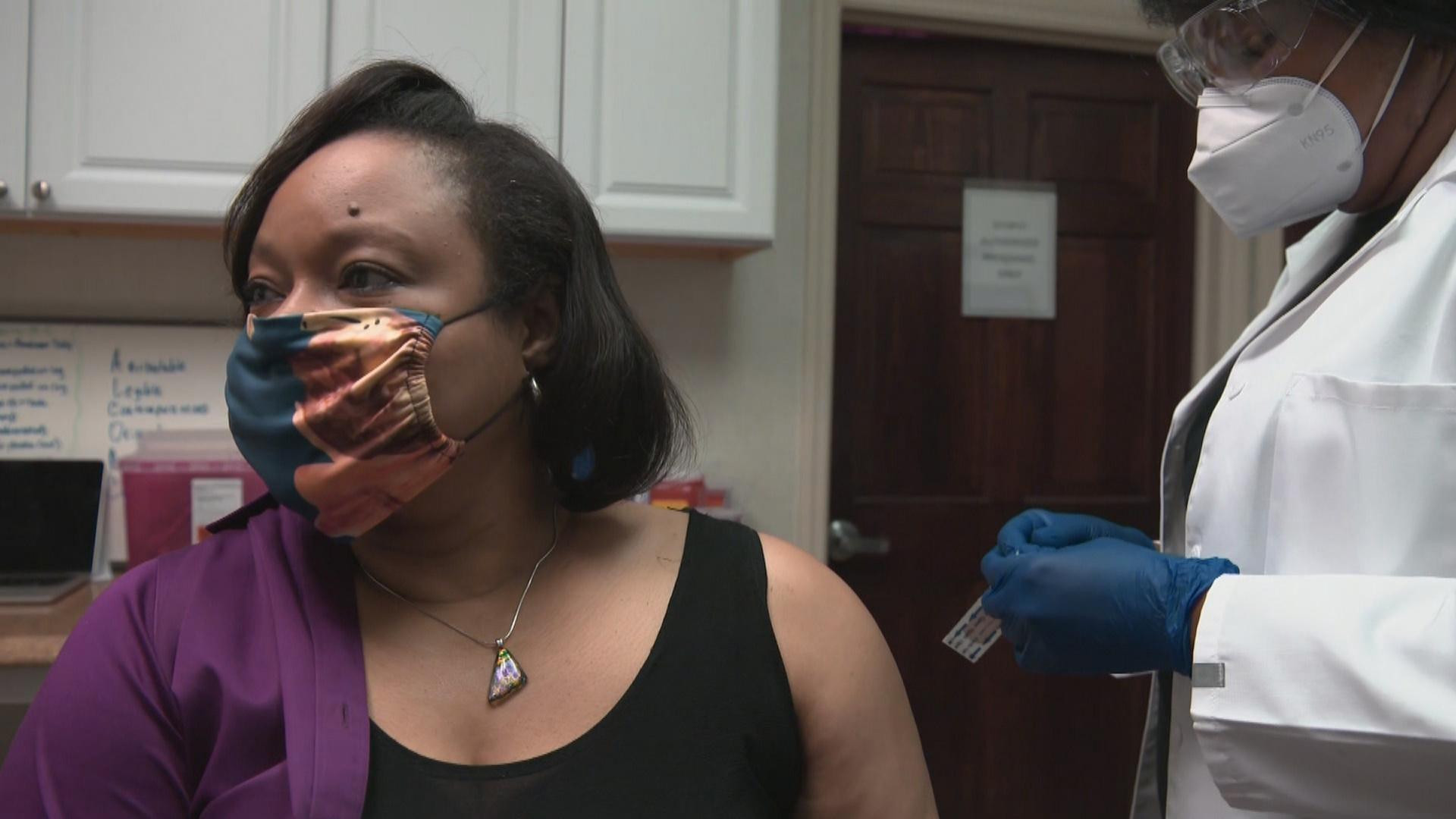 (WTTW News via CNN)
After Chicago’s 400,000 health care workers get two doses of a vaccine, residents and staff of Chicago’s 128 long-term care facilities will be next in line under the plan set by federal authorities, perhaps as soon as two to three weeks, officials said.
That prioritization will ensure that Black Chicagoans, who are at highest risk of contracting COVID-19 and suffering serious symptoms, are among the first to get the vaccine, Arwady said.
In Chicago’s 78 skilled nursing facilities, 49% of residents are Black and 58% of staff is Black, Arwady said.
Once enough vaccine doses are available, the city plans to open mass vaccination clinics at City Colleges as well as mobile clinics for health care workers, officials said.
Essential workers are expected to be vaccinated in the next phase of the plan, which have yet to be approved by federal officials.
Arwady and Lightfoot sought to reassure Chicagoans that the vaccine is safe, and had been proven to be highly effective and could not infect anyone with COVID-19.
The city will also partner with community groups to encourage Black and Latino Chicagoans to get vaccinated, Arwady said, acknowledging that effort will have to overcome entrenched skepticism among those communities about vaccines based on decades of mistreatment by the health care industry.
Once vaccine doses are widely available, it should cause the case rate and test positivity rate to come down — and that will encourage skeptics to rethink their decisions, Arwady said.
The city will not require residents to get vaccinated, Arwady said.
The Chicago Department of Public Health will assemble a scientific advisory committee of local experts to review the federal approval process, which followed the normal procedures despite the accelerated timeline, officials said.
Approximately 10% of those who got the vaccine during trials experienced fatigue and muscle aches for one to two days, with high fevers occurring occasionally, officials said.
Those symptoms are not serious, and indicate that the vaccine is working to trigger an immune response to COVID-19, officials said.
Contact Heather Cherone: @HeatherCherone | (773) 569-1863 | [email protected]