Politics
Johnson’s Debt Refinancing Plan Results in Just Half of What He Promised, Forcing Officials to Scramble to Fill Budget Gap
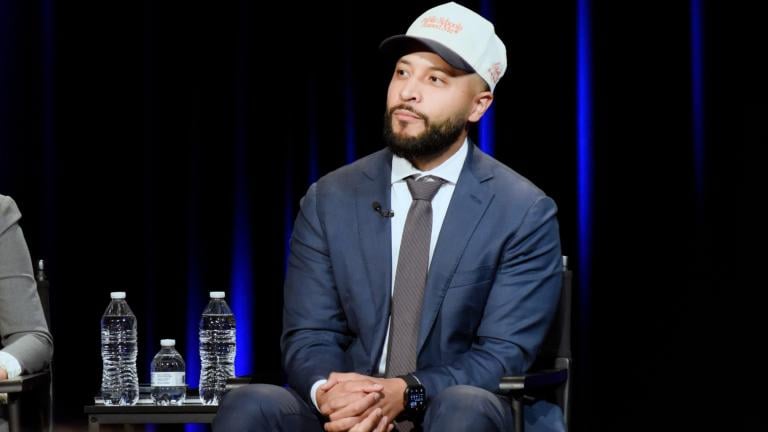
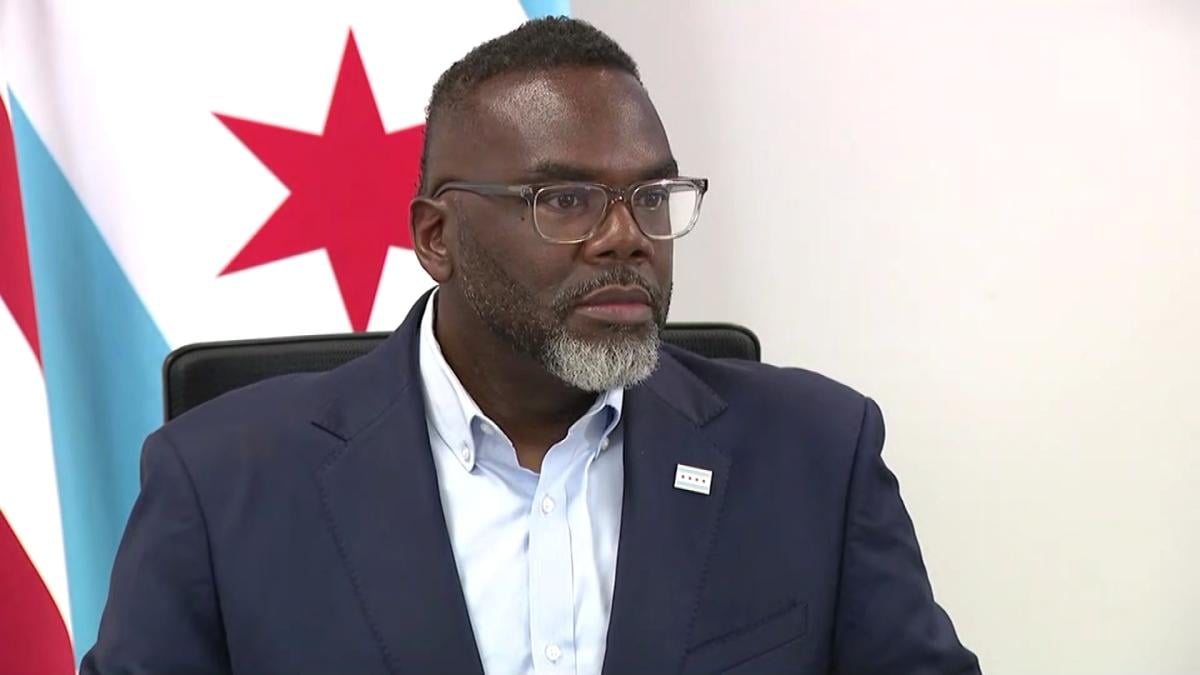 Mayor Brandon Johnson takes questions from the media on Aug. 25, 2026. (WTTW News)
Mayor Brandon Johnson’s plan to refinance a chunk of the city’s massive debt to fill a budget gap of $85.1 million generated just half of what he and his top financial advisers promised Chicagoans, records show.
Johnson, who neither signed nor vetoed the city’s 2026 $16.6 billion budget approved by the Chicago City Council, blamed the shortfall in this year’s budget on the decision by his critics to rely on revenue that failed to materialize.
Initially, Johnson said the city would refinance bonds backed by the city’s sales tax revenues that are at least 10 years old to generate between $65 million and $71 million.
But that refinancing generated just $36 million when completed last week, according to a spokesperson from the mayor’s office.
Johnson’s spokesperson blamed the failure of the debt refinancing plan to generate his stated target on “rising interest rates driven by the Trump administration’s economic policies, including the impacts of its tariffs and needless wars abroad.”
However, the city’s credit rating now sits just two or three levels above junk status, making it much more expensive for the city to borrow money. In February, Fitch — one of the major Wall Street ratings agencies — downgraded debt backed by the city’s sales tax revenue, an indication that financial observers are concerned about the city’s ability to manage and pay back its debt.
“Even in one of the most challenging markets in recent memory, investor interest in the city remains high and the city was able to realize significant savings in the most responsible manner possible — without increasing debt service or extending maturities,” said Chief Financial Officer Ashlee Gabrysch.
Chicago officials must now come up with another $49.1 million to fill the city’s gap, records show. Any plan must be approved by the City Council before the end of the year.
Even if the debt refinancing had brought it as much revenue as Johnson had hoped, the mayor had proposed using the $6 million and $10 million left from Chicago’s $1.9 billion share of the federal relief package known as the American Rescue Plan Act, or ARPA.
Using those funds to fill the 2026 budget gap will not result in cuts to ongoing programs or initiatives, Johnson said.
The rest of the gap will be filled with higher than anticipated revenue from the city’s personal property lease tax, which gets added to car and equipment rentals as well as cloud-based software, the mayor’s spokesperson said.
Johnson has described that tax as a way to make big tech firms pay their fair share to Chicago.
By August, that tax had generated $737.6 million, nearly $23 million above original estimates included in Chicago’s 2026 budget.
The city collected an additional $32.2 million “after forcing two under-paying corporations who hold leases in the city related to software products,” officials announced Sept. 30.
The city earmarked enough funds in its 2026 spending plan to hire 13 additional tax auditors, helping to increase collections of unpaid taxes by 58% this year as compared with 2025, according to the mayor’s office.
“Through responsible financial management, aggressive tax enforcement and the mayor’s continued fight to make sure corporations pay their fair share, the administration remains on track to close the (fiscal year 2026) budget gap,” the mayor’s spokesperson said. “These results reaffirm Mayor Johnson’s call for corporations to pay their fair share. At a time when working Chicagoans are being asked to do more with less, the city will continue using every tool available to ensure corporations meet their tax obligations and contribute to the city they profit from.”
The gap in the city’s 2026 budget is nearly entirely due to the fact the city has been unable to sell $1 billion in debt owed to the city by individuals, which the city’s spending plan relied on to generate $89.6 million in new revenue.
Johnson blocked medical debt owed to the city from being included in that attempted sale.
City officials asked 20 firms to purchase that debt, but only two firms expressed any level of interest, Johnson said. Both declined to complete the deal, with one bank concluding that it would only produce between $5 million and $10 million in revenue, he added.
However, the group of alderpeople who crafted the spending plan again have repeatedly accused Johnson of “continuing to slow-walk implementing structural revenues and efficiencies designed to reduce our deficit and put Chicago on its best financial footing possible” contained in the spending plan approved by the City Council.
A spokesperson for the group did not immediately respond to a request for comment from WTTW News.
In addition, only a handful of firms expressed interest in selling advertising spots on 3,000 city light poles, city vehicles and bridge houses, officials said. The city’s budget counted on $29.3 million from that proposal.
Nor has there been any interest in the “augmented reality” advertising licensing program created by the budget that would allow companies to impose videos and other content on city properties like Millennium Park or the Riverwalk that can be seen through a smartphone, virtual reality glasses or tablet. That proposal was expected to bring in $6 million, according to the city’s budget.
Video gambling in Chicago bars and restaurants has also failed to bring in any revenue. City officials have yet to green light the video gaming terminals, which was to have brought in $6.8 million this year.
After warning city officials for months that its move to green-light video gaming would kneecap the city’s permanent casino, Bally’s Corp. halted construction on the 34-story, 500-room hotel, concert venue and restaurants designed to make the city’s only casino into a destination for visitors and residents alike.
The casino is still scheduled to open early next year.
Johnson is set to unveil his plan to fill the projected $882.1 million gap in the city’s 2027 budget before the end of the month.
Contact Heather Cherone: @HeatherCherone | (773) 569-1863 | [email protected]