Crime & Law
‘Broadview Six’ Continue Push for Inquiry Into ‘Poisoned’ Prosecution
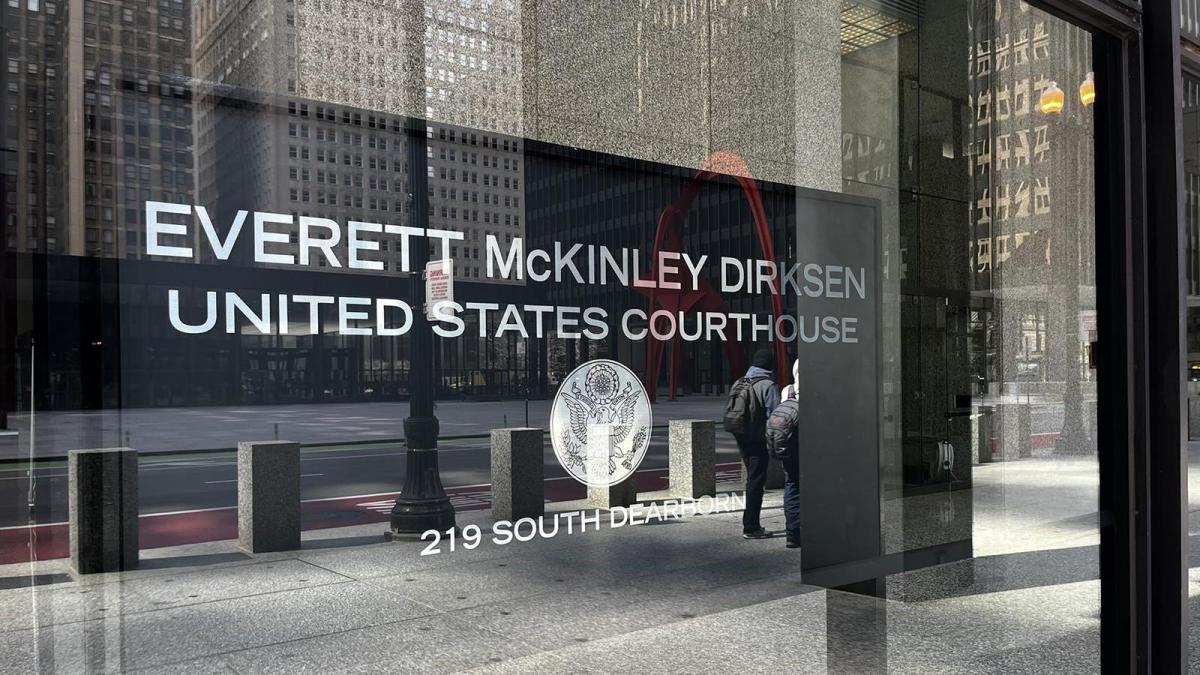 The Dirksen Courthouse is pictured in Chicago. (Capitol News Illinois)
Attorneys for the former Broadview Six defendants are again seeking proof that the “poisoned” case against their clients was influenced by the Trump administration and whether local prosecutors are attempting to cover that up.
A new filing late Tuesday came as defense attorneys in the botched prosecution continue pushing for additional hearings and a special prosecutor to investigate any potential wrongdoing committed by Chicago U.S. Attorney Andrew Boutros’ office.
In that filing, attorneys argued the case was “poisoned from the start” and that Boutros’ office has sought to “draw a curtain around this unfortunate episode.”
“The self-evident truth is that the government is still contorting itself to avoid the very transparency that it claims to embrace while opposing any further judicial inquiry into what transpired here,” defense attorneys wrote. “The government shattered the presumption of regularity and engaged deceitfully with the Court and the defendants. In so doing, it demonstrated an inability to police itself or adhere to due process norms with liberty on the line.”
Oak Park Village Board Trustee Brian Straw, former 9th District congressional candidate Kat Abughazaleh, her campaign staffer Andre Martin, Democratic Committeeperson Michael Rabbitt, ex-Cook County Board candidate Catherine Sharp and musician Joselyn Walsh, were charged following a confrontation on Sept. 26, 2025, between protesters and federal agents outside U.S. Immigration and Customs Enforcement’s west suburban processing facility.
Prosecutors alleged the defendants were part of a group that surrounded a government vehicle, “with the intent to hinder and impede” a federal agent from proceeding to the Broadview facility and “discharging the duties of his office.” According to the initial indictment, the protesters “banged aggressively” on the vehicle’s windows and hood and broke one of its mirrors and a rear windshield wiper.
Unsealed transcripts from the grand jury proceedings in that case last October revealed Assistant U.S. Attorney Sheri Mecklenburg excused skeptical grand jurors, admitted speaking with grand jurors outside of the hearings and “vouched” for the merits of the allegations against the defendants.
Boutros denied knowing of that alleged misconduct until late April, but defense attorneys have since accused the U.S. Attorney of a cover-up amid their longstanding belief that the charges were politically motivated.
Since then, defense attorneys have called for hearings over Mecklenburg’s conduct and for a special prosecutor to investigate. U.S. District Judge April Perry has not yet ruled on those requests.
Boutros last month revealed in a separate filing that while he was sent a copy of the transcripts from the Oct. 9, 2025, grand jury proceedings less than a week later on Oct. 14. But he maintained he has “no recollection of reviewing the transcript at that time, and is quite certain he did not review the transcript at that time.”
Defense attorneys argued this admission “(cries) out for further inquiry.”
They also want more information about whether the prosecution was driven or influenced at all by the U.S. Department of Justice.
Federal prosecutors previously said they found no evidence of outside communications coming from the White House or Trump officials pushing for them to file charges specifically against the defendants in this case.
But defense attorneys noted in a recent filing that Boutros’ office only recently disclosed a video conference between Chicago prosecutors and DOJ officials one day after the incident in Broadview.
Boutros’ office has pushed back against further inquiries on separation-of-powers grounds, arguing such inter-agency communications are covered by “multiple privileges.”
“That argument would carry more force,” defense attorneys wrote in their reply, “if the conduct at issue had not spilled into the courtroom and fatally infected the prosecution of six individuals — a prosecution the government dismissed only after all other efforts at obfuscation had failed.”