Politics
25 Years Later, Sept. 11 Impacts Felt at Home and Abroad
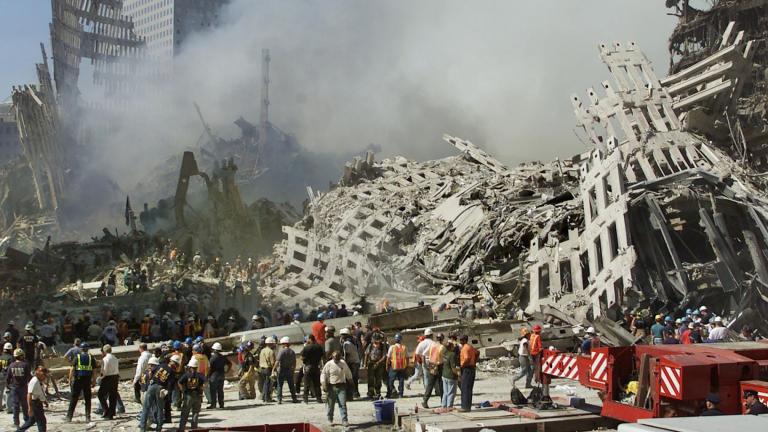
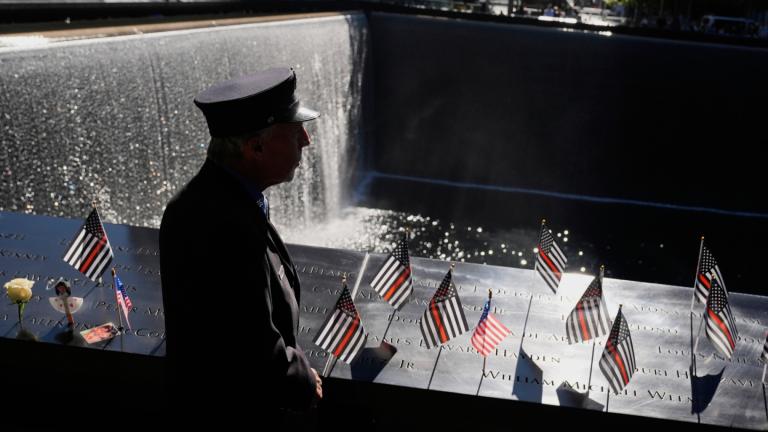
Friday will mark 25 years since the World Trade Center attacks on Sept. 11, 2001.
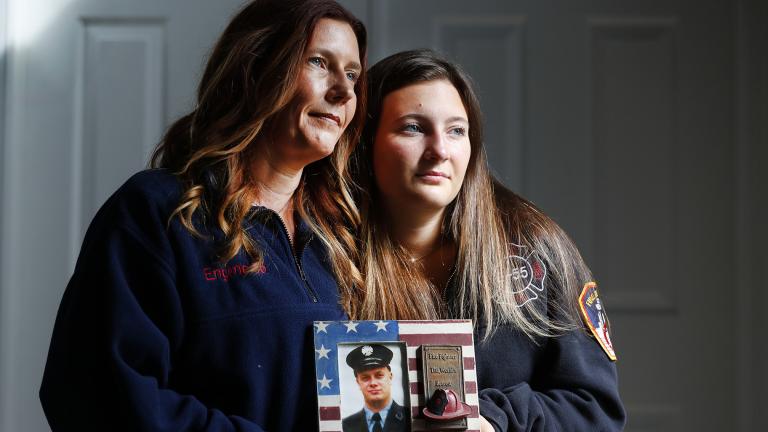
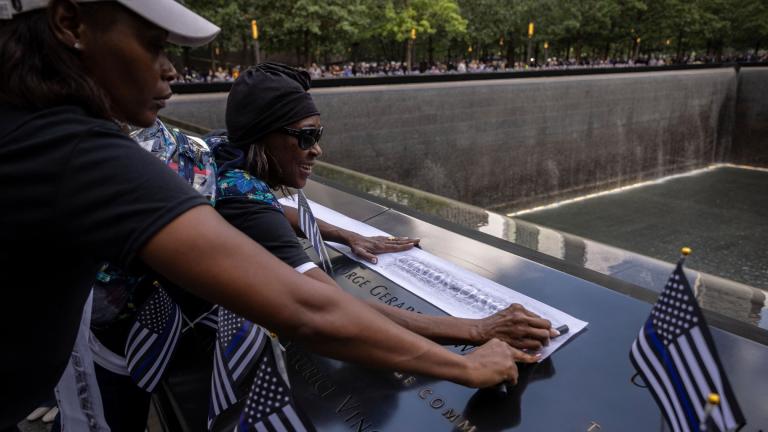
Between the attacks themselves, the lasting health impacts on survivors and ensuing wars, the death toll for Americans is in the tens of thousands.
Now, one generation later, the country and the rest of the world are still reckoning with the aftermath. Amid the mourning, Americans have grappled with societal changes over the past quarter of a century. From conflict abroad to civil liberties at home, the shocks of the 9/11 attacks still linger today.
Ibrahim Abusharif, now a professor of journalism and Middle East studies at Northwestern University, had two thoughts when he first heard of the attacks 25 years ago.
“No. 1, it was a horrific attack, and we feel sad about that,” Abusharif said. “But for Muslim Americans, especially Arab Muslim Americans, there was another concern — we’re going to get the backlash. So we didn’t even have a chance to mourn.”
According to Tom Mockaitis, a history professor at DePaul University, the aftermath of 9/11 kicked off the deepening of social and political divisions in the country.
“It really began the process of this deep divide over who exactly is an American,” Mockaitis said. “Soon after 9/11, there was a brief period of unity, and then it was looking for scapegoats.”
Beyond overt Islamophobia, Mockaitis said the divisions are also apparent in how the term “terrorism” has become more politicized since 2001.
The most recent U.S. Counterterrorism Strategy identified three types of terror groups: “narcoterrorists and transnational gangs,” “legacy Islamist terrorists” and “violent left-wing extremists.”
“There is now a belief that there is no enemy to the right, only enemies to the left,” Mockaitis said.
But Mockaitis added that definition misses the threat from domestic right-wing extremists and nihilistic “lone wolves,” when a perpetrator’s ideology is unclear.
While the threat might be shifting, the government power that expanded after the attacks has not subsided.
“Fear is a bad counselor,” Mockaitis said, referencing the push to overhaul national security policy immediately after the attacks.
This included creation of the U.S. Department of Homeland Security, the passage of the Patriot Act and the expansion of executive power over war.
And those are just the domestic impacts of the Sept. 11 attacks. According to Abusharif, many Americans have not yet reckoned with the effects of wars abroad in the same way that citizens of the affected countries have.
“We’re still timid from saying the United States has a history of being violent with countries in the Middle East,” Abusharif said. “We have to open up the possibility that there is a strategic advantage for the United States to come cleaner with the Arab world and larger Muslim world. Right now, that seems to be almost impossible.”
Beyond the invasions of Iraq and Afghanistan, the most recent conflict in Iran has come with its own set of tragedies that Abusharif said need a re-framing in the American public’s eye — especially the bombing of an Iranian elementary school earlier in the conflict.
“When that school was bombed, for many people, they thought, ‘OK, that’s a shame,’” Abusharif said.
“There’s no humanity behind, ‘OK, these are girls. They’re like our girls, like our kids, like our schools,’” Abusharif said. “The discourse does not permit us to have an emotional response to these young people getting slaughtered. We need to look at the ideology of accepting that has really permeated our culture, permeated our textbooks and our schools.”