Health
What Impact Would a Switch to Permanent Daylight Saving Time Have?
Earlier this month, the U.S. House voted to end the twice yearly changing of the clocks by passing the Sunshine Protection Act.
The bill, passed 308-117, would make daylight saving time permanent in the United States unless states opt out before the act takes effect.
Illinois Democrats were divided on the issue, with eight ‘yes’ and six ‘no’ votes. All three Illinois Republicans voted in favor of the bill.
As the act makes its way to the Senate where it still needs approval, health professionals are voicing concerns. At the same time, members of the business community say there could be benefits to later sunsets.
Eric Albrecht, senior advocacy program manager at the American Academy of Sleep Medicine, says that an adjustment to permanent daylight saving time would be hard on the body.
“The sun controls your internal circadian rhythm,” he said. “Daylight savings time is setting you off an hour for the entire time you’re on it. And if it’s made permanent, those effects never go away.”
Albrecht says alternative health outcomes could include increased heart attacks, strokes and mental health risks.
Medical professionals aren’t the only ones sounding the alarm. Aviation and travel experts say that their industries could also be impacted.
In a statement to WTTW News, Airlines for America said, “Airlines operate expansive interconnected domestic and global networks that are reliant on stability and predictability.” And that “policymakers should allow for a significant amount of time to adjust airline schedules, websites, reservation systems, crew scheduling, payroll and the implementation of IT fixes both at the air carriers and any impacted vendors prior to implementation of DST changes.”
Similarly, construction workers and rideshare and delivery drivers noted that their early morning start times could lead to some dangerous conditions for workers if the sun is rising later.
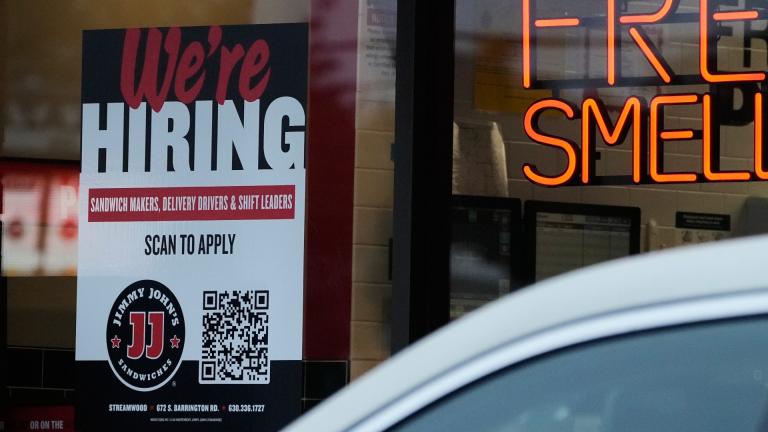
Some business owners say the extra hour of evening daylight could bring more customers and create positive economic impacts. Trudy Leong, administrator at the Rogers Park Chamber of Commerce, argues that those impacts do not outweigh health and safety risks.
“On the surface, businesses would benefit from permanent daylight savings time by being able to open later and then have more consumers come in more hours into the day,” she said. “The most important part of running a business is that the employees are alert and ready to work.” A task, she says, that won’t happen without help from the sun.
However, while businesses could benefit from later nights, parents say children are not so lucky.
Chicagoans could see sunrises as late as 8:18am in the winter months, meaning students could be waiting for school buses in the dark. Commuters also voiced concerns over increased traffic accidents that occur in decreased visibility.
Days before the Sunshine Protection Act was passed, an opposing bill was introduced to the House. The Sunshine for Our Kids Act advocates for permanent daylight standard time, which keeps our days more in line with the sun.
If the U.S. passes the latest measure, it would join Europe and parts of Australia in practicing permanent daylight saving time. Arizona and Hawaii, however, currently stick to standard time year-round.
Congress has tried to pass a version of the bill before. In 2022, the Senate through unanimous consent moved to make daylight saving time permanent, but the bill failed to advance in the House. This time around, President Donald Trump has declared his support of the bill, calling for an end to worrying about the clock.
And the country’s history with permanent daylight savings time goes back even further. In 1973, President Richard Nixon signed the Emergency Daylight Saving Time Energy Conservation Act. It remained in effect for almost 10 months, but was removed after facing public backlash.
Today lawmakers face three options: permanent daylight saving time, permanent standard time, or keep the ritualized biannual clock-switching.