Politics
Chicago Voters Won’t Weigh Whether to Tax Millionaires — But Will Be Asked About ShotSpotter, Festivals
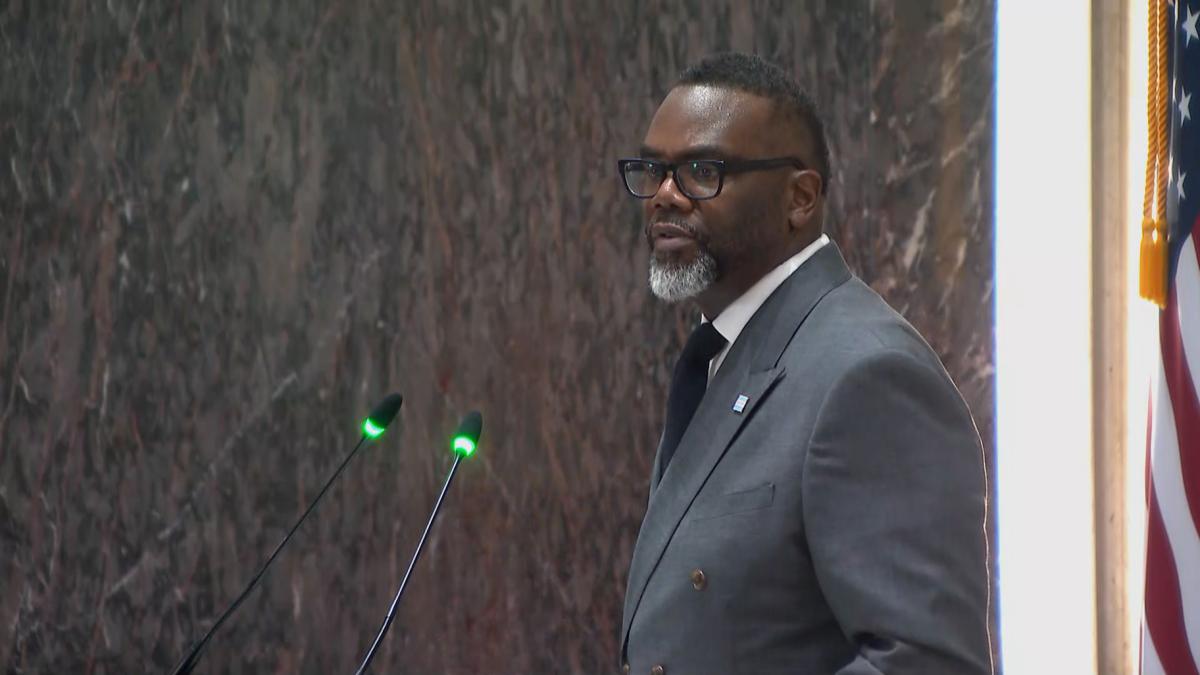 Mayor Brandon Johnson presides over a meeting of the Chicago City Council in October 2024. (WTTW News)
Chicago voters in the November election will not get to weigh in on whether the Illinois General Assembly should impose a 3% surtax on those earning $1 million or more annually.
But they will get a chance to tell Mayor Brandon Johnson whether he should replace the city’s controversial gunshot detection system and can urge city officials to create a permanent home for festivals and other large events.
Officials can pose no more than three nonbinding questions about citywide issues or policies during each election, giving them a chance to drum up support — or opposition — from voters.
The fight over which questions will appear on November’s ballot erupted into a proxy fight Wednesday between the mayor and his increasingly emboldened opponents on the Chicago City Council, even though the results will only carry symbolic weight.
State lawmakers declined to give voters a chance in November to impose a 3% surtax on Illinois residents earning $1 million or more per year, much to Johnson’s frustration. The mayor’s attempt to use a nonbinding referendum to keep the proposal in the spotlight was thwarted by his critics on the City Council.
Alderpeople also blocked a proposal from Johnson to ask voters about whether the city should establish a fund to offer financial assistance to Chicagoans struggling to stay in their home because of massive property tax increases.
Alds. Anthony Napolitano (41st Ward) and Anthony Beale (9th Ward) joined forces Wednesday to use a parliamentary maneuver to prevent Chicago voters from being asked whether the city should “pursue all lawful means” to make the Trump administration pay for the cost of the federal immigration raids known as “Operation Midway Blitz.”
Both Napolitano and Beale have frequently opposed the city’s efforts to protect undocumented immigrants from deportation.
While progressive members of the City Council could have blocked the measure authored by Ald. Marty Quinn (13th Ward) that will ask voters whether the city should restart the use of “gunshot detection technology that informs first responders when gunshots are detected” from making it on to the ballot, they did not.
Johnson turned off the city’s ShotSpotter system in September 2024, saying the system was ineffective.
Another spot for an advisory question will be filled by a proposal authored by Ald. Nicole Lee (11th Ward) to quiz voters on whether Chicago “should develop permanent festival and outdoor event space for large-scale events.”
Much of Grant Park has been closed to the public for several months during recent summers because of Lollapalooza and the Sueños Music Festival.
With one of the spots for advisory ballot questions empty, the City Council is scheduled to meet again on July 22.
That spot could be filled by Johnson’s proposal to give voters a chance to condemn the Trump administration’s aggressive immigration raids or a measure to ask voters whether Chicago should make its required contributions to the city’s four pension funds before March 31.
Alds. Jason Ervin (28th Ward) and Byron Sigcho Lopez (25th Ward) prevented that question from being added to the November ballot on Wednesday.
Ervin and Sigcho Lopez also joined forces to block a final vote on three advisory referendums set for the February election, more than seven months before that contest is set to take place.
Contact Heather Cherone: @HeatherCherone | (773) 569-1863 | [email protected]