Science & Nature
Beetle-mania Strikes Again in Lincoln Square, as June Bugs Swarm Welles Park in Mating Frenzy
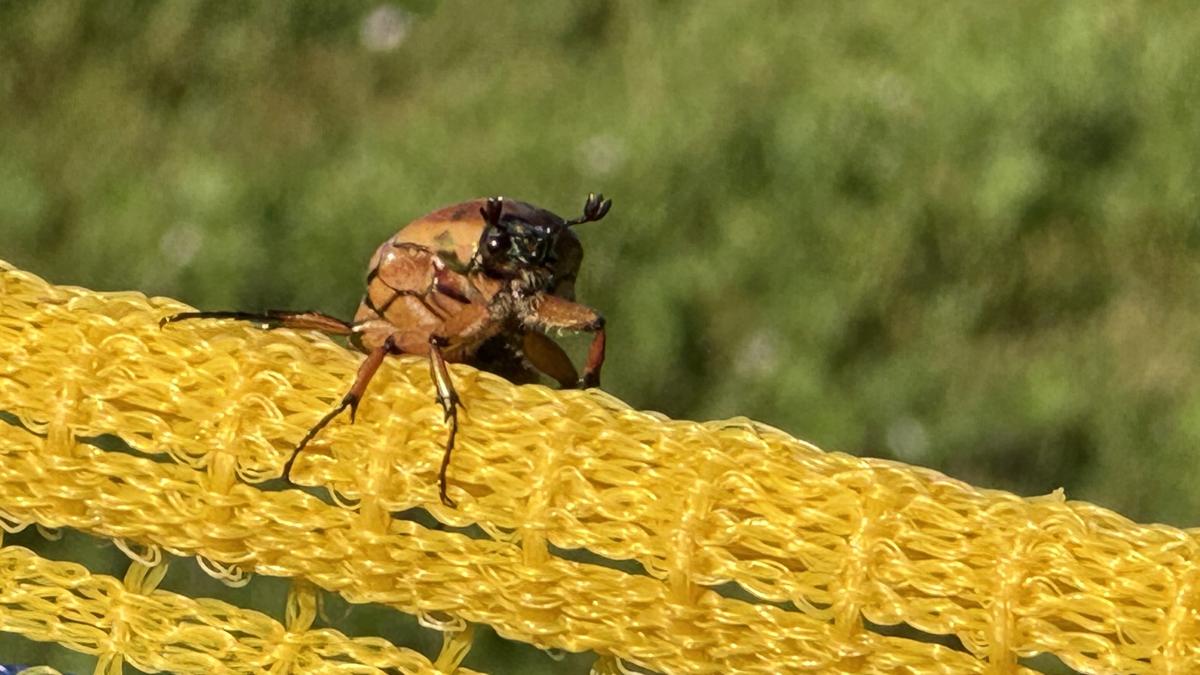 Swarms of adult scarab beetles have converged on Welles Park in a mating frenzy. In past years, the resulting larva have eaten acres of the park’s turf. (Patty Wetli / WTTW News)
Ball players are catching more than pop flies at Welles Park.
“Bag-a-bug” traps have been placed along a temporary outfield fence at the Lincoln Square park on Chicago’s North Side, where swarms of beetles are zipping around just above the grass in search of a mate.
“They’re sweeping the area to figure out where the female is,” Chris Dietrich, Illinois’ state entomologist, said of the male beetles’ herky-jerky flight patterns.
The resulting offspring will burrow underground as larva where they’ll continue to develop, feeding on the park’s grass until they emerge as adults next spring.
It’s the larval, or grub, stage that causes damage to turf. And for whatever reason, Welles Park has become a preferred breeding ground for the beetles, multiple years in a row, in numbers that Dietrich called “atypical.”
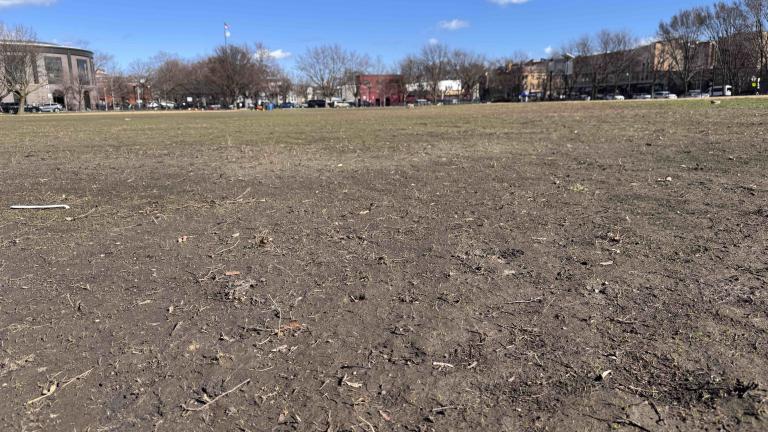
In 2021, grubs laid waste to roughly one-third of Welles Park’s 15 acres, stripping large swaths of all vegetation. That fall, tens of thousands of them came to the surface — either drowned out of their burrows or searching for more food — and eventually rotted on the ground.
The Chicago Park District treated the lawn with insecticide and reseeded, but the problem has persisted.
“With populations this size, sometimes it takes multiple years to get it under control,” Dietrich said.
From his office in downstate Springfield, Dietrich noted that he could only speculate on the conditions that have led to the ongoing beetle explosion at Welles Park. But he said in general, scarab beetles — a large family of species that includes June bugs, Japanese beetles and masked chafers — like soil that’s rich and moist, and even a small imperceptible depression gathering water could suffice. The insects also have a preference for warm temperatures and sunny spots.
Another factor, Dietrich said, is the state of the grass itself.
“These beetles tend to zero in where grass is under stress and therefore the grass itself is less able to defend itself,” he said. “Probably one good strategy is to lay off of those fields to allow the turf to recover — healthy turf grass is less susceptible.”
The turf at Welles Park has certainly been through the wringer. The same area that was devastated in 2021 was treated again this past spring for grubs: Insecticide was applied, followed by reseeding.
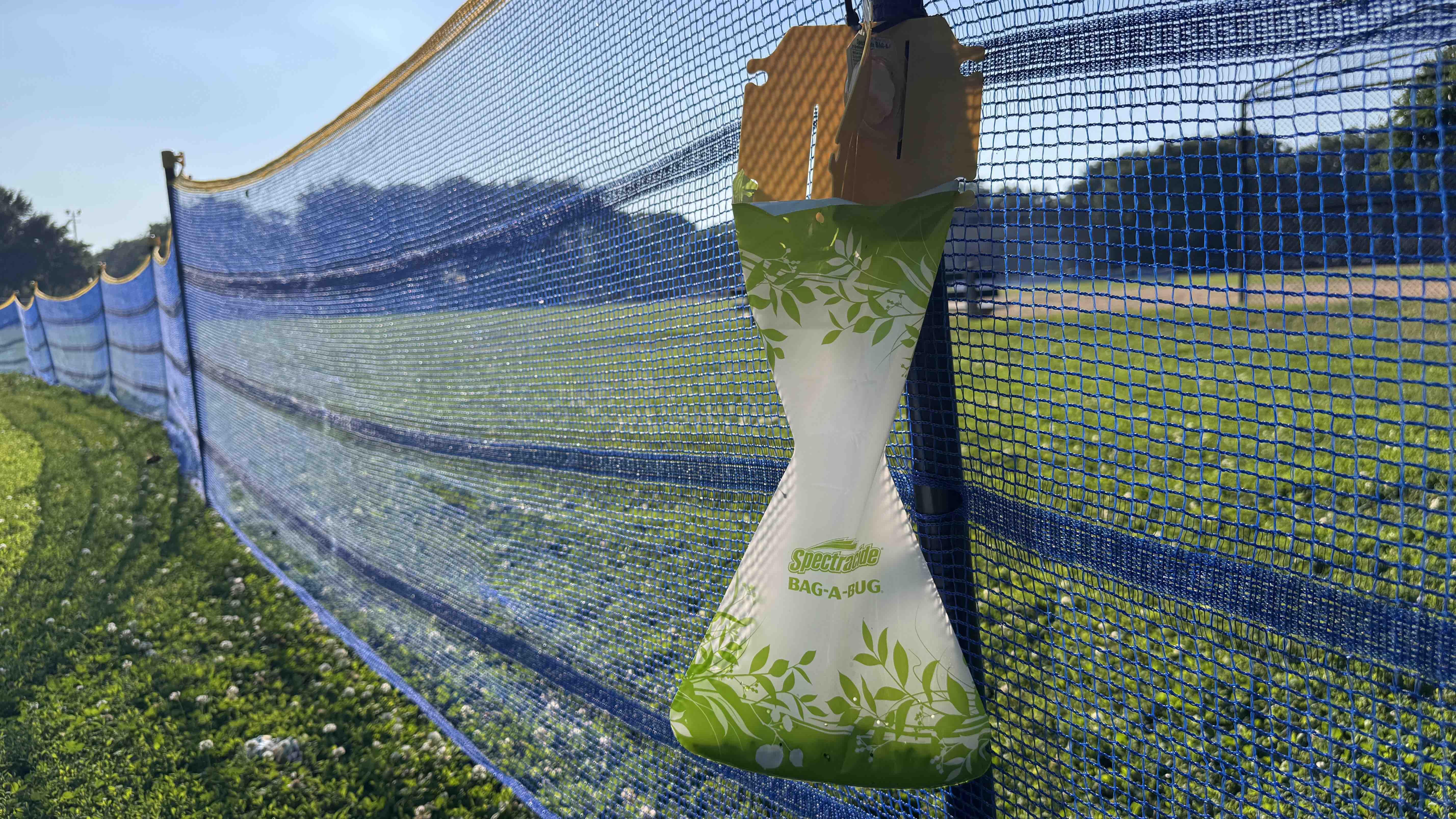 Pheromone traps, like these seen at Welles Park, mimic the chemicals released by female beetles to attract males. “If you can catch enough males, eggs won’t get fertilized,” said Christopher Dietrich, Illinois’ state entomologist. (Patty Wetli / WTTW News)
“We will continue with the treatment to address the recent presence of beetles,” Irene Tostado, Park District spokesperson, told WTTW News.
“The best approach is to treat the insect when it is at its most vulnerable during its life cycle, which is in the larvae stage and in the late summer/early fall,” Tostado said, adding that the bag-a-bug traps were not placed by district staff.
As infestations go, things could be worse. Beetles may decimate grass, but they don’t pose any serious health risk to humans.
“They’re definitely a nuisance,” Dietrich said.
Contact Patty Wetli: [email protected]