Politics
Chicago Budget Task Force Recommends Long-Term Structural Reforms to Address City’s Fiscal Challenges
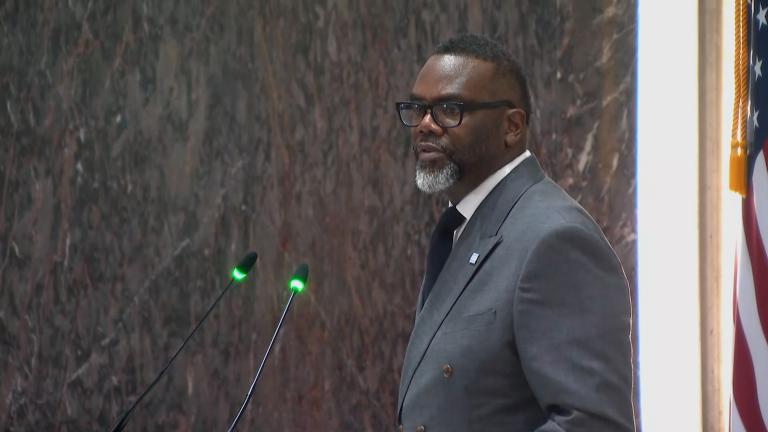
 (Michael Izquierdo / WTTW News)
A budget task force stressed patience and said long-term structural reforms are the best solution to Chicago’s persistent fiscal crisis as the city faces an estimated shortfall of nearly $700 million next year.
The Chicago Financial Future Task Force — a group of nearly two dozen business, labor, public policy and community leaders — published its final report Thursday that included 58 policy recommendations, such as instituting a downtown congestion fee, restructuring electricity tax rates and instituting property tax increases based on the national consumer price index.
“This challenge was not created overnight,” Chicago Urban League President and task force co-chair Karen Freeman-Wilson told reporters this week. “So there has to be — for there to be sustainability — a gradual fix. And it’s not just revenue, it’s not just cutting expenses, it’s not just looking at some of the long-term structural liabilities. It’s all of those things.”
The task force, launched early last year through an executive order from Mayor Brandon Johnson, has sought to find ways to resolve the city’s “persistent structural imbalance.”
While the final report offers a host of recommendations, task force leaders said they’re not pushing for any specific course of action, but instead sought to compile all available choices and the considerations associated with each.
The task force estimated a budget shortfall of $680 million for the city in the 2027 fiscal year, and said baseline assumptions show recurring gaps of between $680-780 million each year moving forward.
In order to get closer to financial stability, the task force said the city must improve its pension sustainability, modernize its operations and grow its tax base through investment and job creation.
“The stakes of inaction are not merely financial,” the report states. “If the City continues on its current path, fixed and legacy costs will absorb a growing share of available resources, leaving less flexibility to maintain reliable services, invest in neighborhoods, respond to downturns, or support long-term competitiveness.”
Pension reform specifically is highlighted throughout the report, as the task force said Chicago’s four public pension systems are currently underfunded by approximately $36 billion.
While the final report makes several recommendations to help resolve that debt, task force members noted those recommendations could be difficult to enact because in many cases, it would require the approval of state legislators.
While an interim report published last year outlined the fiscal impact of recommended changes ahead of the 2026 fiscal year budget, the task force’s new recommendations instead were evaluated on their potential impact and the feasibility of their implementation.
“The path forward,” the report states, “will call for difficult choices, continued collaboration, and a care in balancing fiscal responsibility with the services and investments on which residents and communities depend.”