Arts & Entertainment
From Dancehall to Reggaeton, Exhibit Explores the Power of Music as Protest
The Museum of Contemporary Art is showcasing a new exhibition tracing the visual, political and spiritual origins of popular Caribbean music. Art installations are designed to immerse visitors in sound and movement.
“I really wanted to do a club,” curator Carla Acevedo-Yates said. “My dream was to do a club at the museum. This was the closest I got to the club.”
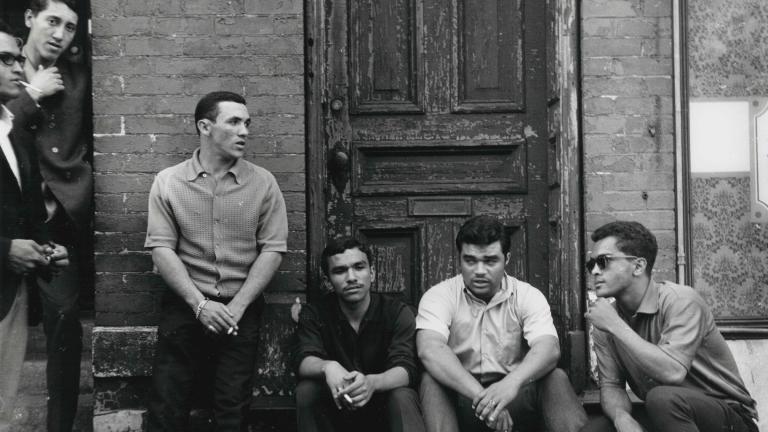
“Dancing the Revolution: From Dancehall to Reggaetón” transforms the gallery into a participatory space filled with speakers, video works, photography and interactive installations that depict the evolution and spirit of dance culture.
“Both dancehall and reggaeton are musical genres that come from working-class communities, marginalized communities,” Acevedo-Yates said. “They form part of a global musical project that is really for everyone to enjoy.”
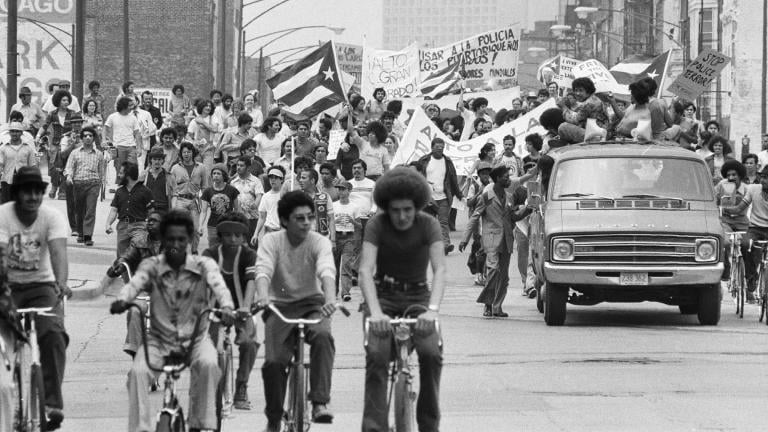
The exhibition was inspired by protests that erupted in Puerto Rico in the summer of 2019, which Acevedo-Yates said brought to light the relationship between music, politics and collective expression.
“It’s about how we hold these different contradictions, from joy to grief, celebration and struggle and resistance — they’re not incompatible,” Acevedo-Yates said. “We can do a reggaeton protest in the streets to demand the ousting of a governor and we also go to a party and dance. Those things, I think, come together in a really potent way.”
The exhibition traces those connections across the Caribbean, beginning in Jamaica and exploring sound system culture and dancehall’s evolution in Kingston. It also highlights the movement of music through migration, including the rise of reggae in Panama.
“West Indian workers and Jamaican workers were brought to Panama to construct the Panama Canal, and with them they brought their records,” Acevedo-Yates said. “With their records they started singing on the instrumental B sides and started translating the lyrics from English to Spanish. I think that is such a fascinating way to think about music, as really a migration story.”
For Acevedo-Yates, the project is also personal. Growing up in Puerto Rico in the 1990s, she listened to underground music that later evolved into reggaeton.
“I grew up in the ‘90s in Puerto Rico and I used to listen to underground music, which is the precursor to reggaeton,” Acevedo-Yates said. “I remember I had a mixtape that was a copy of a mixtape that was a copy of another tape. So I grew up with this music, and at the time it was criminalized by the governor, by Pedro Rosselló.”
From those underground roots, reggaeton has grown into a global genre, influencing artists such as Bad Bunny.
“His work is very political,” Acevedo-Yates said, “and I think that he carries the voices and the spirit, the social and political histories, he’s giving voice to that. He’s also carrying that message to a global audience.”
The exhibition features more than 42 artists and took three years to complete.
“One of the main takeaways I want people to go with is that reggaeton is not just entertainment,” Acevedo-Yates said. “It has a really deep social, political and spiritual history that dates back to the colonial era and that really unites different islands like Jamaica and Trinidad. … So we are all tied together with these histories of music and protest.”
The exhibition runs through Sept. 20. Admission is free for Illinois residents from 5-9 p.m. on Tuesdays. There is also karaoke from 5-9 p.m. Tuesdays through Sept. 15 as part of the exhibit.
WTTW News arts coverage is supported by the JCS Arts, Health & Education Fund of the DuPage Foundation.