Science & Nature
Pollinator Gardens Don’t Have To Be ‘Native or Bust,’ Says New Research Supporting the Value of Cultivars
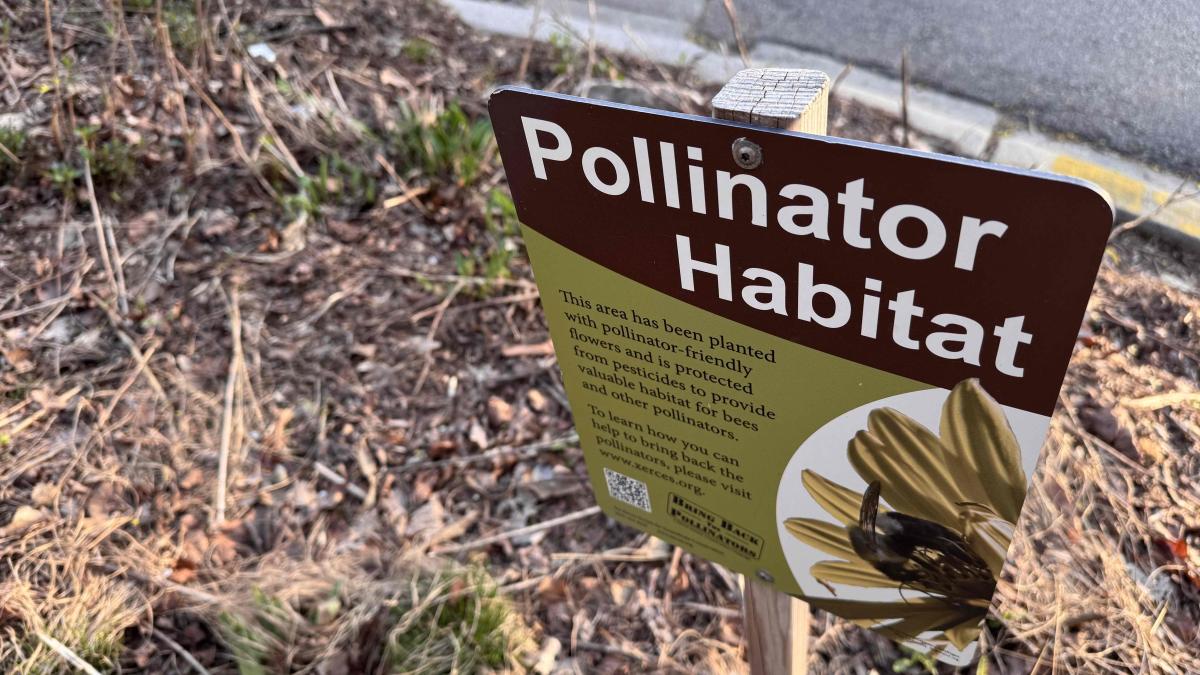 Pollinator gardens are growing in popularity, but there's more than one of creating pollinator-friendly habitat, research shows. (Patty Wetli / WTTW News)
Is there such a thing as a right and wrong way to garden?
It depends on who you ask.
The rise of the pollinator-friendly gardening movement — in which residential landscapes are tended to as habitat for bees, butterflies, birds and other insects — has led to something of a divide between those who advocate for “nothing but native” when it comes to plantings and those whose standards are less rigid.
The results of a new study published by researchers at the Chicago Botanic Garden suggests there’s a middle ground.
“There’s this notion that the only way to attract and support pollinators in your yard is to sort of recreate a meadow, or recreate a prairie or a forest understory in your yard,” said Nicholas Dorian, co-author of the study with plant ecologist Imeña Valdes. “I want to push back on that. There are many ways of creating pollinator-friendly landscapes.”
The study specifically tackled the issue of native cultivars (sometimes called “nativars”), which are greenhouse-born varieties of native plants. (Natives are referred to as “wild types” in the research paper). They may be bred for traits that some gardeners might find more desirable than the pure native, including larger flowers, longer bloom time, shorter height, more colorful foliage or the ability to thrive in different soils.
Cultivars have gotten a bad rap in certain circles. And while it’s true that some varieties offer little to no value to pollinators, the Chicago Botanic Garden study showed that other cultivars are nearly as attractive to pollinators as the wild type.
As Dorian sees it, those research results don’t negate the importance of natives, which remain the gold standard. But they do create a bigger tent for gardeners to join the pollinator-friendly movement, he said.
The “wild type or bust” narrative is alienating to some people, who perhaps have reservations about the height of natives, to name one common concern. The availability of native plants, or lack thereof, also remains an issue, Dorian said.
“If you can’t find a wild type, you’re sort of not sure what to do,” he said. “I think one takeaway from our study is that a cultivar … the cultivars that we studied … all of them attracted insects. All of them would be better than leaving your yard as entirely turf grass. So if you’re at a nursery and you feel stymied, we hope that our research provides you with maybe some reassurance that there are cultivars that can support pollinators.”
Making Sense of a Cloud of Insects
The study looked at four natives: foxglove beardtongue (Penstemon digitalis), black-eyed Susan (Rudbeckia fulgida), New England aster (Symphyotrichum novae-angliae) and aromatic aster (Symphyotrichum oblongifolium).
The species were chosen for their staggered bloom times, ranging from late spring into fall, as well as the availability of popular cultivars that could be found not just in Chicago but across the eastern U.S. In addition, 13 cultivars were included in the study.
") Green sweat bees love coneflowers, but don't take Nick Dorian's word for it. "Go out and see it for yourself," he encourages pollinator gardeners. (JJ Gouin / iStock)
Green sweat bees love coneflowers, but don't take Nick Dorian's word for it. "Go out and see it for yourself," he encourages pollinator gardeners. (JJ Gouin / iStock)
Specimens of both natives and cultivars were planted in test plots at Chicago Botanic Garden, and Valdes created a protocol for monitoring insect visits: 10-minute intervals for every individual plant, between 10 a.m. and 2 p.m., three times per week during sunny, calm conditions favorable for insect activity.
“You quickly get very good at this one task, which is making sense of a cloud of insects,” Dorian said. “You start to develop a sense for ‘flies land and take off and move very differently from bees,’ even if their coloration patterns are similar. You start to be able to see butterflies out of the periphery.”
Along with observing the number of insects attracted to a plant, Valdes and her team also collected data on the type of insect, with categories including honey bee, bumble bee, small bees and flies, butterflies and moths, and beetles, among others.
The study ran for two years at the botanic garden. To expand the scope beyond a single site, researchers also recruited participants from the garden’s Budburst community science project, who provided another five years' worth of data on the same natives and cultivars, from widespread locations.
Aesthetic Considerations and Ecological Value Can Be Compatible
After crunching the numbers, Dorian found that the botanic garden and Budburst data sets were congruent: no cultivar was shown to outperform a native, but some were nearly as attractive to pollinators.
“They told us the same story, which is that if you plant a wild type, that’s really great for pollinators. And a lot of these cultivars also can have value,” he said. “If you don’t want anything taller than four feet, or you have a particular color that you really want in your garden, our study suggests that attending to those aesthetic needs doesn’t have to sacrifice ecological value.”
") "Husker Red" is a cultivar of native Penstemon digitalis, with maroon foliage that some gardeners might prefer for aesthetic reasons. Research showed it's highly attractive to pollinators. (Serhii Hordiienko / iStock)
"Husker Red" is a cultivar of native Penstemon digitalis, with maroon foliage that some gardeners might prefer for aesthetic reasons. Research showed it's highly attractive to pollinators. (Serhii Hordiienko / iStock)
Still, the results should not be taken as a blanket endorsement of all cultivars in all situations, Dorian was quick to add. For starters, the study only applies to gardens, and in no way indicates that cultivars should be used in natural areas or ecological restoration efforts.
Dorian also noted that the cultivars chosen for the study hewed closely to the wild type in terms of traits.
“By that I mean, none of them were highly, highly modified to the point where they don’t produce pollen and nectar,” he said.
One rule of thumb, according to Dorian: The showier the cultivar — particularly “doubled” cultivars with extra rows of petals — the more likely the plant was bred to appeal to humans, not pollinators.
The study recommended the development of a plant labeling program that could incorporate the results of cultivar evaluations in order to “help consumers wade through the difficulty of selecting plants with exemplary ecological value.”
For gardeners curious how their own cultivars might rate, Dorian encouraged them to conduct their own community science project.
“When you’re gardening for pollinators, one of the most important things you can do is go out and observe,” he said. “You’re planting this garden for other living creatures. Go and see what they like. Often times, they’ll tell you which plants are their favorite.”
IS IT A NATIVE OR A CULTIVAR? CHECK THE LABEL
So how is a gardener to know if a plant is a wild type or a native cultivar? Pay close attention to the plant label when shopping at nursery or greenhouse.
A native plant label will list the Latin name in italics along with the common name. For example, Penstemon digitalis, commonly known as foxglove beardtongue.
The label for a native cultivar will add the variety, typically in quotation marks, to the Latin and common names. So Penstemon digitalis, foxglove beardtongue, “Husker Red.” It’s the description in quote marks that’s the cultivar giveaway.
Contact Patty Wetli: [email protected]