Politics
Despite Executive Order, Johnson Now Says New CPD Policy Not Needed to Probe ICE
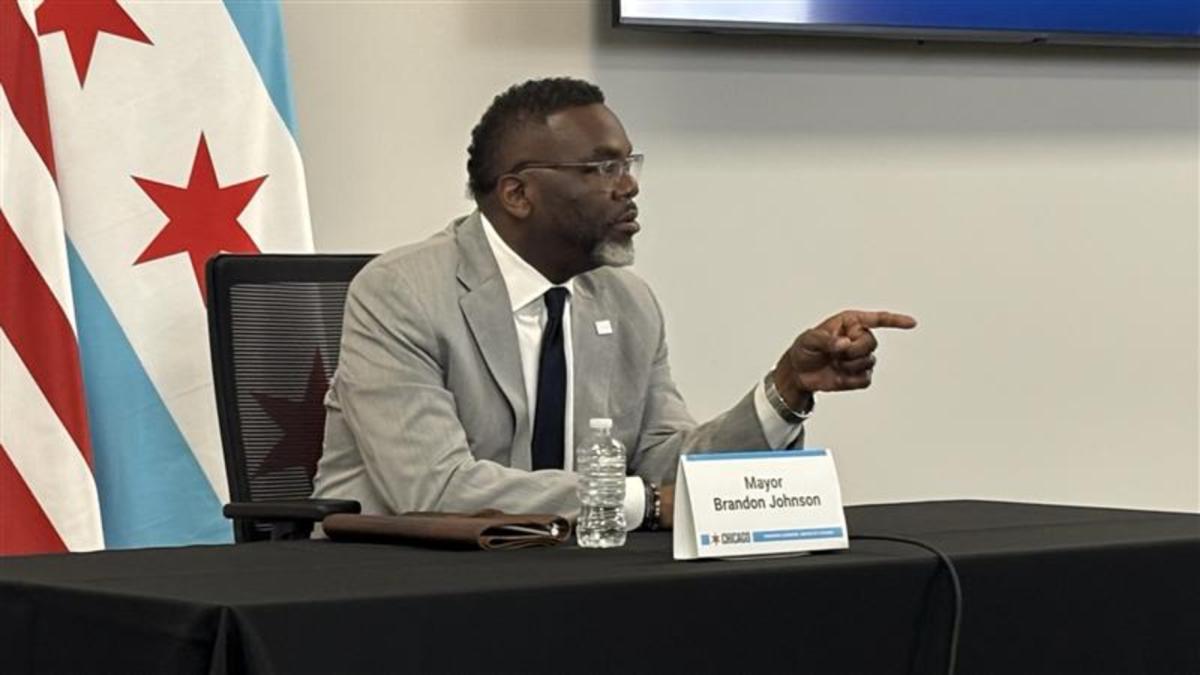 Mayor Brandon Johnson addresses the news media on March 24, 2026. (Heather Cherone / WTTW News)
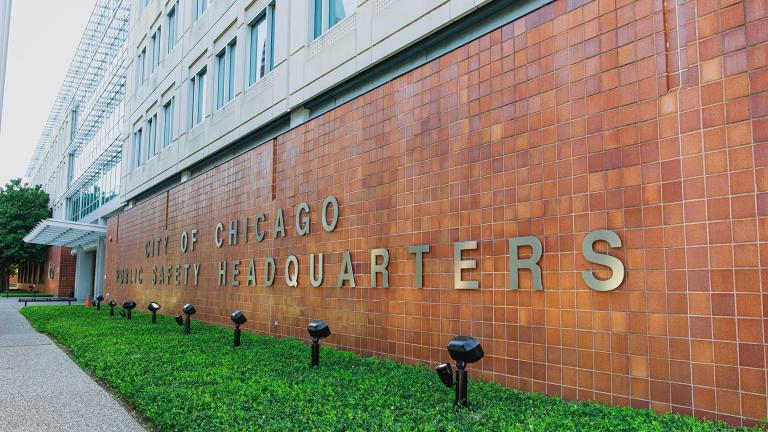
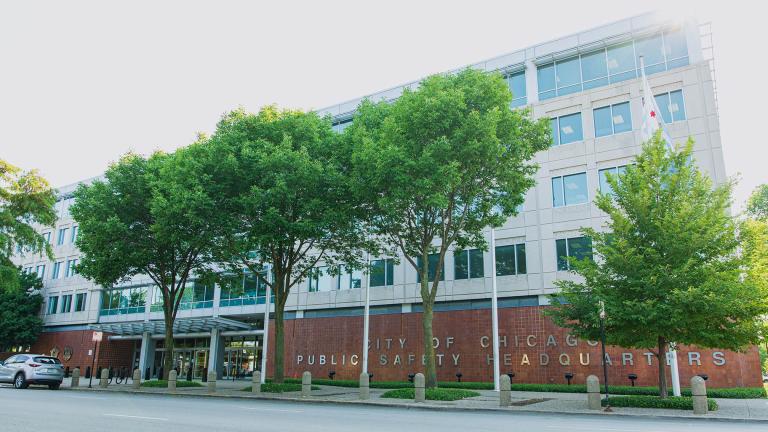
The Chicago Police Department does not need to craft and implement a new policy to allow officers to investigate federal agents for their actions during immigration enforcement raids, Mayor Brandon Johnson said Tuesday, nearly two months after he ordered police brass to do exactly that.
Johnson seized the national spotlight on Jan. 31 when he signed an executive order designed to lay “the groundwork to prosecute Immigration and Customs Enforcement and Border Patrol agents for criminal misconduct.”
Johnson’s executive order gave CPD brass 30 days to develop a policy directing officers to document suspected misconduct or criminal violations by ICE and Border Patrol agents and identify those responsible.
“CPD shall issue guidance in consultation with the Corporation Counsel and mayor’s Office of Immigrant, Migrant and Refugee Rights within 30 days from the effective date of this order establishing procedures for implementing the requirements of this order,” according to the executive order.
But Johnson said Tuesday at a City Hall news conference that a new policy is not necessary, despite that provision of the executive order and CPD’s acknowledgement to WTTW News that a new policy had been drafted, but not finalized.
“What the executive order did, it gave CPD 30 days to review its policy, and to see if its current policy is applicable, or are there other measures that need to be put in place,” Johnson said. “It turns out that the policy that they have in place is applicable to what we’re asking them to do.”
State law allows government agencies to withhold preliminary drafts of policies that officials have not yet finalized or implemented.
“Here’s my understanding is that the policy that they have in place to ensure that the type of evidence that would be received on site, and how that information can be used to transfer over to the state’s attorney to move forward with their investigation, that the policy, as I understand it, is applicable to what this executive order is called for,” Johnson said.
Johnson signed the executive order one week after federal agents shot and killed Alex Pretti on Jan. 24 in Minneapolis amid widespread protests of aggressive immigration enforcement efforts ordered by the Trump administration as part of the largest mass deportation effort in U.S. history.
While targeted immigration enforcement actions have continued in the city and surrounding suburbs, federal agents have not returned in large numbers to Chicago since the end of December. City officials have warned they were preparing for increased enforcement actions once the weather warmed up for good.
The specifics of any new policy under development by CPD is particularly important because, in most cases, state and local law enforcement officials are prohibited from charging federal officials for reasonable conduct that occurred during the course of their official duties.
Johnson’s order brought a rebuke from Cook County State’s Attorney Eileen O’Neill Burke, who called it “wholly inappropriate.”
O’Neill Burke, who frequently criticizes Johnson’s approach to public safety issues, blasted the section of the executive order that requires CPD supervisors to preserve evidence of suspected wrongdoing by federal immigration agents and “at the direction of the mayor’s office, make a referral of felony matters to the Cook County State’s Attorney.”
O’Neill Burke’s office took no action after federal agents shot and killed Silverio Villegas-Gonzalez on Sept. 12 and after federal agents shot Marimar Martinez five times on Oct. 4 in Brighton Park.
Villegas-Gonzalez was shot and killed during a traffic stop in Franklin Park after he dropped off his children at day care.
Federal agents alleged Villegas-Gonzalez dragged an officer with his vehicle while attempting to flee, seriously injuring an officer.
However, local police body camera videos showed the agent who shot Villegas-Gonzalez walking around afterward and dismissing his own injuries as “nothing major.”
Martinez was charged with a felony after federal officials accused her of trying to ram agents with her vehicle. The case was dismissed after videos emerged that Martinez’s attorneys said showed an agent steering his vehicle into Martinez’s truck.
After Martinez was shot, Chicago Police Supt. Larry Snelling said his officers “cannot and will not” arrest federal agents conducting immigration enforcement operations in Chicago and implored residents not to interfere with those efforts.
There is no evidence that either CPD or Franklin Park police investigated either shooting.
Ten days after her office slammed Johnson’s executive order, O’Neill Burke unveiled a new protocol that she said would allow the use of force by federal immigration officers to be scrutinized.
However, a coalition of Chicago-area officials, organizations and individuals argued O’Neill Burke failed to hold federal agents accountable and asked a Cook County judge to appoint a special prosecutor to handle the probes.
O’Neill Burke’s office said Tuesday that effort was a “frivolous” attempt to violate the law.
WTTW News coverage of policing and police reform is supported by The Joyce Foundation.
Contact Heather Cherone: @HeatherCherone | (773) 569-1863 | [email protected]