Crime & Law
Former CPD Detective Who Also Served at Guantanamo Bay Testifies He Did Not Torture Man Into 1992 Murder Confession
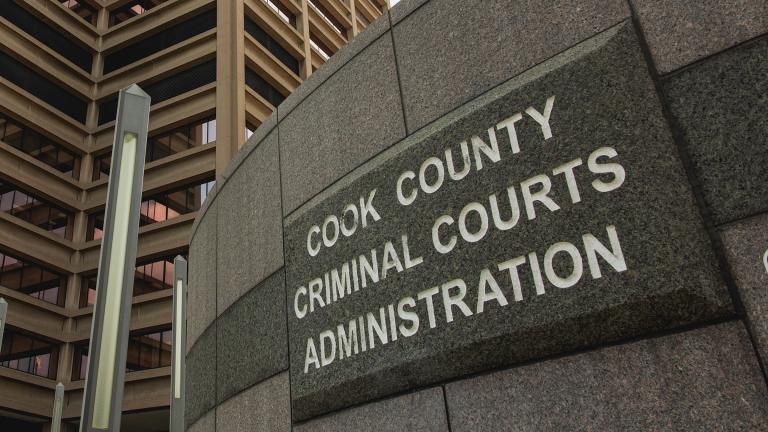
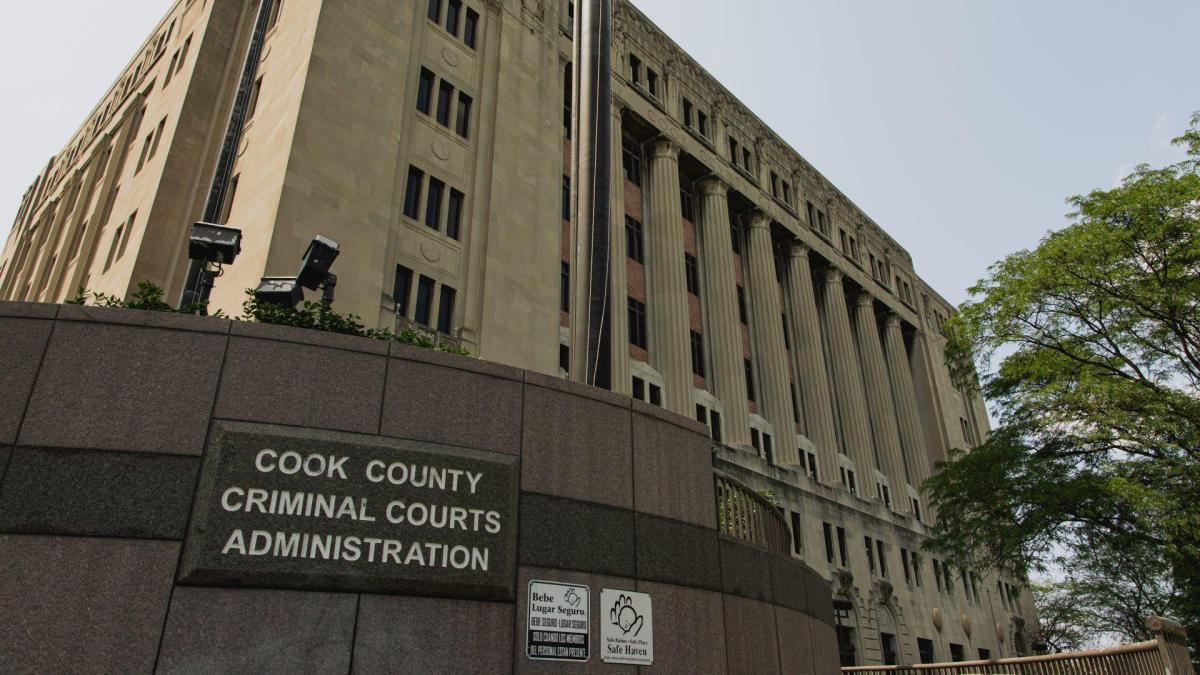 Leighton Criminal Court Building (Michael Izquierdo / WTTW News)
A former Chicago police detective who has repeatedly been accused of abusing detainees denied torturing a man who says he falsely confessed to a 1992 murder after being beaten multiple times while in custody.
Richard Zuley, who spent 30 years as a CPD detective, testified in a third-floor courtroom Wednesday afternoon that he never verbally or physically assaulted Anthony Garrett, who was sentenced to 100 years in prison following his conviction in the shooting death of 7-year-old Dantrell Davis.
Zuley repeatedly denied physically abusing or even raising his voice at Garrett during a series of interrogations before he confessed to the killing.
“He was a gentleman,” Zuley testified about Garrett’s demeanor during his interrogation. “He was respectful, he was responsive and for lack of a different word, I liked him.”
Davis was shot by a sniper at Cabrini-Green in 1992 as he and his mother walked to school.
Garrett, who was arrested shortly after, has sought a new trial after claiming Zuley beat him on at least two occasions with rubber hoses and a phone book on his torso, genitals and legs, court records show.
Zuley, who also served as a Naval reserve officer during his career, has repeatedly been accused of torturing detainees to obtain confessions, most notably in the case of Mohamedou Ould Slahi, who claimed Zuley nearly killed him during an investigation into his ties to al-Qaida while he was detained at the Guantanamo Bay detention camp.
“He told me ‘I don’t give a f--- about fairness or justice, I care about saving lives,’” Slahi, who was called to testify in Garrett’s case, said while under oath last year. “I had no answer for him.”
Slahi testified that he falsely confessed to being involved in an attack on Toronto’s CN Tower and was held for 14 years, without charge or trial, before being released in 2016 and returned to his native Mauritania.
Garrett’s attorney, Jennifer Blagg, has said that like Slahi, her client falsely confessed after Zuley beat him and prevented him from sleeping.
Cook County State’s Attorney Eileen O’Neill Burke opposes Garrett’s bid for a new trial.
Another man, Lee Harris, sued the city of Chicago and was paid $4 million as part of a settlement agreement after he claimed he spent 30 years in prison for a murder he didn’t commit. Zuley was named in that lawsuit, which claimed he has a “long history of engaging in precisely the kind of investigative misconduct that occurred in this case.”
In 2023, the Illinois Torture Inquiry and Relief Commission found that there was “sufficient, credible evidence” that Garrett was tortured by Zuley, and urged that a Cook County judge review his conviction. That finding relied, in part, on Slahi’s testimony that Zuley tortured him at Guantánamo, records show.
Zuley testified for more than three hours Wednesday, though no determinations in Garrett’s case have yet been issued. He is expected to return to the witness stand to finish his testimony April 1.
Garrett’s Interrogation and Confession
Davis’ killing outraged the city and became a symbol of the gang violence plaguing Chicago and the city’s notorious public housing. Zuley testified during Garrett’s 1994 trial that he confessed to accidentally shooting the boy while firing at rival gang members from the 10th floor of a high-rise apartment building.
The weapon used to kill Dantrell was never found, gun powder residue was not found on Garrett’s clothing, and no one testified they saw Garrett kill the boy, court records show.
Garrett said he was not informed of his rights or given access to an attorney before he was interrogated in a small windowless room, where he was denied access to the bathroom and prevented from lying down to sleep for more than 24 hours, court records show.
During his testimony Wednesday, Zuley recounted the morning of the killing and the arrest of Garrett, who he said was detained by a tactical officer following a search near the scene of the shooting.
Zuley claimed that Garrett was initially handcuffed, but that he removed those restraints as they brought him to a windowless 12x16 foot room where he was interrogated.
“Mr Garrett was with us voluntarily, there was no reason (for the handcuffs), he was cooperating fully,” Zuley testified. “There was absolutely no reason to handcuff him. I’m trying to develop a rapport and handcuffing him to a wall isn’t going to do that.”
According to Zuley, Garrett initially denied any involvement in the shooting and provided a list of alibi witnesses to corroborate his account that he was by a nearby playground when Davis was shot.
Zuley claimed the men talked about their shared military background — Garrett previously served in the Army — and that during this conversation, he learned that Garrett was an expert marksman.
Once Garrett’s alibi witnesses failed to check out, Zuley testified, Garrett was informed he was being arrested. He allegedly asked for time overnight to “think” and then confessed the following morning.
“He spoke in this little weak voice and he said, ‘Yea you’re right, I didn’t mean to kill him,’” Zuley testified.
Zuley claimed that Garrett admitted he had fired two to three shots at a group of Vice Lord gang members and accidentally struck Davis. He testified Garrett was “remorseful” after the confession.
Zuley on Wednesday testified about specific times and activities he was engaged in around Garrett’s interrogation, including when exactly he arrived for work and what food he brought into the interrogation room for dinner and breakfast.
But he also denied recalling anything about several investigations into other people and cases brought up by attorneys Wednesday.
“One, I think there were some notes taken,” he said when asked how he could remember such details from over 30 years ago, “and two, some of that stuff was pretty dramatic.”
Asked directly if he’d ever used physical force during an interrogation, Zuley said: “Absolutely not.” He further denied ordering any subordinates to use torture to obtain a confession and denied that such force had ever been used in any case he’d worked.
He pointed to a conversation he said he’d had years ago with U.S. Sen John McCain — who spent more than five years in a Vietnam POW camp — who told him that the torture he endured had only hardened his resolve to resist.
“Corporal punishment doesn’t work, rapport building does work,” Zuley testified. “Rapport building is the only thing that works and the only thing that’s reliable.”
Heather Cherone contributed to this report.