Science & Nature
Conservationists Aren’t Bluffing When It Comes to Safeguarding One of the North Shore’s Rarest and Most Fragile Coastal Landscapes
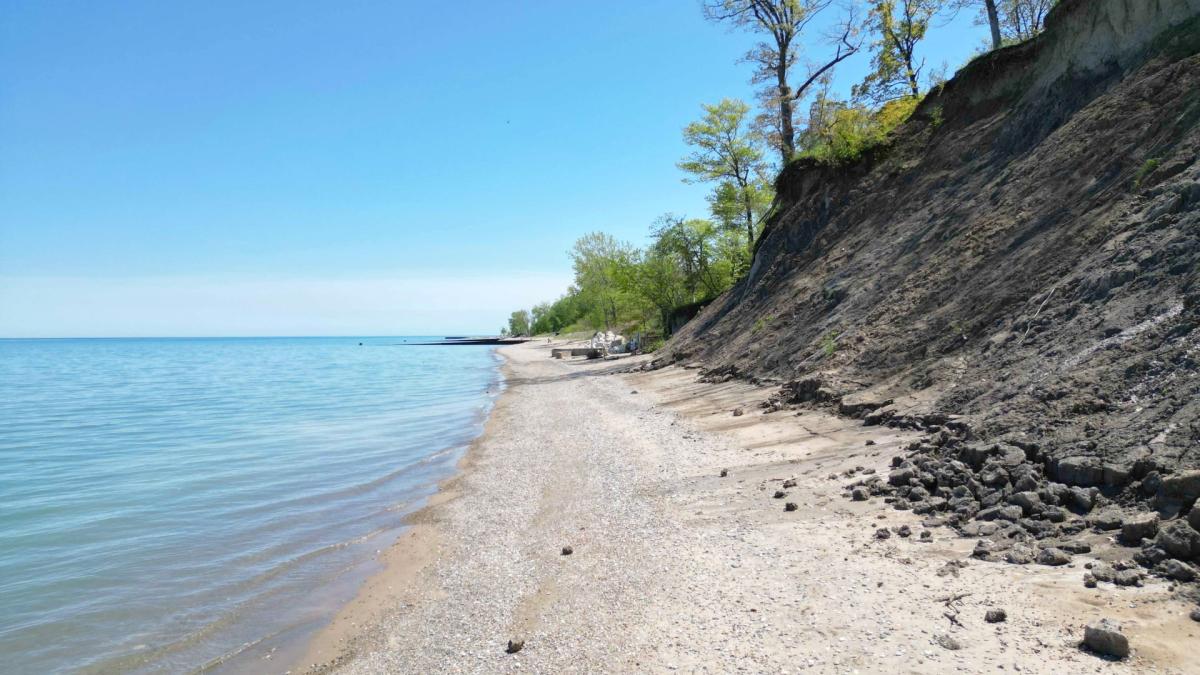 The bluff along Greene Preserve's Lake Michigan shoreline has been hard hit by erosion. Restoration efforts will focus on stabilizing the bluff using nature-based solutions. (Courtesy of Lake Forest Open Lands Association)
If landscapes could talk, the 61-acre Greene Nature Preserve in Lake Forest would have quite the tale to tell.
This is where the last glacier in the area deposited a mix of sand, gravel, silt and clay. Water running over this moraine carved channels into the comparatively softer soil, creating a ravine-bluff ecosystem that stretches along 22 miles of Lake Michigan north of Chicago up to Wisconsin. Greene Preserve harbors one of the finest remnants of this ecosystem, one of the rarest and most fragile landscapes in Illinois.
Apart from supporting threatened and endangered plants and wildlife, the ravine-bluff’s characteristic ridges and valleys offer a welcome bit of topography in a part of the state that’s otherwise has all of the interest of a flat line.
“This is a regional treasure,” said Ryan London, president and CEO of Lake Forest Open Lands Association, the nonprofit that owns the preserve.
To protect that treasure, the organization is preparing to embark on the latest phase of ongoing restoration work at the site, thanks to a $5.75 million federal grant — the largest in Lake Forest Open Lands’ history.
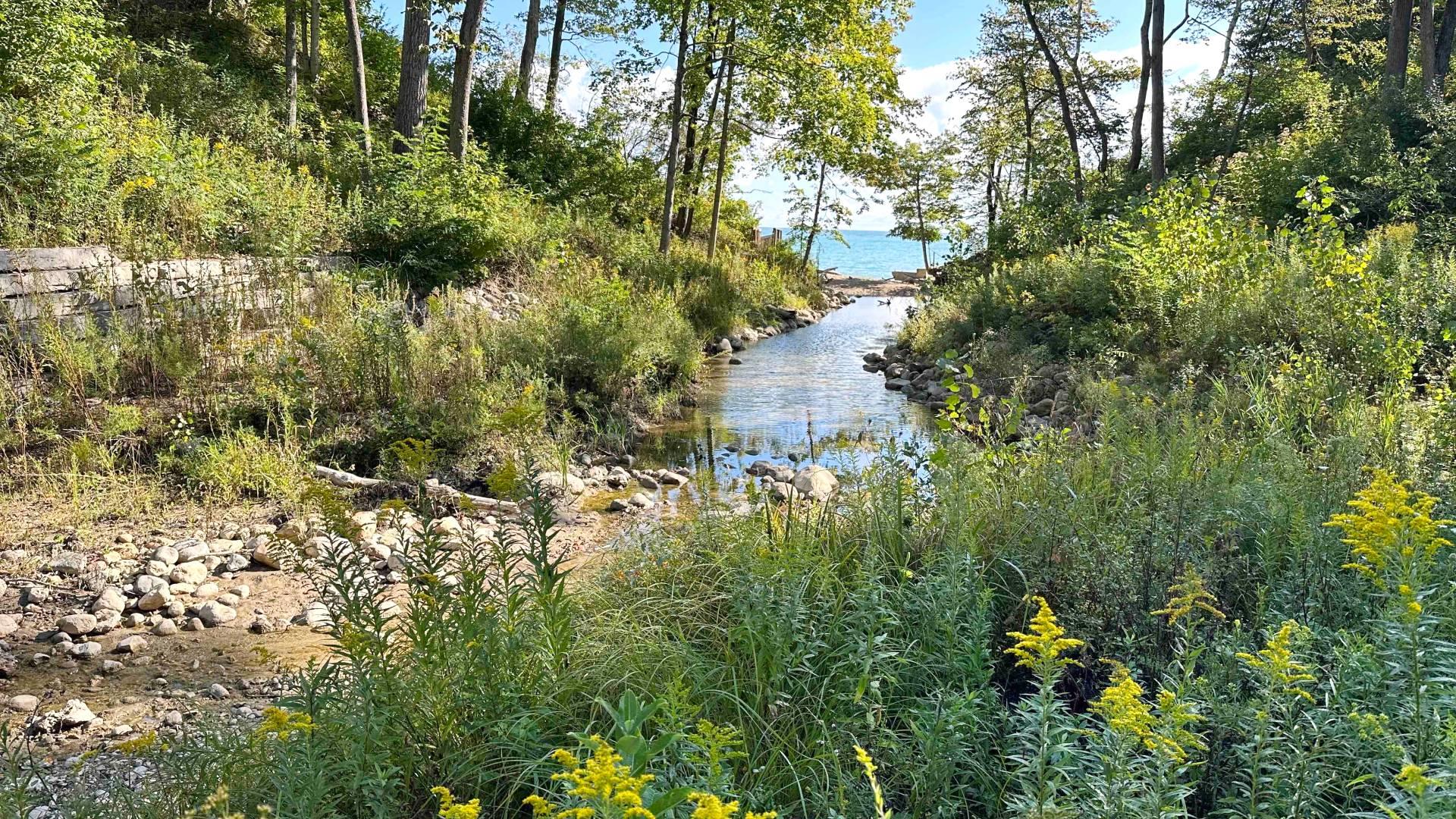 Restored ravine in Greene Preserve leading to Lake Michigan. (Courtesy of Lake Forest Open Lands Association)
Some folks might better know the Greene space as McCormick Ravine, a nod to its former status as part of the sprawling 300-acre estate of Gilded Age power couple Edith Rockefeller and Harold McCormick. Most of the McCormick property was eventually sold to a developer — indeed the vast majority of Lake County’s ravines are in private hands — but what’s now the Greene Nature Preserve was salvaged as public land.
Volunteers with Lake Forest Open Lands have been involved with the site’s maintenance since the 1970s, monitoring plant communities that had gone largely undisturbed for thousands of years. Because of ravines’ unique microclimates, which even differ between sun-drenched south facing slopes and shady north slopes, some species found here don’t grow anywhere else in the state.
“They’re these little relic communities, almost like a window to the past,” London said.
But like all remnants, the Greene Preserve has been threatened by activity outside its boundaries, from the incursion of invasive species to commercial and residential development. The latter, in particular, has dramatically increased the amount of water entering Lake County’s coastal ravines, which are conduits in a narrow watershed that drains into Lake Michigan. (The reversal of the Chicago River shrunk this watershed from nearly 700 square miles to less than 100 square miles.)
For millennia, the ravines performed admirably as natural infrastructure, but have been overwhelmed by manmade alterations.
“Because these ravines are carved into glacial moraines, naturally they want to erode. A whole host of (plant) species evolved to adapt to those conditions,” London said, naming paper birch and juniper as two examples. “But they’re not keeping pace with the input of water as we’ve added roads, as we’ve added roofs, gutters, storm sewers. Some of the stormwater outfalls on these systems turn into literally three-foot wide fire hoses when we have a two-inch rain.”
So for the past decade, Lake Forest Open Lands has been engaged in a series of projects at the site, aimed at stemming the damage, restoring the landscape and building resilience. (In exchange for its stewardship, the city of Lake Forest formally granted the organization ownership of the preserve in a 2019 land swap.)
Its partners have included the Illinois Department of Natural Resources and the Army Corps of Engineers, which have also assisted with coastal projects at Illinois Beach State Park and Fort Sheridan Forest Preserve, to the north and south of Greene Preserve, respectively.
Initial work by Lake Forest Open Lands focused on removing invasive trees (primarily buckthorn), dams and concrete; regrading slopes; rebuilding ravine beds; and replanting areas all but stripped of vegetation.
The benefits were almost immediate, London said. Fish returned to restored streams and spring ephemeral flowers reappeared once sunlight — formerly blocked by impenetrable buckthorn thickets — could reach the forest floor.
A second phase was all about creating access. Trails — designed to have minimal impact on the sensitive landscape — were built in 2021-22 and now lead from the head of McCormick Ravine down to the lake, including sections of boardwalk and even a suspension bridge.
Lake Forest Open Lands hosts various guided hikes and the organization’s ecologists regularly meet with visitors on the trails.
While land managers’ instincts in the past may have been to wall off valuable sites, when it comes to building champions for the preserve, “there’s nothing better than bringing people on site,” London said.
“Knowledge generates interest and interest generates compassion,” he said, reciting one of his favorite quotes from Doug Tallamy, an ecologist largely credited with spearheading the current native landscape movement.
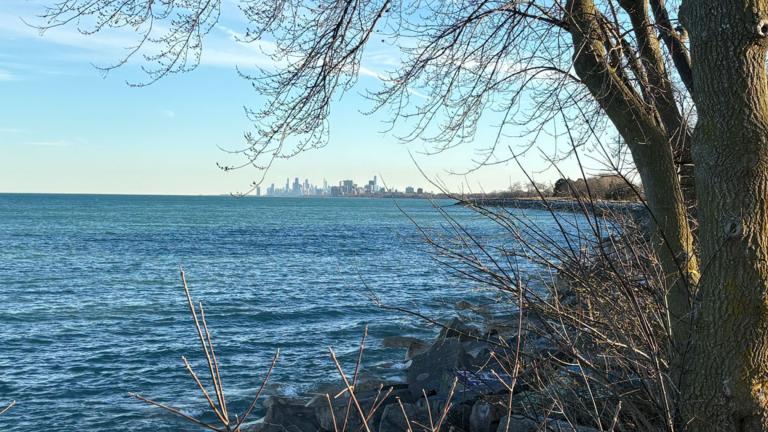
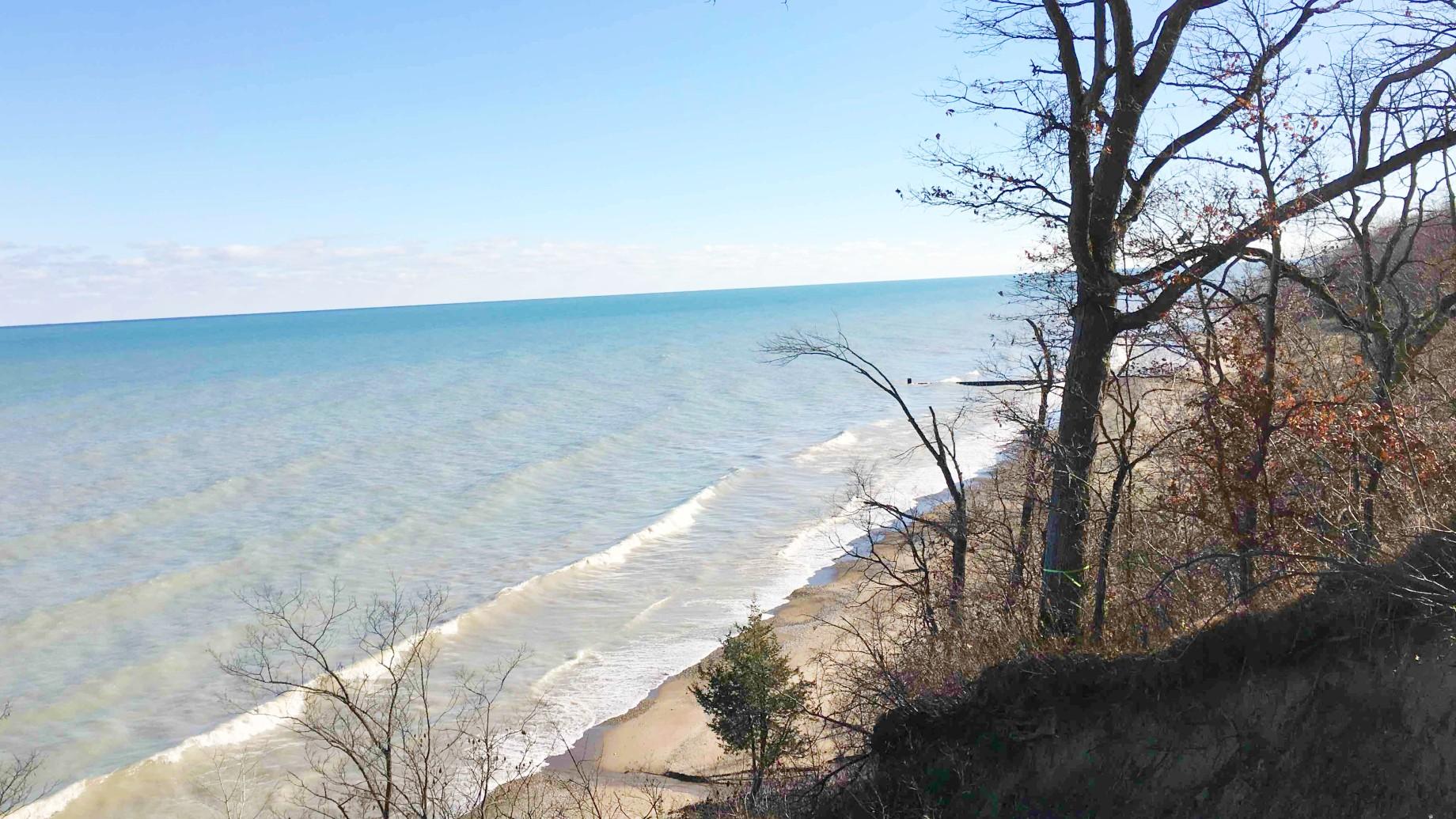 A view of Lake Michigan from the bluff at Greene Preserve. (Courtesy of Lake Forest Open Lands Association)
The latest phase in the preserve’s restoration, which will kick off in spring, will tackle stabilization of the site’s lakefront bluff and add offshore habitat for wildlife.
London estimated that 2020’s high lake levels contributed to the loss of “a solid 15 feet of bluff and all vegetation.”
But lake levels are only part of the equation. Another factor adding to the erosion, according to London: As other landowners up and down the Illinois lakefront have “hardened” their shorelines, the Greene Preserve’s unprotected, natural landscape has borne the brunt of wave action.
Instead of rolling in on beaches, dunes and wetlands, waves are crashing into steel piles and stone walls. And while those defenses spare property from damage, they’ve led to stronger waves and the scouring of near shore habitat, London said.
To counter those impacts, the plan is to reinforce the base of the preserve’s bluff with rounded stone — the shape chosen specifically because insects prefer it to ragged rip-rap — and reinvigorate the plant community to better hold soil in place.
Sunken reefs, placed some 500 feet offshore, will help break down waves, while also recreating some of the lost near shore habitat, giving dozens of fish species a place to spawn, feed and/or hide from larger predators.
Most of the heavy construction work will be finished by fall 2027. London said his team should be in monitoring mode by 2028, determining whether their interventions were successful.
The hope, he said, is for Greene Preserve to serve as a demonstration project to other private and public landowners, specifically in its emphasis on nature-based solutions over civil engineering. Something as simple as homeowners placing a buffer of native plants at the edge of their property would help slow ravine erosion, London said.
Though there’s no such thing as a “completed” restoration, today the McCormick Ravine is in better shape than it has been in decades. To increase the likelihood that this window to the past survives well into the future, the site has been put forward for consideration as an Illinois Nature Preserve, which would translate to an added layer of protection from development.
At a meeting earlier this month, the Illinois Nature Preserve Commission recommended preliminary approval of that application, calling McCormick Ravine “likely the most intact example of the Lake Michigan ravine system.” It could take another six months to a year for the final determination.
Contact Patty Wetli: [email protected]