Science & Nature
National Lab Report Cards Earn Argonne and Fermilab Millions in Fees and Highlight Research Accomplishments
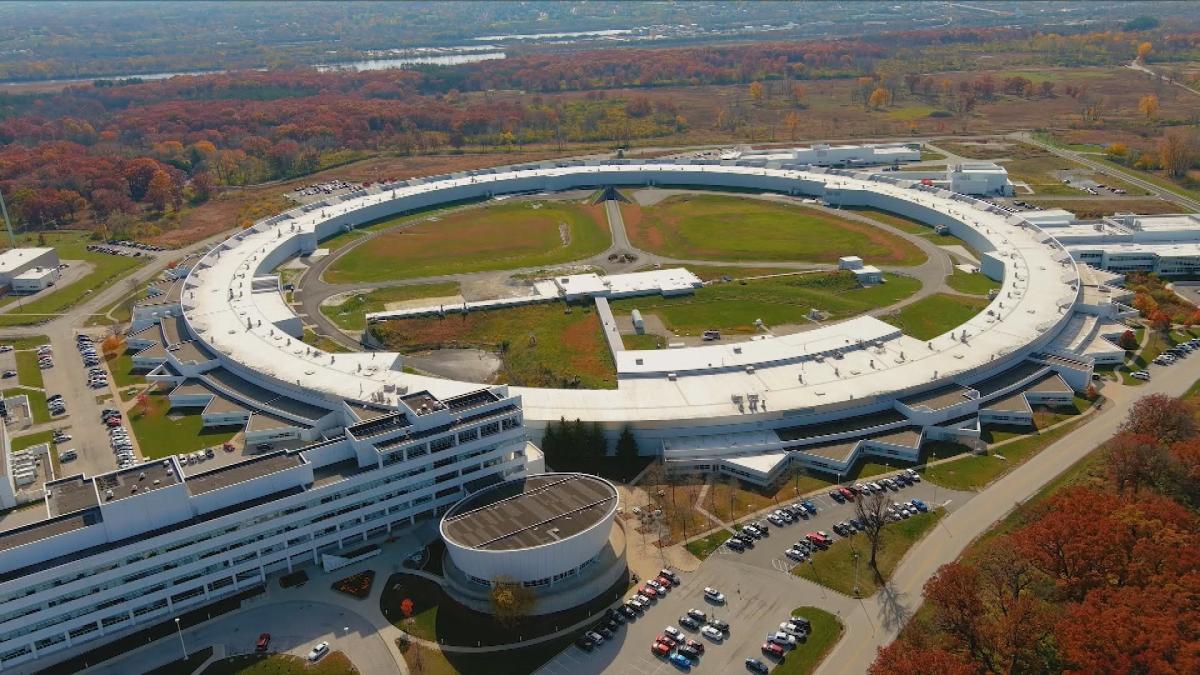 Argonne National Laboratory is pictured in a file image. (Credit: Argonne National Laboratory)
For the Chicago area’s two national laboratories, the past year has been filled with its fair share of change and challenges.
Recently released performance ratings reveal how the contractors managing those two suburban labs navigated the evolving priorities of the U.S. Department of Energy over the past year, records obtained by WTTW News show.
UChicago Argonne, which manages Argonne National Laboratory in Lemont, received passing scores for all goals identified by the DOE Office of Science, which leads the appraisal process. Fermi National Accelerator Laboratory in Batavia, managed by the Fermi Forward Discovery Group, received a B+ overall.
While some of the goals for Fermilab were below the passing threshold of B+, project management and contractor leadership both improved from C+ to B grades in 2025. The lab did not receive grades below a B for any goals in the past fiscal year.
The report card grades are used to assess the performance quality of the contractors selected to manage and operate each laboratory. The scores are tied to performance-based fee payments in addition to being used in decisions to renew or replace the contractors.
Records show Argonne’s earned fee percentage was 94%, leading to a payment of $6 million. Fermilab registered 91%, earning about $3.5 million. It was a considerable improvement from the 2024 calculation, which cost Fermilab about $1 million.
Recent changes in research priorities and funding have shifted priorities for national laboratories across the country over the past year, leading to changes in employment across various sections of local facilities under the DOE.
‘Lack of Effective Budget Planning and Execution’
The evaluation of Fermilab, the most renowned high-energy physics program in the national laboratory system, described improvements including leadership and safety, praising its scientific output and some project execution. It also identified problems.
Fermilab pinpointed a projected budget gap of around $29 million in April, records show. That represents about 3.8% of the lab’s total budget for 2025, records show. The evaluation said Fermilab was able to get finances in line for the end of the fiscal year.
National laboratories across the country, including Fermilab and Argonne, offered employees a voluntary separation agreement at the end of the last fiscal year. The report card highlighted preventative measures that would prevent financial shortfalls by Fermilab in future years.
“While it is understood that a lack of effective budget planning and execution and insufficient standard operating procedures were driving forces behind this repeated challenge, Laboratory leadership responded and corrected the error and have taken efforts to formalize a budgeting process,” the report said.
Fermilab was praised for its record-setting 80% uptime from its accelerator complex. Despite the success, insufficient supply of transformers prevented beam delivery by the main injector in the accelerator, creating multi-year operational delays and missed opportunities with other research facilities, the evaluation said.
The report card praised the high-quality, peer-reviewed science produced by Fermilab in addition to its impactful work in quantum science, accelerator and high-energy physics research.
It also highlighted a concerning annual cost of approximately $1.7 million related to disposal of tritium condensate water, a radioactive byproduct of accelerator use the lab ships to Utah.
A spokesperson said each laboratory operates with a unique mission, and highlighted sustained progress by the lab.
“Fermilab’s improving grades demonstrate forward momentum, while continued focus remains necessary to achieve long-term operational excellence,” the spokesperson said.
Interim Director Young-Kee Kim was pleased by DOE recognition of the significant effort the laboratory made in improving its safety culture and security posture.
“I know going forward that Fermilab’s new director, Norbert Holtkamp, and the lab’s leadership team will be focused on making continuous improvements in our operations to support the scientific achievements that Fermilab is poised to make in the future,” Kim wrote in a statement.
Holtkamp’s first day at Fermilab was Jan. 12.
Some of the lab’s lowest grades were related to its business practices. The report repeatedly tied execution problems at Fermilab to modern financial system gaps. The systems “were not effective at making timely and accurate budgetary projections or corrections,” according to the evaluation.
The lab has been hampered by weak system controls, limited integration of business systems and atypical processes across divisions, the report said.
The report card publication appears to have been followed by C-suite turnover at Fermilab.
Chief Financial Officer Angela Manning-Hardimon left Fermilab Dec. 8, a spokesperson confirmed. Ami Dave will serve as the interim CFO at Fermilab until a new CFO is named.
A spokesperson for Fermilab said she was unable to answer questions about the timing of Manning-Hardimon’s exit due to lab policy about personnel matters. Manning-Hardimon did not respond to a request for comment.
Strong Mission Alignment at Argonne
Argonne conducts multidisciplinary research focused on fields including energy, materials science, computing, medicine and national security. The evaluation repeatedly credits Argonne for high-quality, mission-relevant research across its programs.
The laboratory was praised in the review for many things including being “strongly aligned” with the nuclear physics mission of the Office of Science.
“Argonne National Laboratory is honored to have received strong marks in this year’s national laboratory performance evaluation,” a spokesman wrote in response to the grades. “We are especially proud of the recognition for our mission accomplishments, which underscores the groundbreaking research and innovation our scientists, engineers, and staff members deliver.”
While the report was mostly positive, there were a few notable missteps. The analysis praised the quality of basic science publications by the lab, but it also highlighted a decrease in research output.
Documents highlighted that the Low-Energy Accelerator Facility at Argonne was not operational in 2025 due to facility and operational challenges. The report describes a “Linac contamination event in 2024” at Building 211 followed by coordination between the lab and site office. A restart of the accelerator was approved in October, according to the review.
The incident involved molybdenum-99 and technetium-99m, which are radioactive materials commonly used in medical imaging and life-saving procedures, according to a spokesperson for Argonne, who wrote in a response the contamination was entirely confined to the laboratory area.
Nine individuals, including researchers and response personnel, were found to have minor amounts of contamination on their protective clothing and equipment, the spokesperson said. All affected individuals were successfully cleaned of contamination, and there was no risk to the public or the environment.
The evaluation also detailed a serious flooding event at Argonne in July where 90 minutes of heavy rain overwhelmed infrastructure. Water was present in more than 25 facilities. The damage was quickly repaired, according to the report.
Several serious incidents involving reactive chemicals occurred and required continued attention and stronger adherence to the laboratory’s institutional governance, documents show.
During the past fiscal year, several waste-characterization problems arose at Argonne, including the content of a radiological waste shipment being mistakenly underreported, and two instances in which the receiving facility limits were exceeded.
Waste shipments were suspended while a laboratory-wide assessment was planned for early in fiscal year 2026, according to the evaluation.
Contact Jared Rutecki: @JaredRutecki | [email protected]