Crime & Law
Illinois Attorney General Kwame Raoul on State’s Legal Battles, Immigration Enforcement
Illinois is locked in a series of legal battles with the Trump administration, challenging everything from federal funding freezes to what the state calls aggressive and unconstitutional immigration enforcement tactics.
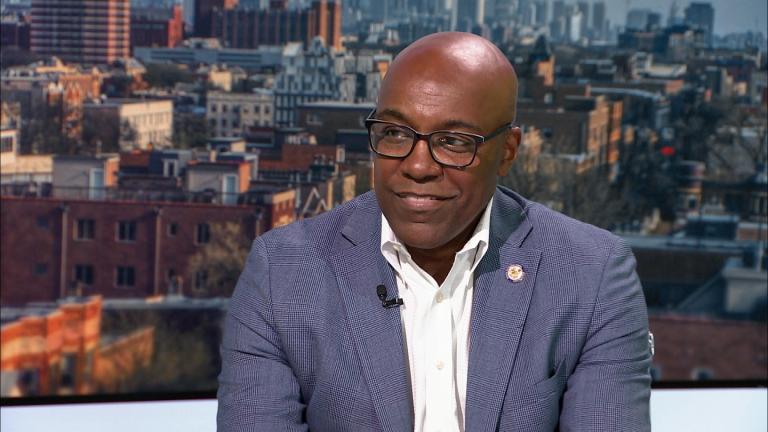
Illinois Attorney General Kwame Raoul joined “Chicago Tonight” to discuss how the legal efforts are going amid a tense relationship between the state and federal governments.
On the lawsuit over immigration enforcement:
Illinois and Chicago officials are suing the Trump administration over what they describe as “menacing, violent and unlawful” immigration enforcement actions.
Notable violent encounters with federal immigration agents include the fatal shooting of Silverio Villegas-Gonzalez, an undocumented immigrant from Mexico, in suburban Franklin Park in September. In October, Marimar Martinez was shot five times after following agents by car.
Minnesota filed its own, separate lawsuit against Immigration and Customs Enforcement on similar grounds following the fatal shooting of poet and mother Renee Good earlier this month.
“It’s important to note that our lawsuit is not saying that immigration enforcement should not happen. Of course it should happen,” Raoul said. “There are what are called enforcement and removal officers who have traditionally done that work on the interior and they are trained to do so. It’s targeted enforcement with warrants -— with not being violative of people’s privacy — not just doing sweeps and asking everybody whether or not they are a citizen of the United States.”
On the Supremacy Clause:
There are concerns that Illinois’ lawsuit may clash with the U.S. Constitution’s Supremacy Clause, which maintains that federal law supersedes state law. However, both Illinois and Minnesota’s suits argue that the federal government’s aggressive tactics are trying to force the states to abandon their sanctuary policies that protect immigrant communities, and that those tactics violate the Constitution’s 10th Amendment.
The 10th Amendment states “the powers not delegated to the United States by the Constitution, nor prohibited by it to the States, are reserved to the States respectively, or to the people.”
“It was Justice Scalia that said in a case, U.S. v. Prince, that the federal government cannot commandeer states and state and local resources to do what is the federal government’s work,” Raoul said. “The 10th Amendment gives us our sovereignty, gives us a state’s rights. It used to be that Republicans would advocate for the protection of state rights.”
U.S. Department of Homeland Security spokesperson Tricia McLaughlin said in a statement: “It really is astounding that the Left can miraculously rediscover the Tenth Amendment when they don’t want federal law enforcement officers to enforce federal law — which is a clear federal responsibility under Article I, Article II and the Supremacy Clause — and then go right back to federalizing every state responsibility possible when they get back in power. Spare us.”
On sanctuary laws and the Constitution:
The legal battle intersects with Illinois’ Trust Act, which limits cooperation between local law enforcement and federal immigration authorities. Raoul said Illinois’ policies are consistent with the U.S. Constitution.
A recent report from Raoul’s office found that four Illinois sheriff’s offices complied with immigration detainers or civil immigration warrants, defying the state’s sanctuary laws.
“They’re self-reporting to us,” Raoul said. “We communicate back once they alert us that there may have been a violation as to how to avoid it happening again. These are situations where we’ve been alerted and we try to work with our law enforcement partners into making sure they’re abiding by the state law.”
On the federal government freezing funding to social safety net programs:
Last week, a federal judge granted a temporary, two-week restraining order blocking the Trump administration from freezing roughly $10 billion in federal funding for child care and family services programs in Illinois, California, Colorado, Minnesota and New York. The order prevents the funding from being withheld while the case moves forward.
As justification for freezing the funds, the Trump administration cited concerns about fraud and undocumented immigrants receiving benefits and said it needed to conduct internal reviews and collect documentation.
“It’s violative of … the Administrative Procedures Act in that it’s arbitrary in how they’re doing it, but it’s also political retribution,” Raoul said. “It’s just five states. It’s a fishing expedition.”
He continued: “We have systems in place to make sure that people who are receiving these benefits are people who sorely need these benefits, truly need them and truly qualify for them. Could there be a case here or there where somebody scams the system? Absolutely. We actually partner with the federal government in investigating and sometimes prosecuting such fraud.”
On ongoing legal battles:
Illinois is currently involved in dozens of lawsuits against the federal government — a number Raoul said could grow.
“It’s looking that way, and it’s not because I’m looking for battles with the Trump administration, but it’s because our Constitution and our laws are being violated,” Raoul said.