Crime & Law
Steep Drop in Homicides Continued for Full Year After ShotSpotter Was Removed: Analysis
 (WTTW News)
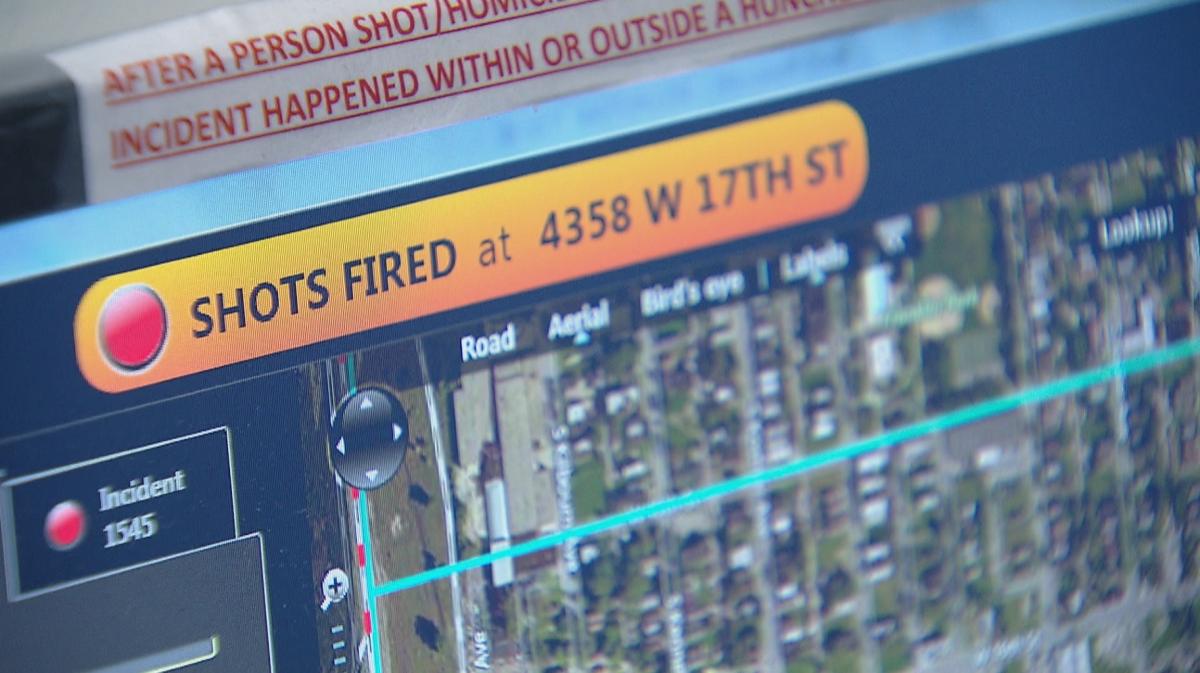
A steep drop in homicides in the 12 South and West side neighborhoods that had ShotSpotter sensors lasted a full year after Mayor Brandon Johnson scrapped the city’s controversial gunshot detection system, an updated analysis of Chicago crime data shows.
Despite dire warnings that without ShotSpotter police officers would be unable to stop a wave of gun violence, Johnson turned off the microphones that sent an alert to police officers every time the system picked up suspected gunfire.
Between Jan. 1 and Sept. 22, the first anniversary of the system being shut down, police beats that had ShotSpotter sensors saw an approximately 32% decrease in homicides, according to an analysis of Chicago crime data by Rob Vargas, a sociology professor at the University of Chicago who leads the UChicago Justice Project. Vargas and David Hackett updated the analysis at the request of WTTW News.
Citywide, the number of homicides dropped approximately 28% during the same period, according to the analysis and Chicago police data.
The analysis by the UChicago Project, which studies the politics of policing, is the first academic study to examine the impact of the decommissioning of ShotSpotter on crime rates in Chicago. The system was not in use on Chicago’s North Side or downtown.
Between Jan. 1 and Sep. 22, Chicago saw an 11% drop in violent crime, as compared with the same period in 2024, according to the analysis.
The 12 South and West side neighborhoods that had ShotSpotter sensors saw an 11.3% drop in violent crime during the same period, according to the analysis.
During the course of the first full year without ShotSpotter, the drop in the number of violent crimes “got a little smaller” but continued to show distinct improvement as compared with the year before, Hackett said.
The Chicago City Council twice rebuked Johnson and demanded that he reverse his decision to scrap the system, which he has said leads to the overpolicing of neighborhoods home to a majority of Black and Latino Chicagoans.
The City Council attempted to give Chicago Police Supt. Larry Snelling the power to bypass the mayor’s office and directly ink a contract with SoundThinking, the firm that operates ShotSpotter. Snelling supported the use of the system, but did not openly defy the mayor, who appointed him and has the power to fire him.
Snelling and other supporters of the gunshot detection system said it helped officers save lives when shootings were not reported to emergency services.
ShotSpotter was never used to dispatch paramedics.
Johnson has repeatedly said there is “clear evidence (ShotSpotter) is unreliable and overly susceptible to human error.” He blamed the system for the death of 13-year-old Adam Toledo, who was shot and killed by a Chicago police officer responding to an alert from the system in March 2021.
There was no evidence that ShotSpotter lived up to promises that it would reduce gun violence, Johnson said, calling it no more than a “walkie talkie on a pole.”
Under pressure from the City Council, Johnson’s administration agreed to consider proposals from firms to use technology to “ensure quick response by law enforcement authorities in emergency situations.”
City officials required gunshot detection systems to cover the entire city of Chicago and be able to report “incidents” to police with positional data within 60 seconds, with 95% accuracy, to help the city “improve detection of violent crime, expedite response times, improve the likelihood of obtaining forensic evidence and speed up medical response and first aid for victims.”
The city’s 2026 budget, set to take effect Thursday over Johnson’s objections, includes $5 million for “software maintenance and licensing” as proposed by the mayor that could be used to fund another contract with SoundThinking or another firm to provide a gunshot detection system.
That is less than the $9 million the city set aside in its 2025 budget for a ShotSpotter replacement, records show.
A contract for a new system — although it is unclear whether a gunshot detection system exists that meets the city’s specifications — could be finalized in the coming months, officials said.
Any decision to re-implement a gunshot detection system in Chicago would come after the city agreed to pay $90,000 to resolve a lawsuit filed by the MacArthur Justice Center, a nonprofit civil rights organization in Chicago.
That suit alleged the city used ShotSpotter alerts as a pretext to stop and search Chicagoans near the alert without other reasonable suspicion or probable cause, records show.
Because that settlement was less than $100,000, it was authorized by Corporation Counsel Mary Richardson Lowry and did not require City Council approval.
Johnson and Snelling have cited a number of reasons for the drop in crime and violence, including the expansion of violence prevention programs designed to stop shootings, carjackings, assaults or robberies before they happen by addressing what supporters say causes people to commit the vast majority of crimes in the first place: trauma, abuse and poverty.
One program, funded by both the state and city as well as philanthropic organizations, trains community members to work as peacekeepers to prevent violence.
Police beats where peacekeepers are active saw a decrease in homicides of more than 63%, more than double the citywide average, and a 12.4% drop in violent crime, according to the analysis.
WTTW News coverage of policing and police reform is supported by The Joyce Foundation.
Contact Heather Cherone: @HeatherCherone | (773) 569-1863 | [email protected]