Politics
Johnson Stops Short of Vowing to Veto Rival Budget Plan, But Calls It ‘Morally Bankrupt’
 (WTTW News)
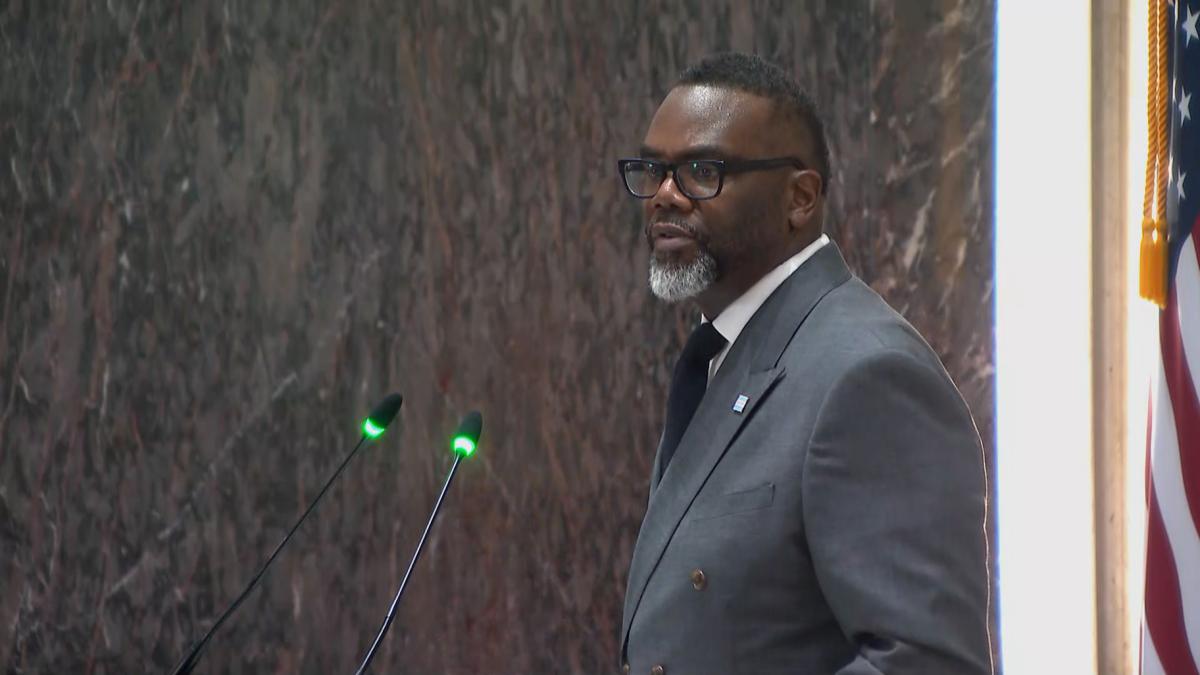
Mayor Brandon Johnson stopped short Thursday morning of vowing to veto a plan to bridge Chicago’s $1.2 billion budget gap without hiking taxes on large firms but called the proposal “morally bankrupt.”
The Chicago City Council took a procedural step Thursday toward adopting a nearly $16.6 billion spending plan for 2026, even though the city’s top finance officials warned it would leave the city with a deficit of more than $163 million.
Supporters of the rival budget plan have repeatedly insisted that it is balanced.
Even as a final, decisive vote by the City Council could come as soon as Saturday, Johnson pledged at a City Hall news conference to “keep working towards a reasonable, responsible compromise.”
While Johnson said he had “not completely made that decision” on whether to veto the spending plan that eliminates his proposal to levy a $33 per month per employee tax on companies with 500 or more employees, he called the plan to replace that revenue by stepping up debt-collection efforts a “deal breaker.”
The proposed spending plan counts on $176.6 million in new revenue to eliminate the so-called head tax and pay an additional $140 million into the city’s woefully underfunded pension funds. But those changes will actually result in an $8.3 million loss to the city, according to Budget Director Annette Guzman, Chief Financial Officer Jill Jaworski and Comptroller Michael Belsky.
While Johnson and his allies have defended the so-called head tax as the best way to generate $82 million to continue funding the programs they credit with reducing Chicago’s homicide rate by approximately 29% and the city’s overall violent crime rate by more than 22%, opponents contend the tax will kill jobs and stifle economic growth.
“We may walk away with only 98% of what we want,” Johnson said. “And you know, if we can get to a point where it gives us room to fight for that last 2% in a form that I believe the people of Chicago want and deserve, then that’s a fight that’s worth staying a part of.”
While Johnson weighed what could be the biggest decision of what he hopes will be his first term in office, the Civic Federation, a nonpartisan fiscal watchdog group, offered only tepid praise for the proposed spending plan, the first to be crafted by members of the City Council without the support of the city’s budget and finance teams.
“Unfortunately, even with these changes, the budget does not move Chicago appreciably toward long-term fiscal stability,” according to a statement from the organization led by former Inspector General Joseph Ferguson who has been fiercely critical of Johnson’s financial stewardship of the city.
The plan calls for the city to collect an additional $89 million from Chicagoans who owe to the city ambulance payments, utility bills, red-light camera tickets and other debt.
The budget would allow the city to sell the debt to a private company, and Johnson said those firms would target the poorest residents, including Black and Brown residents.
“I think that’s just morally bankrupt,” Johnson said. “We’re going to continue to ensure that we’re balancing our budget responsibly, and that we’re not just simply making up numbers, just so that we can, you know, settle some sort of political score.”
City officials have just 12 days to avoid an unprecedented shutdown of city government.
“I will do whatever is necessary to avoid a government shutdown,” Johnson said.
If Johnson vetoes the spending plan, it would take 34 votes of the 50 City Council members to override the mayor’s rejection.
“We’re not going to allow this budget process to move forward with make believe,” Johnson said. “We have to keep talking.”
Officials cannot pass a short-term ordinance to keep City Hall functioning while negotiations continue, officials said. That means without a budget agreement, more than 30,000 workers will not be paid and city services will stop.
Contact Heather Cherone: @HeatherCherone | (773) 569-1863 | [email protected]