Crime & Law
What Is Tear Gas, And Why Is It Used on Civilians But Banned in Combat?
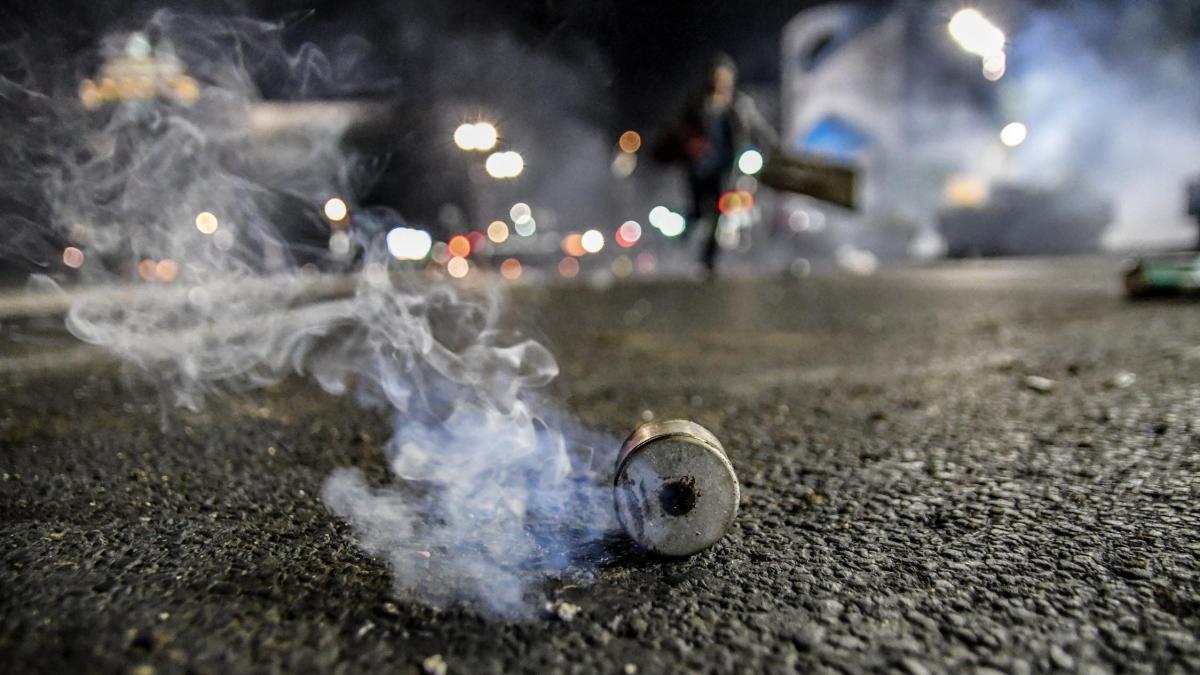 Tear gas cannot be used in combat, according to an international chemical weapons treaty, but it is not prohibited as a “riot control agent.” (Bobislav / iStock)
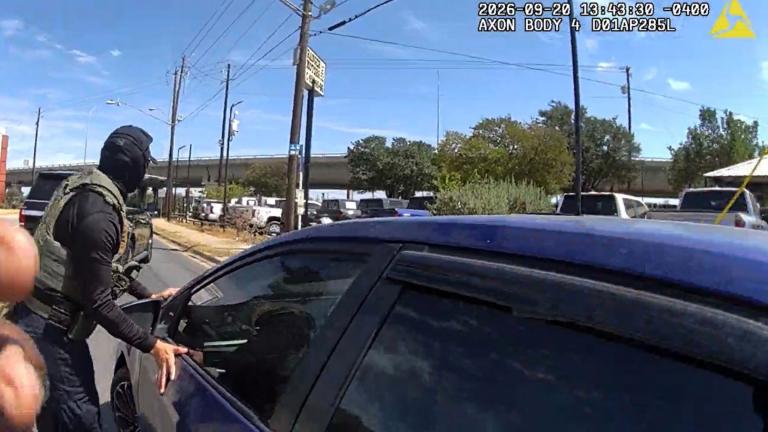
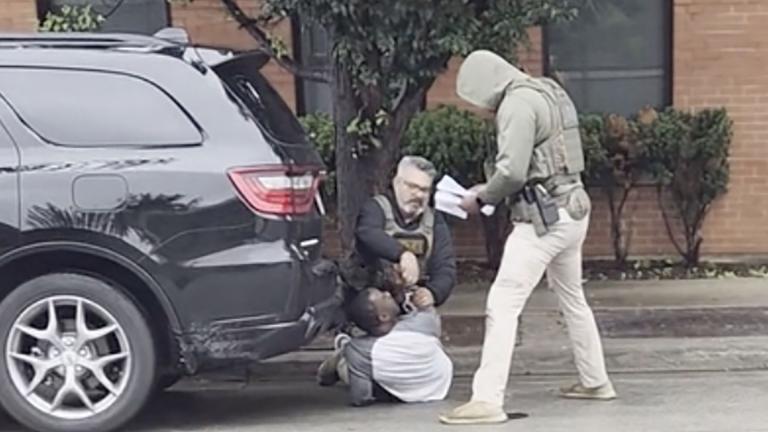
Federal agents’ use of tear gas during immigration enforcement raids has drawn intense scrutiny in Chicago, it was recently dispersed in the Old Irving Park neighborhood as many residents were on their way to a Halloween parade.
But the deployment of these chemicals — referred to as “riot control agents” — has long come under question by human rights organizations.
Here’s a look at the history of tear gas and why it remains so controversial.
What exactly is tear gas?
For starters, it’s not a “gas.” It’s actually a liquid or solid, released as droplets or particles.
Though tear gas was first used during World War I, it shouldn’t be confused with chemical weapons like chlorine or mustard gas, which were introduced during the same war to deadly effect.
Tear gas tends to be classified as a “chemical irritant,” and the term itself, per the Centers for Disease Control, is often used interchangeably to refer to a variety of substances, including pepper spray, that have short-term effects on the eyes, mouth, throat, lungs and/or skin.
One of the most common tear gases is known as Agent CS (chlorobenzylidene malononitrile) — it’s been frequently used since the 1950s and 1960s.
Another is CN (chloroacetophenone), which is the principal component of mace.
And then there’s OC gas (oleoresin capsicum), a highly concentrated extract from chili peppers that’s the active ingredient in pepper spray. According to some reports, OC pepper sprays measure above 2 million on the Scoville scale of heat units. For comparison, ghost peppers come in at 1 million.
What does tear gas do?
According to the Physicians for Human Rights, tear gas/chemical irritants “cause pain and inflammation via multiple mechanisms. These agents work on pain and temperature receptors to cause sensations of burning and severe pain.”
Reactions to the chemicals usually occur within 30 seconds and include eye spasms, coughing, choking and skin burns and blisters. Effects typically subside after 30 minutes.
Under certain conditions, reactions can be more severe, resulting in injury or death, depending on a person’s exposure and underlying health issues, how much of the chemical was released and whether the space in which it was released is enclosed.
The long-term health effects haven’t been well studied.
Other concerns include the use of the canisters themselves as projectiles, which could inflict blunt force trauma.
Why is tear gas legal?
The Chemical Weapons Convention — an international arms control treaty signed by nearly 200 countries including the United States — bans the use of tear gas (or “riot control agents”) in combat.
But the convention does not prohibit the use of tear gas when it comes to “law enforcement including domestic riot control.”
This seeming contradiction has long been pointed to as a significant flaw within the Chemical Weapons Convention, leaving the use of tear gas open to interpretation and abuse.
According to a report challenging these “dangerous ambiguities,” riot control agents have been used to suppress freedom of expression and the right to assembly.
Under a temporary restraining order issued by a federal judge, if immigration agents in the Chicago area determine a crowd poses a threat, they must first issue two warnings before using tear gas and similar chemical sprays.
Illinois State Police troopers, who have regularly been assigned to protests around an ICE facility in suburban Broadview, have similar restrictions around tear gas use. Under a departmental directive, tear gas can only be used as crowd control after a dispersal order has been issued and sufficient time is given for it to be heard and repeated, if necessary.
Contact Patty Wetli: [email protected]