Business
The Chicago Region Needs to Get Better at Recycling. A New ‘Feed the Cart’ Campaign Makes That Message Clear
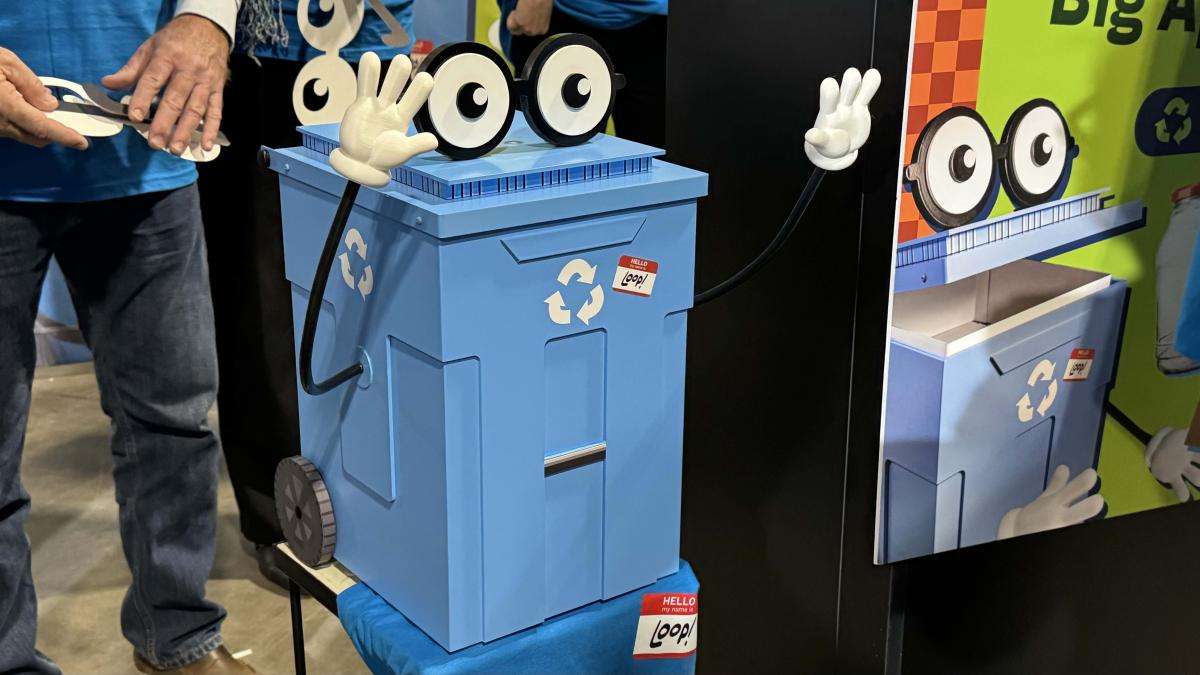 The new "Feed the Cart" campaign has a user-friendly mascot, "Loop." Look for it on billboards and other advertising. (Patty Wetli / WTTW News)
Chicago is not alone in the fight to boost its recycling rate.
On Monday, the Metropolitan Mayors Caucus — representing 275 local governments in the Chicago metro area — kicked off a joint recycling education campaign across six counties, making the announcement in Back of the Yards at the Exchange, a $50-million facility owned by Lakeshore Recycling Systems.
“Feed the Cart” is being billed as the “largest recycling education and improvement campaign in the state of Illinois’ history.” It even has its own cartoonish mascot, a bug-eyed blue-bin nicknamed “Loop.”
Backed by a $2 million grant from the U.S. Environmental Protection Agency, the campaign’s goal is to increase recycling tonnage across the Chicago region by 15% before 2030.
The current region-wide rate has been stalled at 30% for the past decade, which is on par with the national average of 32%, but well short of the EPA’s national target of 50% by 2030, according to Christina Seibert, executive director of the Solid Waste Agency of North Cook County.
Read More: WTTW News Explains: Chicago’s Recycling Woes
A number of trends have combined to stymie recycling’s growth: Contamination (putting non-recyclables in recycling bins), misinformation and complacency. “Feed the Cart” is intended to reinvigorate participation in recycling, while also educating people about how to do it right.
There will be messaging across social media, video and print advertising, billboards and other channels, running in Cook County (including Chicago), DuPage, Kane, Lake, McHenry and Will.
“This large, wraparound effort is key. Everyone is saying the same thing,” said Chris Sauve, deputy commissioner of policy and sustainability with Chicago’s Department of Streets and Sanitation. “It’s the first time in a long time we’re all tied together.”
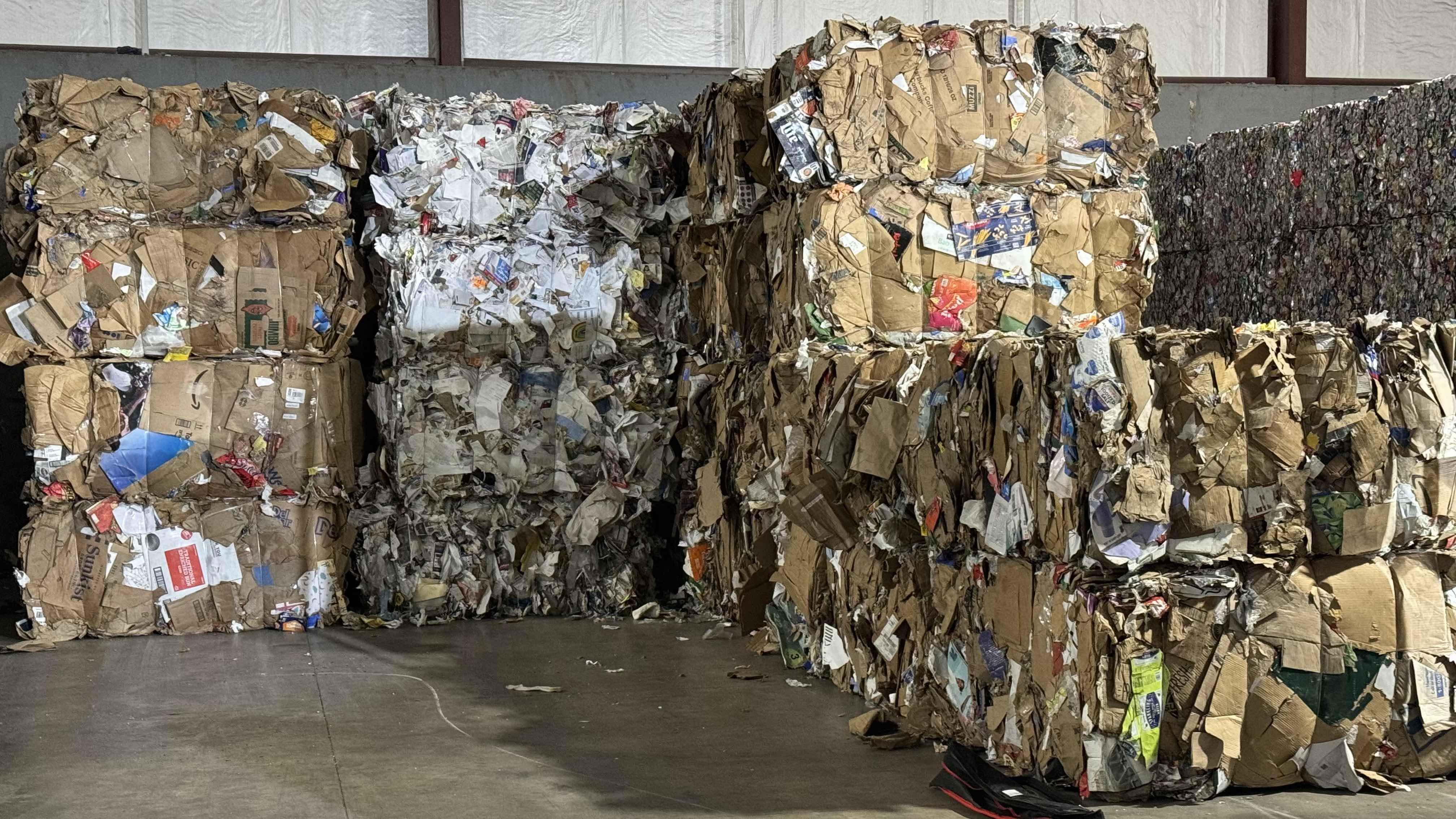 Bales of recycled paper and cardboard, packaged for sale. (Patty Wetli / WTTW News)
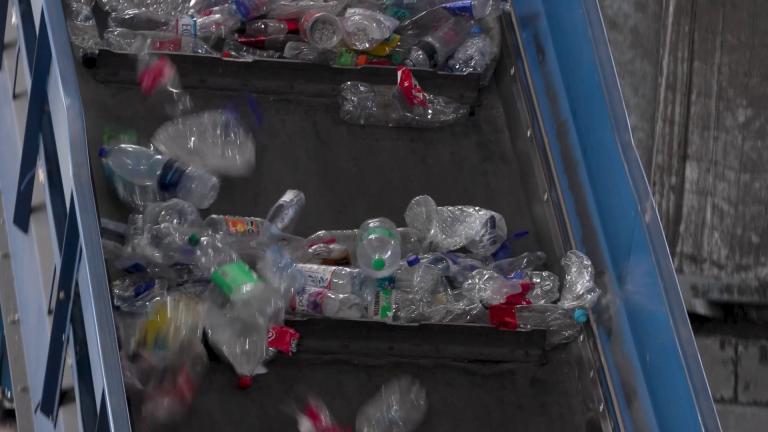
“Feed the cart” has a simple mantra: Put these “good” materials — cardboard and paper, aluminum cans, glass, and plastic bottles, tubs, jugs and jars — into the recycling container.
It sounds basic, but Sauve said he still sees way too many aluminum cans in the garbage, aluminum being the easiest material to sort, bundle and recycle infinitely.
Confusion about what can be recycled has led to an anything goes approach among some people.
“There’s this idea that if you just put it in there because you think its recyclable, the recycling facility will clean it out,” said Seibert.
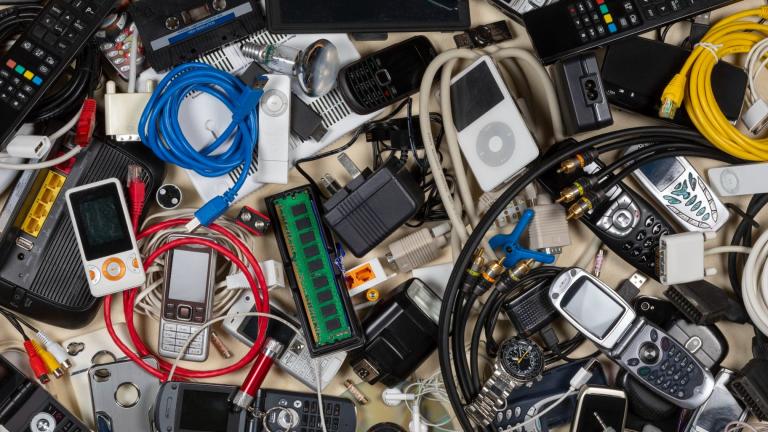
Mark Molitor, vice president of post collection operations for Lakeshore Recycling Systems, said “tanglers” such as extension cords and garden hoses remain some of the most persistent and problematic contaminants, snarling machinery that wasn’t designed to sort them.
Plastic bags also fall into this troublemaker category.
On the opposite end of the spectrum are people who, if they’re uncertain about whether an item is recyclable, err on the side of trashing it.
Seibert conceded that the concept of “if in doubt, throw it out” originated from within the industry to combat contamination that was devaluing recyclables on the open market. It was necessary to clean up the recycling stream but some folks have taken it too far.
“Now it’s become, ‘Let me just throw it out because they’ll catch it somewhere in the system if it really matters,’” she said.
Seibert, who’s been working in waste management for 25 years, said stubborn myths about recycling — along the lines of “My brother-in-law’s best friend works at the recycling facility and they say it’s all trash” — have perhaps been the most harmful.
Standing in the Exchange following the “Feed the Cart” press conference, Seibert pointed to the towering stacks of bales of recyclables ready for resale.
“Trust me,” she said, “they don’t put the kind of work into making this beautiful material to put it in the trash.”
And there are markets for recyclables, contrary to popular opinion.
While it’s true that within the last decade China began rejecting recyclables from the U.S. as too contaminated, not only did the U.S. respond by producing cleaner materials, but it also developed a domestic market.
“This doesn’t get into landfill,” said Patrick Whalen, Lakeshore Recycling Systems’ senior vice president of environmental health and safety. “Your products truly are being recycled, reused and sold as a commodity in the Midwest.”
Contact Patty Wetli: [email protected]