Science & Nature
Has Your Tree Sprouted Warts? The Cause Is Absolutely Gall-ing
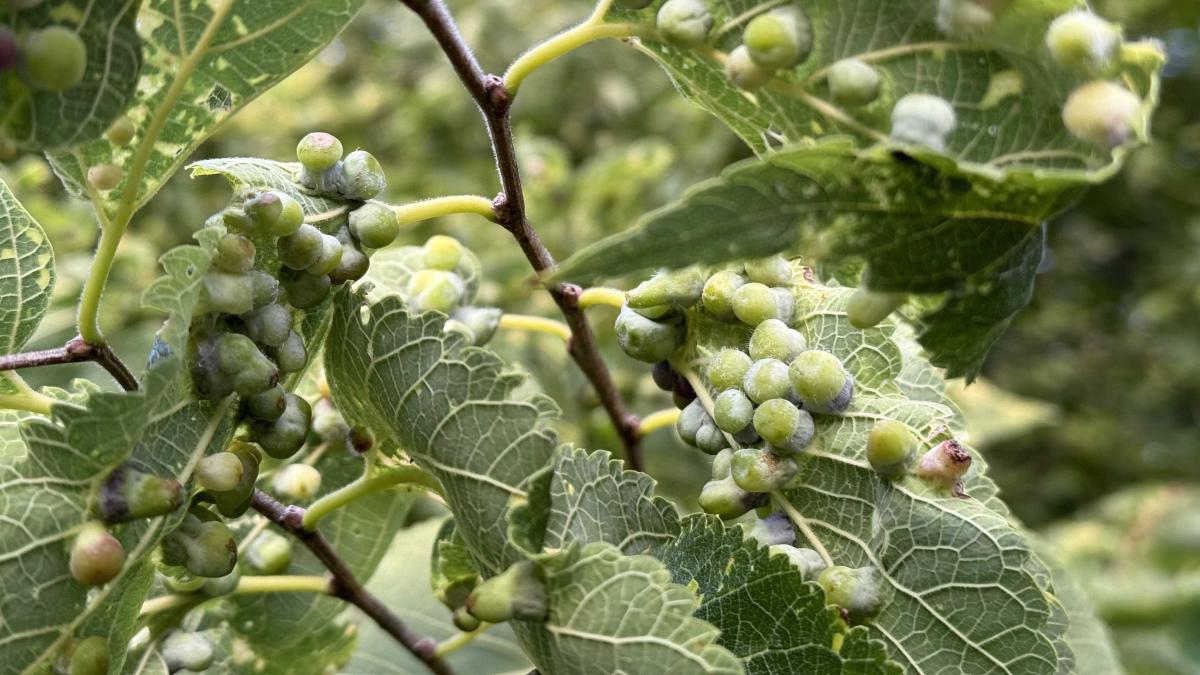 These “warty” growths on hackberry leaves are one of nature’s many unusual phenomena: galls. (Patty Wetli / WTTW News)
Want more local nature coverage? Sign up for WTTW News’ weekly Urban Nature newsletter.
Ever seen a tree that looks like its leaves have sprouted warts or are suffering from a really bad rash? How about a goldenrod plant that looks like it’s swallowed a golf ball?
Welcome to the wild, wonderful world of galls.
Galls are “plant oddities,” said Tom Tiddens, plant health care supervisor at Chicago Botanic Garden. “They’re really abnormal growths that happen on leaves, twigs or branches, but the majority of them do not cause harm to the plant that they’re on.”
The plant tissue malformations come in all kinds of shapes from knobs to bumps to tubes. The culprit is usually an insect or mite that quite often is living inside the gall (but again, not hurting the plant).
Think of galls kind of like a scab — they’re the plant’s response to an injury, in this case an insect laying eggs or larva sucking on sap, generally during the rapid growth period of new leaves.
As a defense mechanism, the leaf builds up tissue around the insect or mite to contain the threat. That mass is the gall, and it actually benefits the insect.
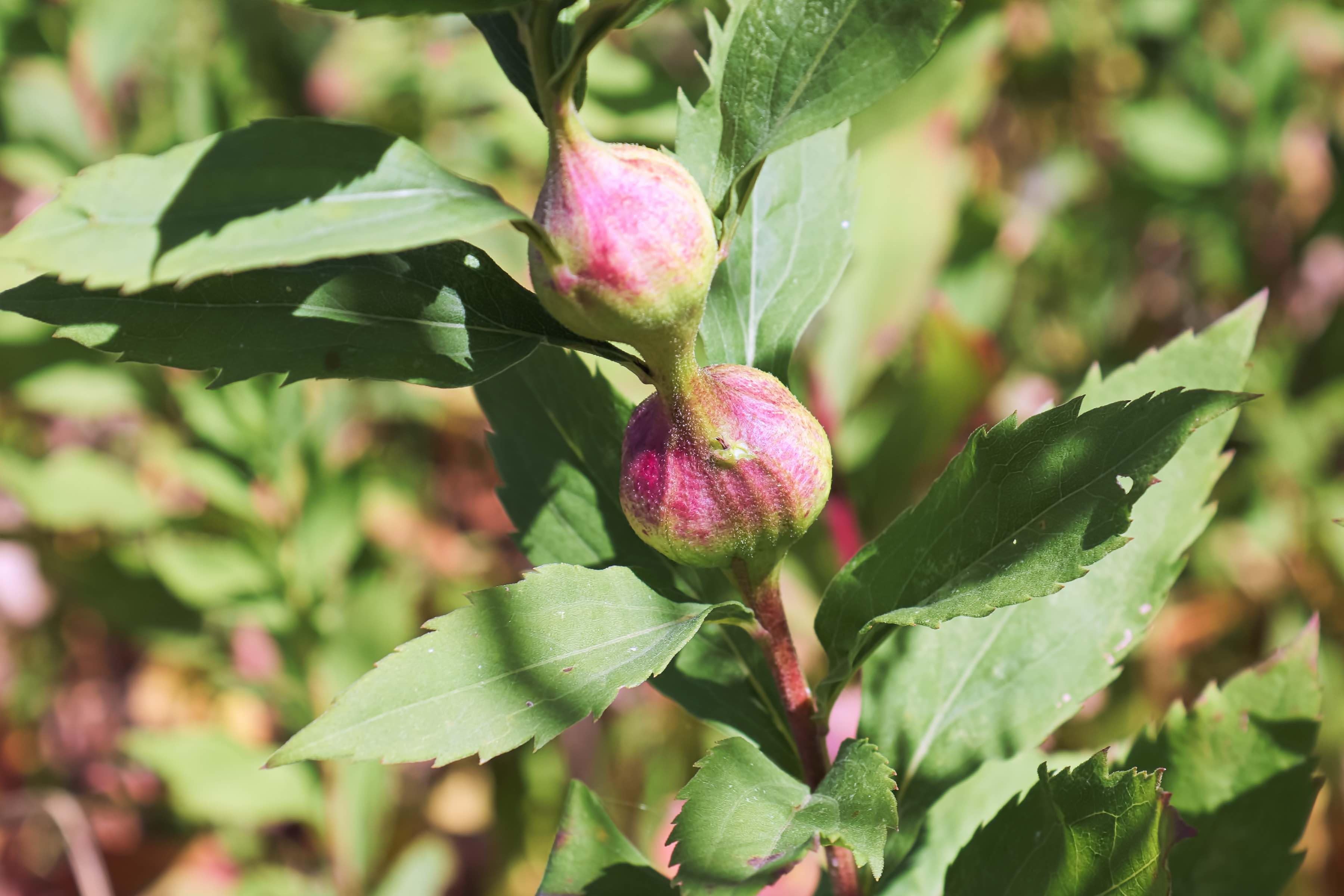 A golf-ball-shaped goldenrod gall. (Akchamczuk / iStock)
Now the midge-fly-wasp-mite has a cozy little home — almost like a nursery for its young — where it’s protected and can keep on feeding until it’s mature enough to bust free and start the cycle all over again.
“It’s just what I would call another wonder of nature,” Tiddens said. “How do (insects) create this chemical that causes this hormonal response in leaves to make this nice little chamber for them? Insects are just kind of amazing.”
Because galls are almost always harmless, they’re “woefully understudied,” said Spencer Campbell, plant clinic manager at Morton Arboretum. “There’s not much research out there. But it’s one of those things where it’s a neat phenomenon if you observe it and notice it.”
Here’s what scientists do know: Generally there’s a very specific relationship between a certain gall-forming insect or mite and the plant (or small group of plants) on which galls form.
“These insects and plants have co-evolved together since time immemorial and they have figured out how to dance together,” Campbell said.
While some people might find galls unsightly, the general advice from experts like Campbell is to leave them alone. There’s no need to spray pesticides or otherwise manage the situation, he said.
“It’s a unique feature of the natural world. I think it really helps tell the story of how dynamic the natural world is,” Campbell said. “The diversity, the dynamism — it’s beyond comprehension.”
There are an estimated 1,500 gall-producing insects and mites, 500 of them affecting oaks alone. Campbell’s gateway gall was the goldenrod gall fly — responsible for those golf-ball-sized nodes in the plant’s stems — not to be confused with the goldenrod bunch gall midge, which produces an entirely different growth.
“The world’s a mysterious place,” Campbell said. “I’m just glad I get to live here.”
Here’s a small selection of some of the more common galls seen in Chicago.
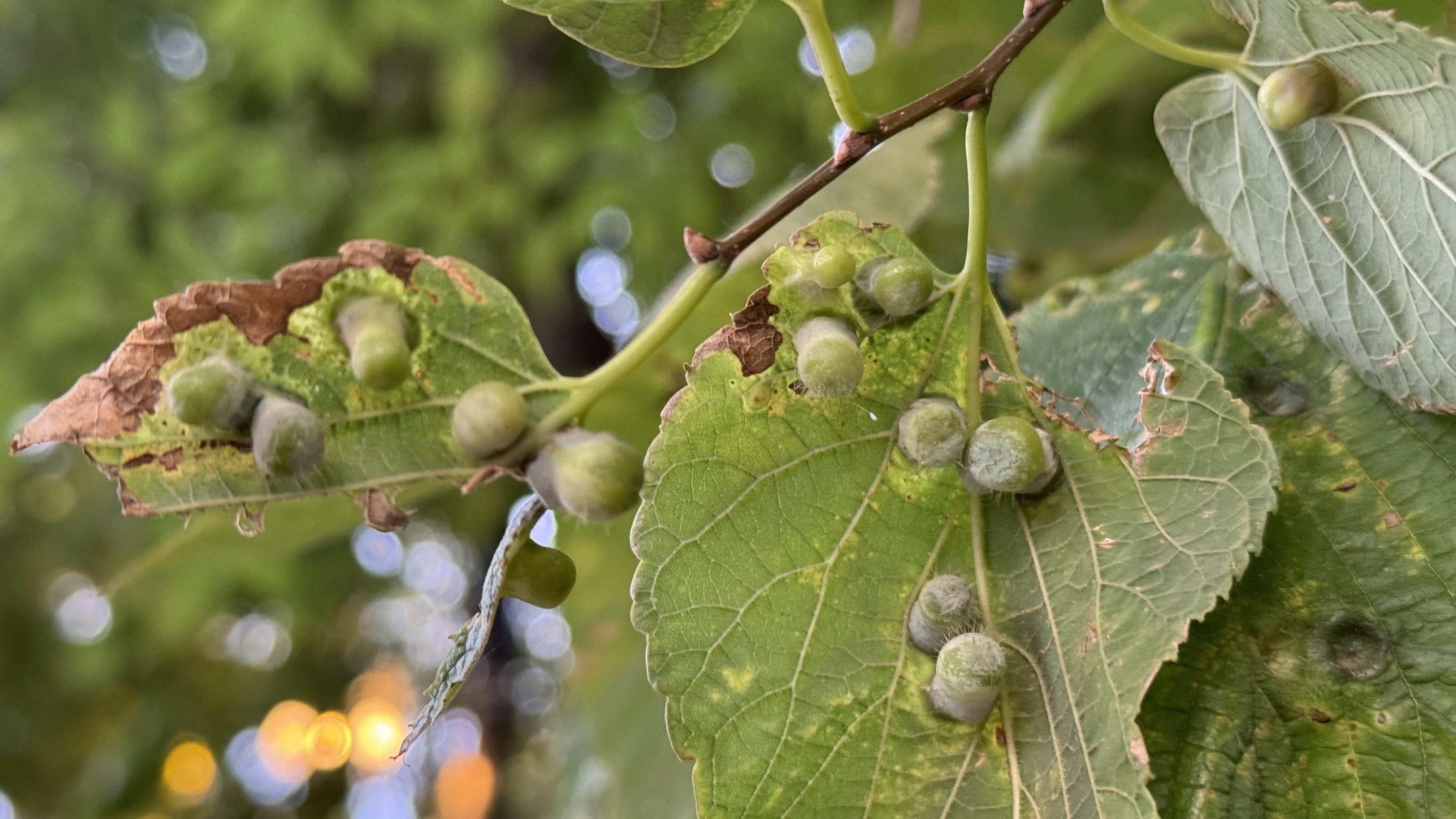 Hackberry trees are incredibly hardy and even though galls look problematic, they’re not doing any harm. (Patty Wetli / WTTW News)
Host plant: hackberry tree (Celtis occidentalis)
Gall-former: hackberry psyllid (Pachypsylla celtidismamma)
That’s so galling: Psyllids (pronounced “sill-ids”) are often called jumping plant lice. These tiny plant hoppers are small enough to fit through window screens. Under magnification, they’re said to resemble cicadas.
There are anywhere from seven to 13 species of hackberry psyllids, according to estimates, roughly half of which are responsible for leaf galls.
Adults lay their eggs on emerging leaves of hackberry trees in spring, and when the young hatch, the nymphs suck sap straight from the leaf. This is the stage where the tree cranks up tissue cell production, and galls form around the nymphs on the lower leaf surface.
Nymphs are scarcely ever seen, spending all their time snug as a bug in a gall, bulking up on plant juice. To catch a glimpse, try carefully cutting open a gall. Otherwise, adults emerge in the fall and spend the winter holed up in the tree’s bark or some other protective nook.
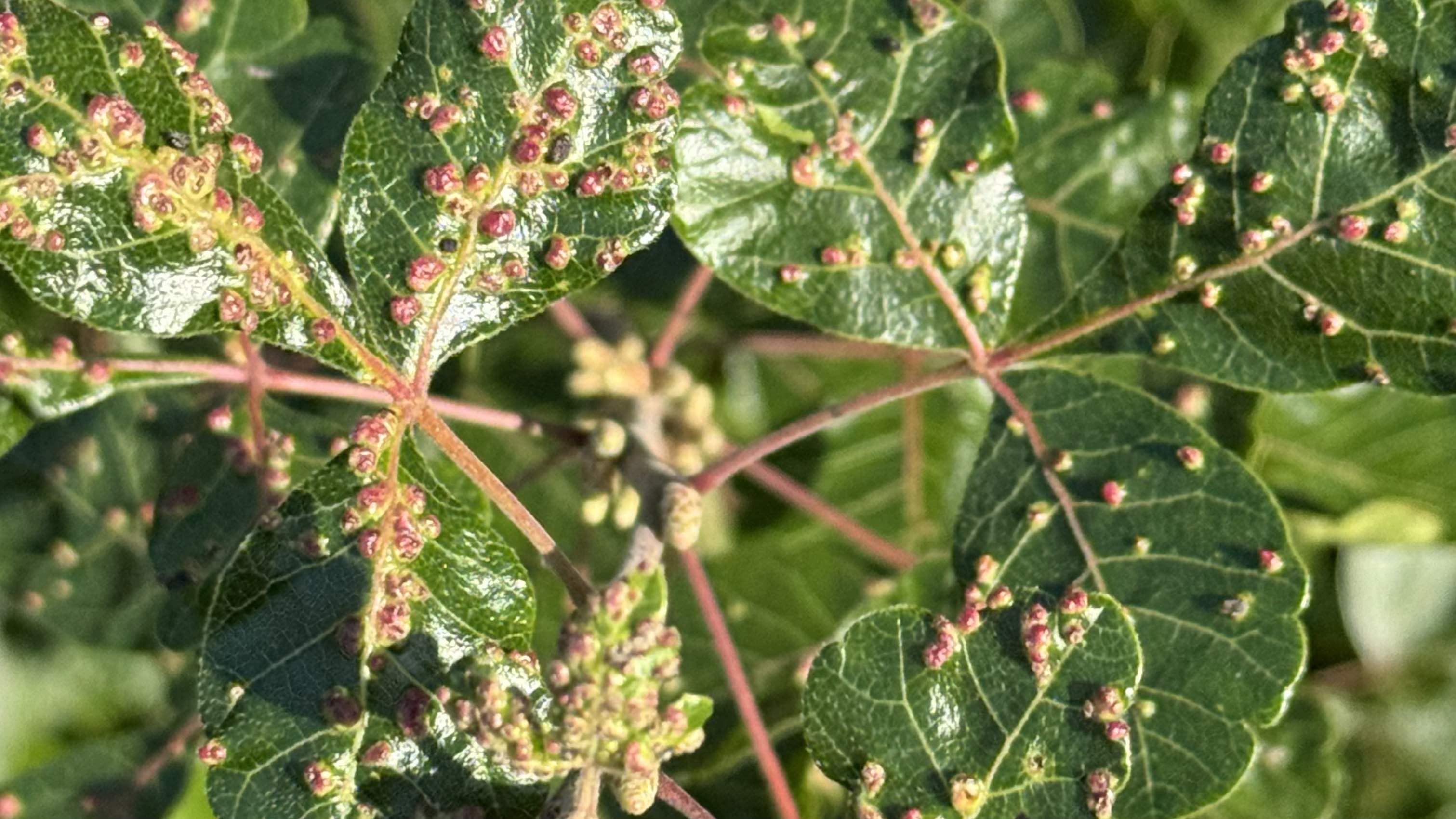 The poison ivy leaf gall mite also uses fragrant sumac as a host. The galls look like a rash on the plant’s glossy leaves. (Patty Wetli / WTTW News)
Host plant: fragrant sumac (Rhus aromatica)
Gall-former: eriophyid mite (Aculops rhois)
That’s so galling: Though best-known for causing galls on poison ivy, this mite will also use other plants, including fragrant sumac, as a host.
Talk about teeny tiny. It takes some serious magnification — at least 40x — to see these buggers. Shaped like cigars, eriophyids are the only mites to have just two pairs of legs.
Adults overwinter in the plant’s bark and make their move as soon as leaf buds swell in the spring. Galls form around the mites, starting out green and then turning into a colorful bumpy rash. It’s a whole separate mite universe under the gall umbrella, with the mites feeding, mating and living their best lives all summer long until they reemerge in fall.
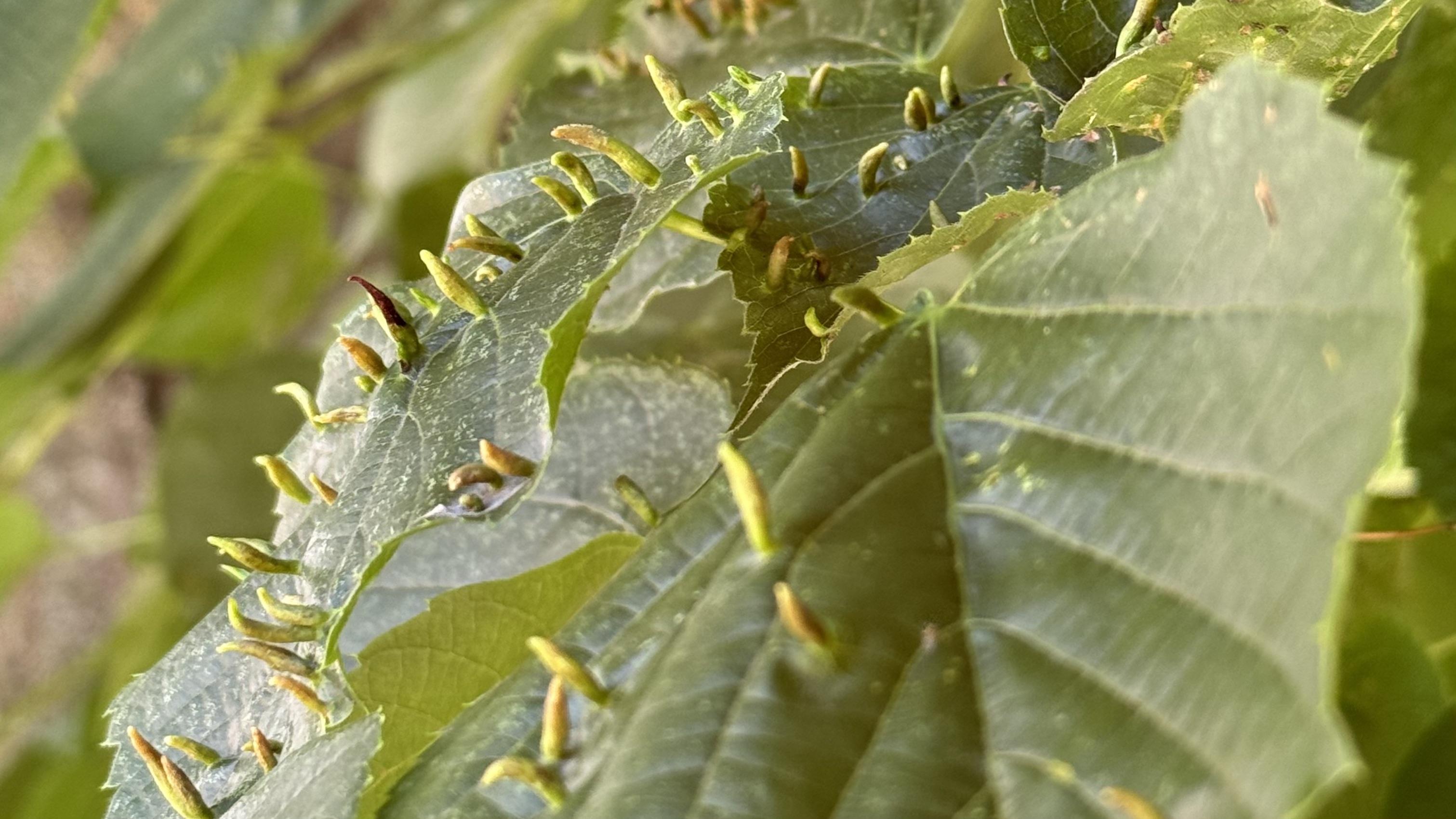 Spindly galls, like the ones on this basswood tree, are often described as finger or fingernail galls. (Patty Wetli / WTTW News)
Host plant: linden/basswood tree (Tilia americana)
Gall-former: another eriophyid mite (Eriophyes tiliae)
That’s so galling: Spindle galls go by lots of names including nail gall, finger gall or bugle gall. They’re slender and erect, ranging in color from greenish-yellow to pinkish to deep red.
This one’s tricky to ID. Sometimes lindens develop masses of tiny hairs on their undersides instead of protruding spindle galls. Online searches will also turn up information about the “lime nail gall” — lime being what members of the linden, aka basswood, family are called in Great Britain.
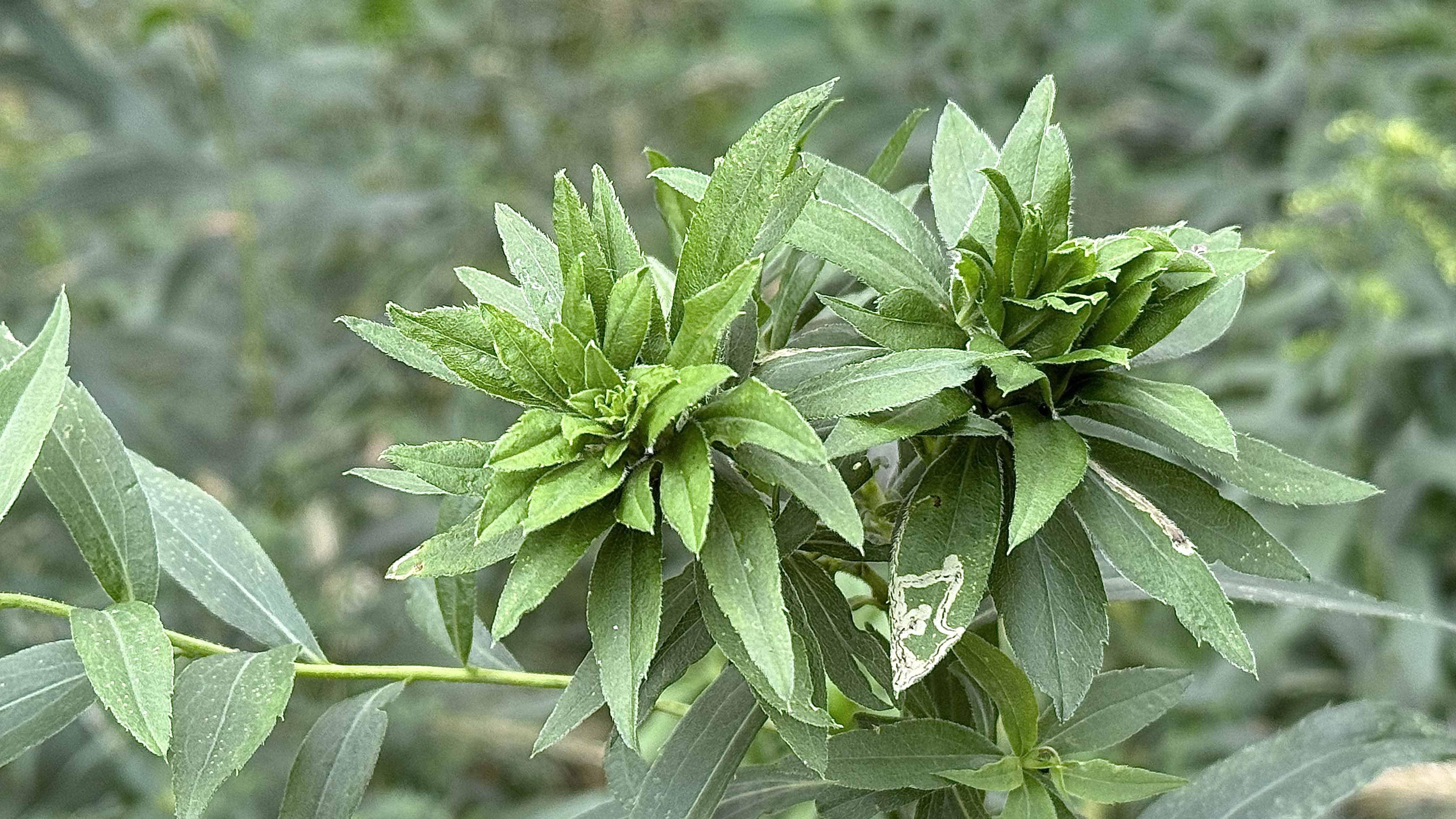 Ask an app to ID this “flower” and it will come back “insect.” It’s a gall. (Patty Wetli / WTTW News)
Host plant: goldenrod (Solidago species)
Gall-former: goldenrod bunch gall midge (Rhopalamyia solidaginis)
That’s so galling: Subjectively speaking, this gall is the prettiest of the bunch, pun intended. Instead of a warty lump or creepy nail, this midge, and goldenrod’s response to it, results in what basically looks like a flower.
When the tiny fly lays its eggs at the tip of the goldenrod plant, the stem stops growing. But the leaves keep sprouting and eventually take the shape of a rosette.
Contact Patty Wetli: [email protected]