Science & Nature
Looking for Peak Fall Foliage in and Around Chicago? These Fall Color Reports Won’t Leave You Hanging
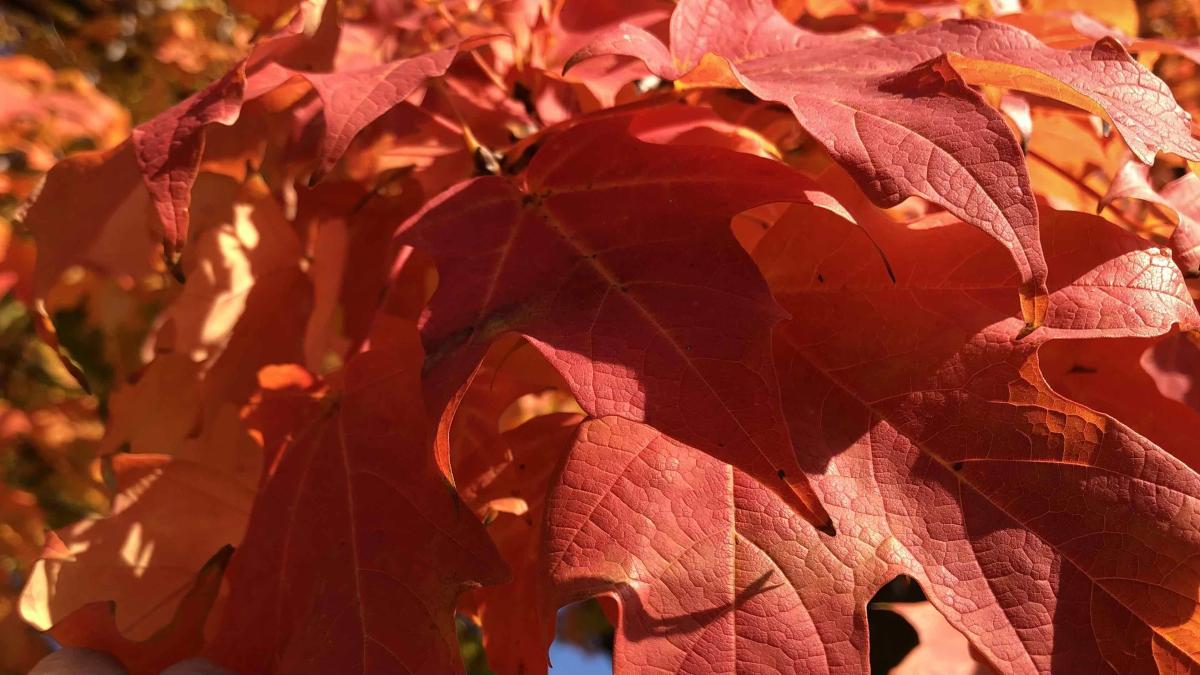 Fall color is highly anticipated. (Patty Wetli / WTTW News)
Want more local nature coverage? Sign up for WTTW News’ weekly Urban Nature newsletter.
No two fall color seasons are alike, but if there’s one thing we can safely predict, it’s that people will go gaga for foliage.
At least one team of researchers has attempted to get to the bottom of this obsession with dying leaves, and their conclusion was kind of simple: Looking at the multi-colored display makes people feel more relaxed.
Red, orange and yellow also happen to have positive mood associations, from warmth to enthusiasm to happiness.
Looking for a little psychological boost? There are a number of local fall forecast resources that will point you in the direction of peak color.
The state of Illinois’ fall color guide is powered by the Department of Natural Resources. It features weekly reports on foliage conditions in northern, central and southern Illinois, with information on the color progression of different species of trees. There’s also an interactive map showing the general timing of peak foliage in various parts of the state.
Morton Arboretum updates its weekly fall color report every Wednesday, with real-time information on which species are turning color across the 1,700-acre site, including in the parking lots. Because this is the arboretum, the report also includes details on plant health and how stressors like heat, lack of rain, exposure to car exhaust or damage from last year’s periodical cicada emergence are affecting this year’s color.
Starved Rock, one of the region’s most popular outdoor destinations, has its own color report, which posts weekly on Facebook. The report includes helpful picture IDs of leaves and also recommends trails where people can find some of the most striking views.
The Foliage Report takes a broader view and aggregates forecasts from across the country. It publishes regional reports, including one for the Midwest, on Mondays.
So why do trees change color in the first place?
They’re winterizing themselves.
They stop producing chlorophyll, the green pigment that absorbs energy from the sun and makes sugars.
“Chlorophyll requires a lot of nitrogen — it fuels the green,” Christy Rollinson, forest ecologist at Morton Arboretum, told WTTW News in a prior interview. “Because nitrogen is not abundant in nature, trees try to get that investment back as much as they can before their leaves fall off. The process of changing color is trees getting the nutrients back out of their leaves.”
Other pigments in the leaves that were always present but were masked by the profusion of green are then revealed, namely all those shades of yellow and orange (technically carotenoids).
Reds (anthocyanins) are a slightly different matter, produced specifically in the fall.
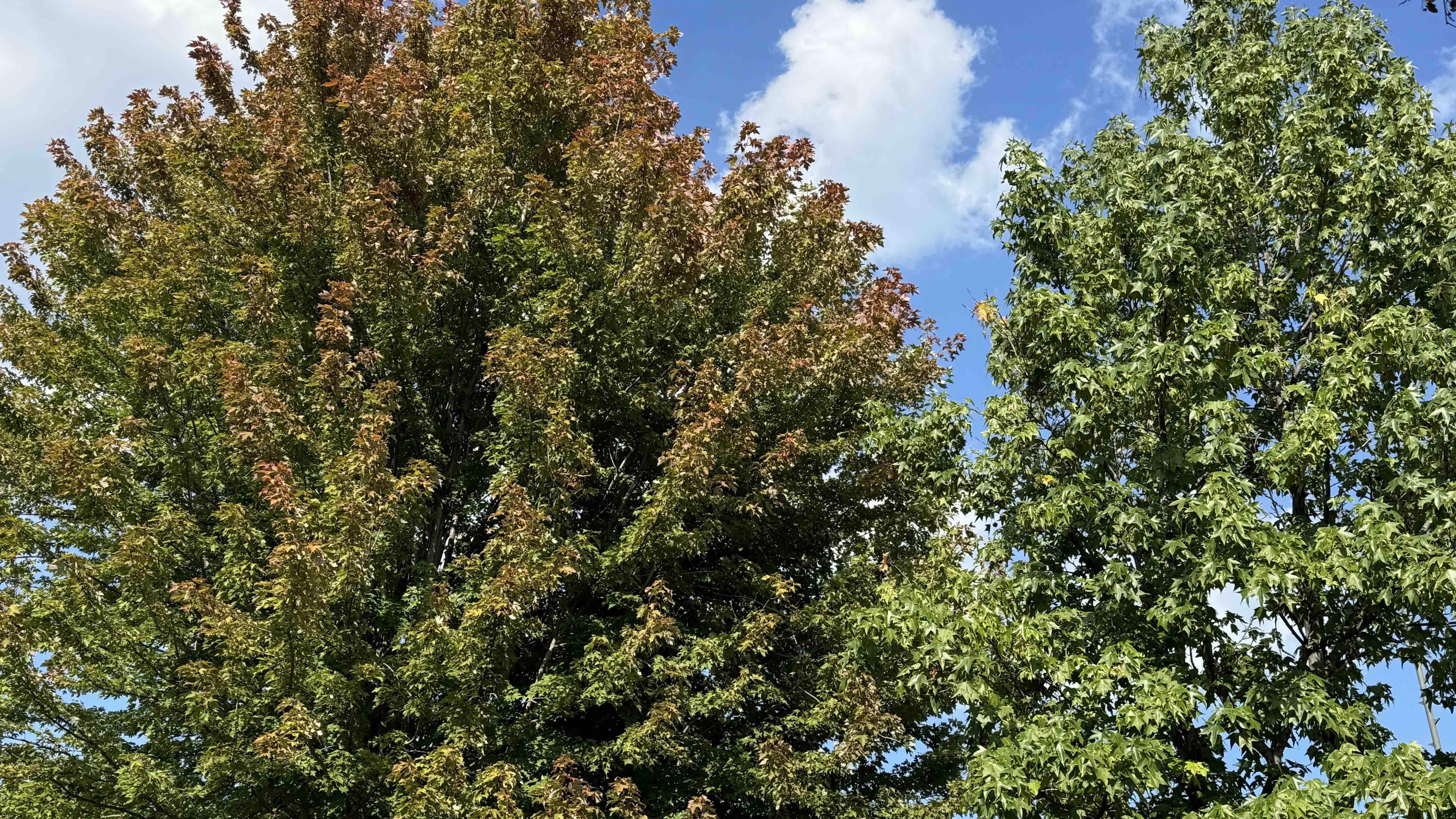 There’s still a lot of green out there in the first week of October, likely due to uncommonly warm temperatures in September. (Patty Wetli / WTTW News)
“Red kind of acts like a sunscreen for the compounds in the leaf, so they don’t get broken apart by the sunlight and the tree can reabsorb them,” Rollinson said.
For bright yellow, look for honey locust trees, ginkgos, hickory and basswoods (aka linden).
Maples are the poster children for red, but Rollinson said sumac shrubs also turn a blazing red, as do poison ivy and the Virginia creeper vine.
Vibrancy is particularly susceptible to weather conditions, Rollinson said.
Warm sunny days, cool nights and a consistent availability of water are the ideal conditions for peak fall color.
Uncommonly hot temperatures in September and a lack of rain could affect the intensity of this year’s leaf colors, causing earlier, shorter and less vibrant displays, according to the University of Illinois Extension-Forestry. Some stressed trees have already dropped their foliage.
Contact Patty Wetli: [email protected]