Education
University of Chicago, Northwestern Ranked Among Top 10 Colleges in US News List
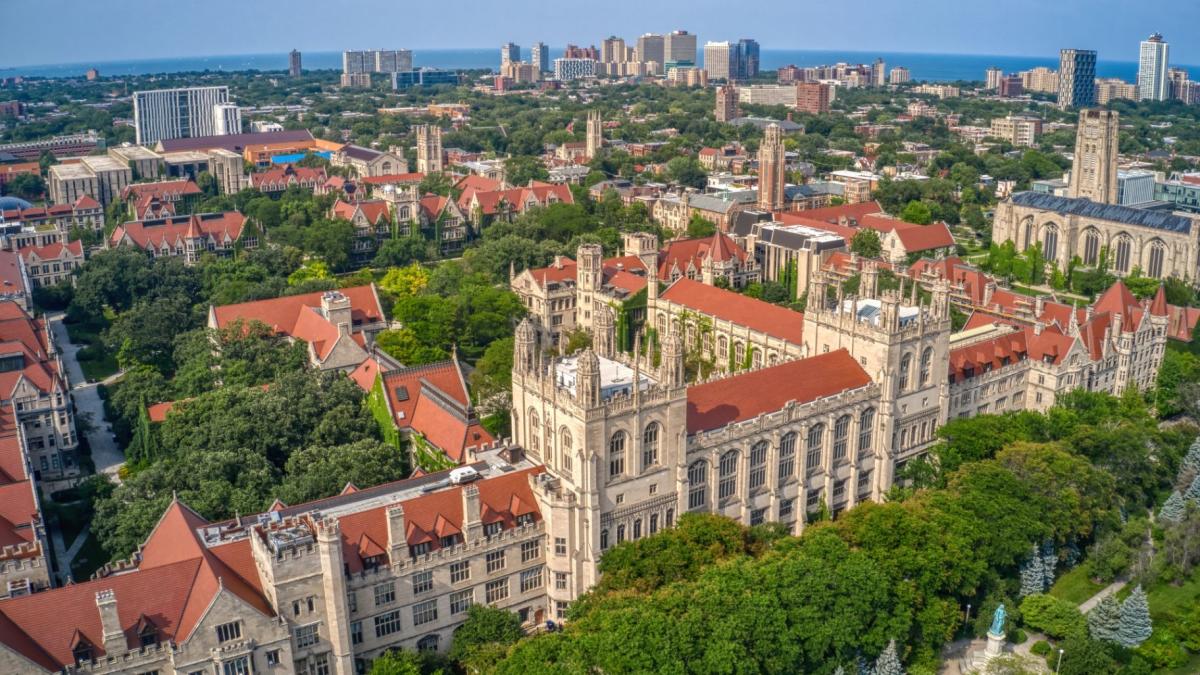 The campus of University of Chicago is pictured in a file photo. (Jacob Boomsma / iStock)
Two Chicago-area universities have once again been ranked among the top colleges in the nation, according to U.S. News & World Report’s 2026 list.
The University of Chicago ranked sixth in the nation, jumping up five spots from eleventh last year, while the Evanston-based Northwestern University fell one spot into a tie for seventh with Duke and Johns Hopkins universities.
“Over the years, Best Colleges has evolved into a comprehensive tool that reflects the changing landscape of higher education, providing prospective students with a crucial starting point to identify schools that align with their academic and personal goals,” LaMont Jones, managing editor for education at U.S. News, said in a statement.
Both universities have faced federal funding issues under the Trump administration this year that have forced difficult staffing and spending decisions. UChicago this month announced it would be cutting $100 million in expenses, while Northwestern has announced hundreds of layoffs amid an ongoing federal funding freeze.
The 41st annual rankings from the self-proclaimed “global authority in education rankings” also included the University of Illinois Urbana-Champaign at No. 36, a drop of three spots from last year, while the University of Illinois Chicago was ranked No. 84. Coming in outside the top 100 were the Illinois Institute of Technology (No. 117) and Loyola University (No. 132).
The top four universities in the rankings — Princeton, the Massachusetts Institute of Technology, Harvard and Stanford — remained unchanged from last year’s list.
Beyond the national rankings, U.S. News & World Report also published lists of its top liberal arts colleges, historically Black colleges and universities and regional universities.
According to U.S. News, the universities are ranked based on 17 academic factors, including student outcomes, graduation rates, retention rates, peer assessments and financial resources for students.
“While the general scoring weights and factors remained consistent, the 2026 rankings made a few small adjustments to ensure the results accurately reflect the evolving landscape of higher education,” Jones said. “By considering students’ credit hours and increasing the minimum number of students for a cohort, the rankings deliver a view of institutional investment in students, and graduation and retention rates.”