Science & Nature
UIC Students Helping NASA Prepare for Human Return to Moon
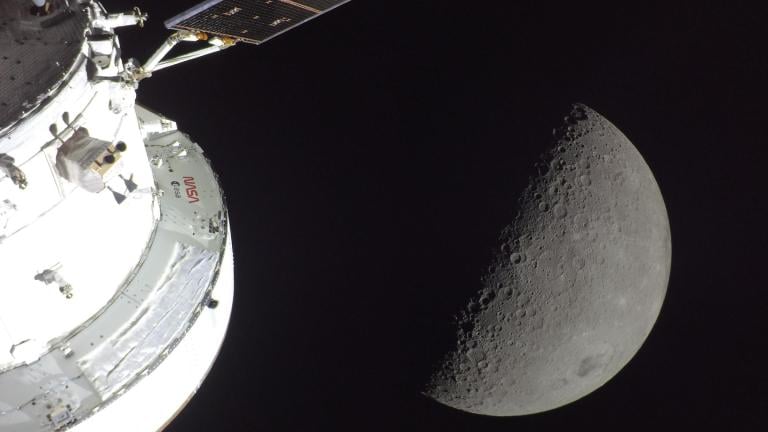
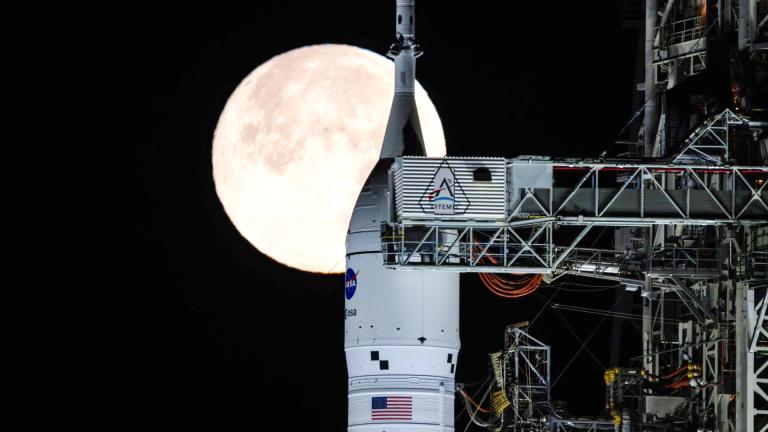
As NASA’s Artemis mission prepares to return humans to the moon and establish a permanent lunar base, three University of Illinois Chicago students are playing their own small part to make that happen.
The three have just completed a summer internship program at NASA’s Marshall Space Flight Center in Alabama, helping to lay the groundwork for humans to have an enduring presence on the moon and maybe, one day, even Mars.
Raguez Taha is a Ph.D. student working in the civil, materials, and environmental engineering department at UIC. Taha said she was initially reluctant about interning at NASA.
“I was a bit hesitant,” said Taha. “I come from a civil structural background. So before joining the Ph.D. program (at UIC), I was actually a bridge engineer and so I didn’t know how my bridge experience could relate to work at NASA.”
It was Taha’s experience using lidar, which can create very accurate 3D models of real objects and spaces, that was attractive to NASA.
“Lidar is just a laser system that sends a signal and then when it interacts with anything, an object or structure, it sends it back and it creates points in space,” Taha said. “So my job was to essentially connect these points and create a model that can be used for different engineering analysis and applications.”
For NASA, Taha was creating 3D models of lava tubes.
Lava tubes on the moon may one day be used to provide the basis for lunar habitats, shielding astronauts from harmful radiation.
Despite her initial skepticism, Taha said her NASA experience was “amazing.”
“What this internship has taught me is that there’s value in the differences in our backgrounds,” said Taha. “I met so many different engineers and designers just in my branch alone that came from a variety of backgrounds that were able to come together and collaborate on all these projects.”
“What I found inspiring was that there’s a space at NASA for everybody and you don’t have to just be an aerospace engineer or a rocket engineer, so I guess that was the highlight and defining moment for me,” said Taha.
Caleb Smith, who earned his bachelor’s degree this spring and will soon start work on a Ph.D. in the mechanical and industrial engineering department at UIC, said it was his interest in working in the aerospace industry that led him to the NASA internship.
Smith’s internship focused on “additive manufacturing” — a form of 3D printing — to produce various tools future astronauts could potentially use made from simulated moon dust called regolith.
“Additive manufacturing is taking material and depositing it layer by layer in order to form a 3D model,” Smith said. “NASA’s interested in additive manufacturing primarily for in-space fabrication as well as improving manufacturing techniques here on Earth. For in-space manufacturing it’s important because … it’s very expensive to get supplies off of Earth to say, the International Space Station or the lunar surface. So instead we want to be able to manufacture components directly in space and by doing so you’re dramatically reducing the cost of future space missions.”
Yuri Labuca, a mechanical and engineering undergrad at UIC, has long dreamed of one day making it to space after watching the launch of the space shuttle Atlantis when he was just 7 years old.
Prior to the internship at NASA, Labuca had been working on the Lunabotics program at UIC — part of NASA’s Artemis program — where students are challenged to come up with a rover design to help build infrastructure on the moon. Labuca was part of a team that made it to Kennedy Space Center and won an innovation award.
Labuca’s work for NASA involved working with a team to check the integrity of experimental manufacturing processes that could one day be used to create everything from tools to lunar habitats.
Labuca said his biggest takeaway from his NASA experience was the importance of teamwork and passion in achieving one’s goals.
“I want to be an astronaut, and I actually plan to sort of keep shaping my experiences to be an astronaut,” said Labuca. “And one lesson that I take to heart from astronauts is always follow your passion, and it’s always going to be that passion that will get you accepted.”