Health
Illinois’ SNAP Education Program to End Amid Federal Funding Cuts. How That Could Impact Local Communities
More than 1 million Illinois residents have benefitted from an educational program that teaches SNAP recipients about nutrition.
But since the Trump administration’s massive budget bill cut $287 billion from SNAP, or the Supplemental Nutrition Assistance Program, the education initiative known as SNAP-Ed is coming to an end after 30 years. The program collaborates with more than 1,800 community partners across all of Illinois’ 102 counties.
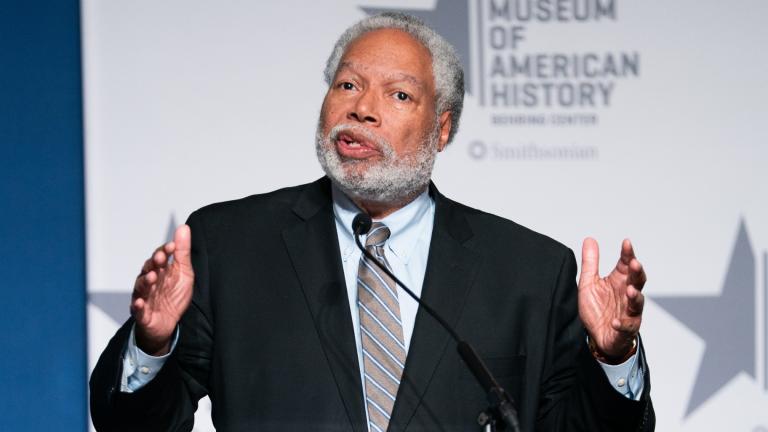
“When I started, people didn’t know what nutrition was,” said Daylan Dufelmeier, director of the Chicago Partnership for Health Promotion (CPHP) at the University of Illinois Chicago.
Dufelmeier began his work with CPHP 17 years ago.
“The science has improved tremendously over the 17 years, and we know with a high degree of confidence the type of impact regular, vigorous physical activity and eating a healthy diet full of fruits and vegetables has on your life overall,” Dufelmeier said. “Really one of the biggest changes is the adoption of normalizing being healthy.”
The Illinois Extension’s SNAP-Ed initiative adopted the name Eat.Move.Save. — teaching people to stretch their food benefits and providing them with a course on how to cook healthier meals.
“I’ve been doing this work for nine years, and so some of the changes that I have seen in the community is they had no knowledge of it,” said Denetria Adams, nutrition peer educator at CPHP. “With me doing the programs and teaching the lessons, they got an understanding on how to maintain a healthy weight, be physically active, regulate … their diabetes.”
With Adams’ lessons, she has helped people shop smarter at grocery stores and food pantries across the city, reminding residents to keep in mind the “My Plate” initiative, which focuses on the five main food groups: protein, dairy, grains, fruits and vegetables — items she said are oftentimes hard to come across in low-income neighborhoods.
“It’s a food desert, and a lot of people don’t have their vehicles to get around, and so they are forced to eat what’s there in the neighborhood, which are the corner stores,” Adams said. “They don’t have fruits and vegetables, the proteins are outdated, the canned goods are outdated, which is unhealthy.”
To combat lack of food access, Eat.Move.Save. developed and maintains Find Food IL, an interactive statewide directory that helps users locate grocery stores, food pantries and meal sites that provide free food or accept SNAP/LINK and WIC benefits. The program also oversees Hunters Feeding Illinois, an initiative that enables hunters to share surplus venison with families in need by covering processing costs and coordinating distribution through local food pantries.
In May, the Republican-led House Committee on Agriculture claimed the SNAP-Ed program showed no meaningful change and was a waste of taxpayers’ money. According to a return-on-investment analysis conducted by the nonprofit research organization Altarum, Illinois SNAP-Ed returned between $5.36 and $9.54 for every dollar invested.
An estimated 5,060 cases of obesity and 570 cases of food insecurity were prevented across Illinois children and adults in a single year.
Federal funding cuts to the program could result in about 230 layoffs across the state. Though it remains unclear what next steps will be, Dufelmeier remains hopeful for the continuation of the program because of its unwavering need.
“Communities want to be healthy,” Dufelmeier said. “We are completely open to strategizing. We are hoping that somebody is interested and wants to support the work that’s going on.”