Crime & Law
Appeals Court Rules Serious CPD Discipline Hearings Must Take Place in Public
 (WTTW News)
Chicago police officers accused of serious misconduct have the right to ask an arbitrator — and not the Chicago Police Board — to decide their fate, but those proceedings must take place in public, an Illinois Appeals Court ruled Friday.
The ruling, which is likely to be appealed to the Illinois Supreme Court, endorses the effort backed by the city’s largest police union to upend the system used for 60 years to punish officers.
However, it affirmed Cook County Judge Michael Mullen’s March 2024 ruling that allowing cases that could allow officers to be fired or suspended for more than a year to take place behind closed doors goes “against a dominant and well-defined public policy.”
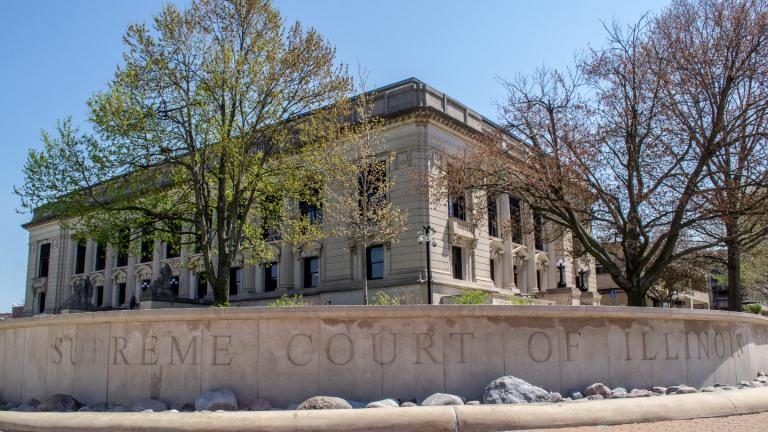
“While there is no specific public policy that requires all police misconduct hearings to be open to the public, we find that to suddenly shut the door after 60 years of open hearings severely undermines the public policies discussed above,” according to the decision authored by Justice Sharon Oden Johnson and joined by Justice Mary Mikva of the Illinois 1st District Appellate Court.
Oden Johnson and Mikva agreed with Mullen that the consent decree, a federal court order requiring the Chicago Police Department to change the way it trains, supervises and disciplines officers, requires discipline hearings to take place in public.
Justice Raymond Mitchell dissented, writing in a separate opinion that he would have reversed Mullen’s ruling.
“To conclude otherwise invites parties to relitigate every labor arbitrator’s decision under the guise of public policy,” Mitchell wrote. “That is repugnant to the explicit, well-defined, and dominant public policy in favor of collective bargaining and the arbitration process that goes with it.”
The appeals court unanimously reversed Mullen’s ruling allowing police brass to continue to suspend officers facing serious discipline without pay until their cases are resolved. The appeals court sent that issue back to the Cook County Circuit Court for reconsideration.
If upheld, the ruling would require city officials to set up an entirely new system to decide the most serious cases of police misconduct and could gut the power of the Chicago Police Board, which is now responsible for deciding those cases.
John Catanzara, the president of the Fraternal Order of Police, Lodge 7, did not immediately respond to a request for comment from WTTW News.
Mayor Brandon Johnson said the city remains committed to transparency.
“There is nothing more important to continuing the historic progress that we’ve made in reducing crime and violence than our efforts to rebuild trust between residents and law enforcement,” Johnson said in a statement. “When it comes to the most serious cases of misconduct, the public has a right to know that those who abuse their authority are being held accountable.”
The Chicago City Council voted twice to reject a decision by an arbitrator made during negotiations over the city’s labor agreement with the police union that found officers facing termination or a suspension of at least a year have the right to choose not to have their cases decided after a public hearing in front of the police board, which is made up of mayoral appointees confirmed by the City Council.
“Hiding these proceedings from public view, as the plaintiff sought, would have undermined trust and cooperation between police officers and the public they serve,” Corporation Counsel Mary Richardson-Lowry said in a statement.
The Police Board has heard just one case this year, with nearly two dozen officers declining to allow the Chicago Police Board to decide their punishment rather than an arbitrator, who must be appointed with the blessing of union leaders.
The Chicago Police Board holds its meetings in public and allows input from Chicagoans, while arbitrations traditionally take place behind closed doors and are not open to public scrutiny.
Chicago Police Board President Kyle Cooper has repeatedly pleaded with Chicago police officers facing allegations of serious misconduct to allow the Police Board to determine whether they should be terminated or suspended as the protracted legal battle plays out, to no avail.
Cooper hailed the decision as “a victory for both the residents of Chicago and the hardworking men and women of the Chicago Police Department who put their lives on the line to serve and protect the public.”
If the decision is appealed to the Illinois Supreme Court, the impasse will continue indefinitely, keeping 25 cases in limbo — including three that seek to terminate officers accused of killing Chicagoans without justification, including the officer that shot and killed 13-year-old Adam Toledo in 2021.
Chicago taxpayers have already paid a combined $13.75 million to resolve lawsuits filed by the families of the victims in the other two cases – even as both of those officers remain on the force, each earning nearly $112,000 annually, records show.
WTTW News coverage of policing and police reform is supported by The Joyce Foundation.
Contact Heather Cherone: @HeatherCherone | (773) 569-1863 | [email protected]