Politics
‘I’ve Done What I Came to Do’: Inspector General Deborah Witzburg on Her Decision Not to Seek 2nd Term as Watchdog
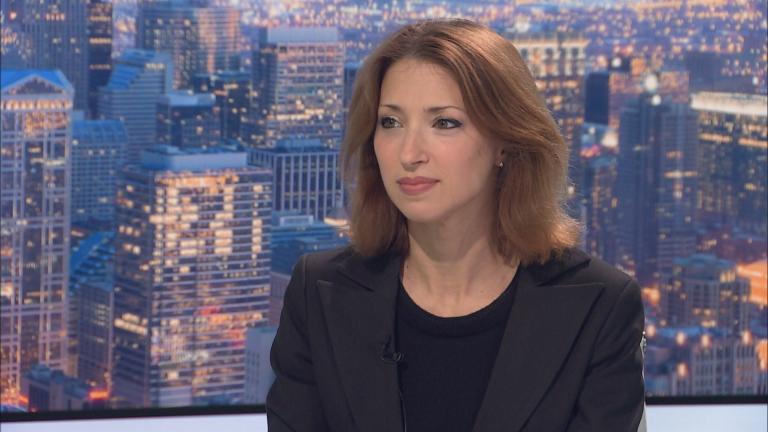
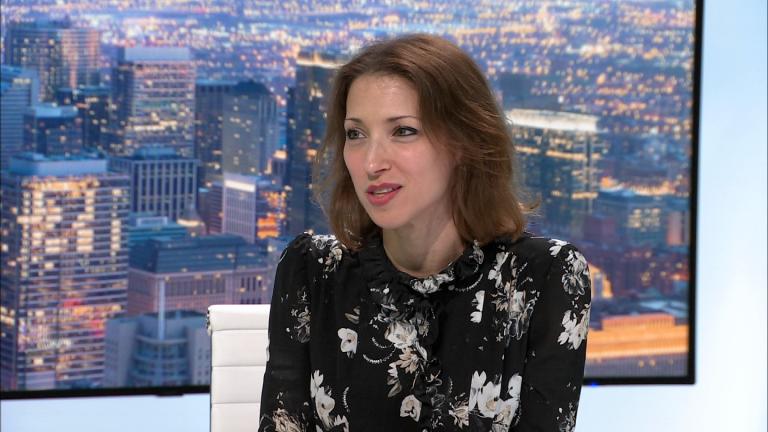
Video: Inspector General Deborah Witzburg joins “Chicago Tonight” on July 21, 2025. (Produced by Bridgette Adu-Wadier)
As the Chicago City Council prepared to vote on whether to expand the powers of Chicago’s inspector general, Deborah Witzburg was clear: Not only did she want to serve a second term as the city’s watchdog, she believed she had earned another four years in office.
“Chicago’s ethics rules have been categorically and dramatically underenforced for decades,” Witzburg told WTTW News on July 9. “We have accomplished a great deal. There is a great deal more work to be done.”
But just eight days later, Witzburg announced she had changed her mind: She would not ask Mayor Brandon Johnson to reappoint her to serve a second, and final, term as inspector general.
“I have done what I came here to do,” Witzburg told WTTW News on Friday, during an interview after she announced her change of heart in an email celebrating the City Council’s 49-1 vote to amend Chicago’s ethics law in order to stop the city’s top lawyer from intervening in ongoing probes that risk “embarrassment or political consequences.”
The fact that the City Council overwhelmingly voted to pass the measure that Witzburg crafted with Ald. Matt Martin (47th Ward), the chair of the Ethics and Government Oversight Committee, made her reconsider her decision to seek another term, Witzburg said.
That vote showed alderpeople to be “principled leaders” willing to strengthen independent oversight of their own actions, Witzburg said.
“This seems like a good place to be, a good moment in time,” Witzburg said. “When I leave in April, I will have left this place better than I found it.”
Witzburg said she had no conversations with the mayor or his staff about whether he planned to reappoint her before she decided not to seek a second term.
A spokesperson for Johnson said the mayor’s office did not tell Witzburg she would not be reappointed as inspector general.
Martin said he was surprised by Witzburg’s announcement, saying she had earned a second term after working aggressively to enforce the city’s ethics laws and pay down what she often called the city’s “deficit of legitimacy.”
But Bryan Zarou, vice president of the Better Government Association, said he was not surprised by Witzburg’s announcement.
“She must have known that it was going to be an uphill battle” to convince Johnson to reappoint her, Zarou said.
Martin was the first Ethics Committee chair to routinely hold hearings on Witzburg’s quarterly reports documenting her office’s investigations, which often documented a wide range of misconduct and malfeasance.
“Public transparency is absolutely vital,” Martin said.
Witzburg often told other advocates for good government reforms that Chicago’s inspector general must do the job without fear or favor — knowing full well that could cost them their chance at a new term.
“Witzburg has accomplished more in the last four years in that office than anyone else has done in the last 20 years,” Zarou said. “The city is better off for her service.”
Witzburg was just the city’s fifth inspector general, an office that was created in 1989, but did not have the power to audit and oversee the operations of the City Council until 2019.
Witzburg will be the first inspector general to serve just one term. In 2022, former Mayor Lori Lightfoot appointed her to replace Inspector General Joseph Ferguson, who left office in 2021 after serving as the city’s watchdog for 12 years.
Witzburg, a former assistant state’s attorney, served as the city’s first public safety inspector general, a position created as part of a package of reforms crafted by the City Council and former Mayor Rahm Emanuel in the wake of the police murder of 17-year-old Laquan McDonald.
In December 2023, the Office of the Inspector General became the first city department to reach full compliance with the federal court order known as the consent decree, which requires the Chicago Police Department to stop routinely violating residents’ constitutional rights.
In July 2023, Witzburg found that Lightfoot violated the city’s ethics ordinance when her campaign sent emails to city employees at their official city emails asking them to contribute to her bid for a second term.
That same month, Witzburg found that Ald. Jim Gardiner (45th Ward) retaliated against a frequent critic and political foe by directing a city employee to issue “unfounded citations” that could have forced the Jefferson Park man to pay more than $600 in fines.
That was the “first-ever finding of probable cause in an inspector general ethics investigation of a sitting member of City Council,” officials said.
Gardiner cast the lone vote against the ordinance on Wednesday designed to expand the inspector general’s power.
The Chicago Board of Ethics later dismissed Witzburg’s finding in Lightfoot’s case. An administrative law judge dismissed the case against Gardiner after he found the inspector general’s office failed to turn over potentially exculpatory evidence in his case.
Witzburg found three investigations conducted by CPD’s Bureau of Internal Affairs into ties between police officers and far-right extremist groups that have clashed with the United States government to be lacking, and demanded they be reopened. None of those probes resulted in any of the officers being disciplined.
Witzburg blasted Johnson’s handling of those probes and urged him to form a task force and “implement a comprehensive, whole-of-government approach to preventing, identifying and eliminating extremist and anti-government activities and associations within CPD.”
Eight months after that recommendation, Johnson finally followed Witzburg’s advice. In the four months since that task force was formed, no results have been publicly announced.
Witzburg’s most public clash with Johnson came after she released an audit that detailed repeated efforts by the mayor’s staff to hinder her probe into the mayor’s acceptance of gifts on behalf of the city. Forty days later, Johnson opened the so-called City Hall “gift room” to scrutiny as Witzburg had demanded.
Witzburg’s replacement, who must be a practicing attorney, should have a record of experience holding public officials and agencies accountable while maintaining their integrity and independence, Martin said.
Chicago’s next inspector general should “focus on putting the needs of the people above politics,” a spokesperson for Johnson said in a statement.
“The next inspector general should be someone who has enough institutional knowledge to effectively evaluate the city’s programs to ensure that they are serving Chicagoans,” according to the statement. “The mayor wants someone whose integrity is above reproach to help bring in a new era of transparent, equitable, and responsive city government that is focused on the needs of working-class and poor Chicagoans.”
Witzburg promised to continue energetically enforcing the city’s ethics laws during the last eight months of her term.
“Leading this office is not a sprint or a marathon,” Witzburg said. “It is a relay race, and it’s time to pass the baton.”
Note: This article was published July 18, 2025, and updated with video July 21, 2025.
Contact Heather Cherone: @HeatherCherone | (773) 569-1863 | [email protected]