Politics
After Burke and Madigan Convictions, Push for Ethics Reform at Inflection Point: Analysis
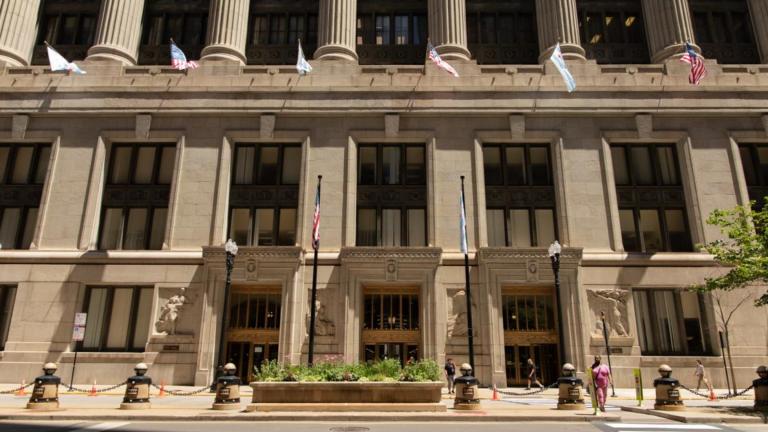
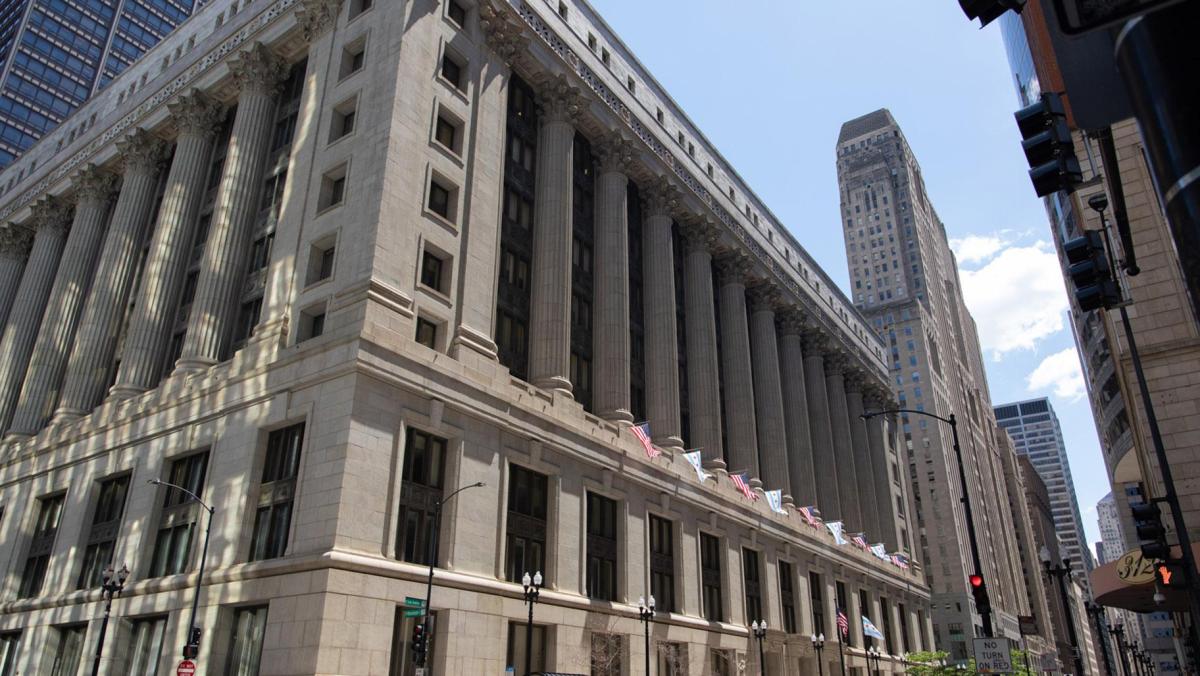 Chicago City Hall (Michael Izquierdo / WTTW News)
The most powerful politician in Chicago history is now a convicted felon, having served a prison sentence for shaking down those who needed or desired an official action from their elected leaders.
The most powerful politician in Illinois history is now a convicted felon, headed to prison after prosecutors argued his storied political machine was actually a criminal enterprise designed to enrich him and his closest friends and allies.
In the aftermath of the scandals triggered by the arrests of former Ald. Ed Burke (14th Ward) and former House Speaker Michael Madigan, elected officials followed a well-worn playbook and raced to the nearest microphone to proclaim Chicago was actually, finally, really ready for reform this time.
But despite the sound and fury about the need for reform, no substantive reforms have been imposed, leaving good government advocates angry and frustrated. Chicago’s place in the national imagination as the most corrupt of corrupt American cities had been secured, once again.
The lack of urgency to respond to the revelations that both Burke and Madigan routinely sought to corruptly leverage their elected office for perks or cash — without anyone around them blowing the whistle or even voicing the mildest objection — represents a missed opportunity to pay down Chicago’s “deficit of legitimacy,” Inspector General Deborah Witzburg said.
“I’m not sure we have missed the window of opportunity completely, but we might have,” Witzburg told WTTW News. “Have we built better systems? I don’t think so.”
The evidence presented during the trials of Burke and Madigan should have been a “catalyst” for systemic reform, Witzburg said.
“We cannot keep doing the same thing and expect a different outcome,” Witzburg said. “The people in power are not entitled to the status quo.”
Bryan Zarou, vice president of the Better Government Association, said the failure to upend business as usual at City Hall after Burke became the 38th alderperson to be convicted of a crime since 1969 was “incredibly frustrating.”
Not only has Mayor Brandon Johnson failed to seize the opportunity to strengthen Chicago’s ethics rules after Burke and Madigan were convicted, but he has actively worked to block changes designed to crack down on corruption, several city officials told WTTW News.
Johnson has also feuded with Witzburg, the city’s watchdog, and Ald. Matt Martin (47th Ward), his handpicked chair of the City Council’s Ethics and Government Oversight Committee.
“It has been deeply frustrating to have the Johnson administration throwing up roadblocks at every turn,” Martin said.
Over objections from the mayor’s office, Martin will ask the Ethics Committee on Monday to advance a proposal designed to prevent the city’s top lawyer from intervening in ongoing probes that risk “embarrassment or political consequences” for city leaders.
If it wins the committee’s endorsement, a final vote by the full City Council could come as soon as Wednesday.
Martin crafted the measure in consultation with Witzburg after she blasted the mayor’s office and the city’s Law Department, led by Corporation Counsel Mary Richardson Lowry, for slowing her office’s work to root out waste, fraud and abuse at City Hall.
The measure would prevent the Law Department from withholding documents from the inspector general by asserting attorney-client privilege and expressly ban city attorneys from attending confidential investigative interviews.
“These are not radical innovations,” according to a statement from the Union League Club of Chicago. “They are long-overdue affirmations of democratic norms and lawful governance.”
Allowing a lawyer who reports only to the mayor to be present during investigatory interviews would “create a chilling effect, discouraging witnesses from speaking freely and undermining the investigative process,” according to the Chicago Council of Lawyers.
The measure also has the support of the Association of Inspectors General.
A spokesperson for the city’s Law Department said in a statement that “the legal rights of city employees and the legal interests of the city rightfully justify our practices.”
“There is both legal precedent through case law as well as procedural juris prudence that dictates how we must conduct ourselves,” the statement said.
In September, the City Council voted unanimously to ban registered lobbyists from sending campaign cash to Chicago mayors — and those running to be the city’s chief executive. Johnson had blocked that measure from getting a vote for months before he bowed to pressure.
In January, Witzburg released an audit that detailed repeated efforts by the mayor’s staff to hinder her probe into the mayor’s acceptance of gifts on behalf of the city. Forty days later, Johnson opened the so-called City Hall “gift room” to scrutiny as Witzburg had demanded.
Johnson often touts his commitment to acting honestly and fairly to ensure all Chicagoans are treated equally by city officials when asked about ethics, Zarou said.
But the mayor has been “actively hostile” to proposals designed to make specific changes to existing law or craft new ways to stop corruption, Zarou said.
High-Profile Appointments on Tap
In the coming months, Johnson will have no choice but to put his own stamp on the bodies charged with enforcing the city’s ethics ordinance.
Hours after the City Council considers Martin and Witzburg’s attempt to shore up the independence of the inspector general’s office, William Conlon will preside over his last meeting as chair of the Chicago Board of Ethics.
It will be up to Johnson to nominate Conlon’s replacement. The City Council must confirm the mayor’s pick. The post is unpaid.
Appointed to lead the Ethics Board by former Mayor Rahm Emanuel in 2016 and re-appointed by former Mayor Lori Lightfoot, Conlon led the civil division of the U.S. Attorney’s Office for the Northern District of Illinois.
“It was time for a change,” Conlon said.
Chicago Board of Ethics Executive Director Steve Berlin praised Conlon as a man of compassion determined to make Chicago a better place to live.
“It has been an incredible honor to work with him,” Berlin said, calling Conlon a “mensch.”
It was at Conlon’s direction that the Board of Ethics began enforcing the city’s ethics rules when it had evidence of a potential violation without waiting for the inspector general to conduct a full probe, said Berlin, who has served as the board’s executive director for 32 years.
“There has been nobody like Bill,” Berlin said.
Conlon said his replacement should oversee a complete rewrite of the city’s ethics ordinance in order to root out public corruption. But Conlon acknowledged that it will be tough to convince the City Council to approve new restrictions governing their conduct.
“Elected officials are always hesitant” to impose tougher rules on themselves, Conlon said.
Those changes should give officials the ability to enforce the city’s ethical code of conduct, which is now “aspirational,” Conlon said.
Those unenforceable rules urge elected officials to “treat members of the public with respect and be responsive and forthcoming in their requests for information” and “act impartially in the performance of their duties, so that no private organization or individual is given preferential treatment.”
Conlon said he was hopeful that Johnson would quickly replace him, but not optimistic. Johnson allowed seats on the seven-member board to sit vacant for months, prompting Conlon to publicly call on the mayor to act.
“There has been a lack of leadership from the mayor,” Conlon said. “The mayor’s attention has been focused elsewhere, on issues he finds more compelling. That’s a shame for all of us.”
The lack of action after the convictions of Burke and Madigan is unworthy of a city as great as Chicago, Conlon said.
“It reflects badly on the very essence of our city government,” Conlon said. “It communicates the wrong message.”
Regardless of who he picks to lead the Ethics Board, Johnson’s legacy on ethics is likely to be defined by whether he reappoints Witzburg to serve a second, and final, four-year term as inspector general.
Witzburg urged the City Council to amend the ordinance to limit her to two terms, saying it would help keep the office independent.
That ordinance also requires the mayor to decide 180 days before the expiration of the inspector general’s term whether to reappoint them — or launch a national search for their replacement. That means a mid-October deadline looms.
Those changes are designed to prevent a repeat of the turmoil that engulfed the office after Lightfoot declined to reappoint former Inspector General Joseph Ferguson, who left office in October 2021 after 12 years in office.
Chicago was without a watchdog for six months, outraging advocates for good government.
Witzburg, who was confirmed unanimously, said she wants to serve a second term and continue to ramp up efforts to hold public officials accountable for wrongdoing.
“Chicago’s ethics rules have been categorically and dramatically underenforced for decades," Witzburg said. “We have accomplished a great deal. There is a great deal more work to be done.”
Contact Heather Cherone: @HeatherCherone | (773) 569-1863 | [email protected]
Related Stories