Science & Nature
Injured Bobcat Rescued and Recovering at DuPage Wildlife Center
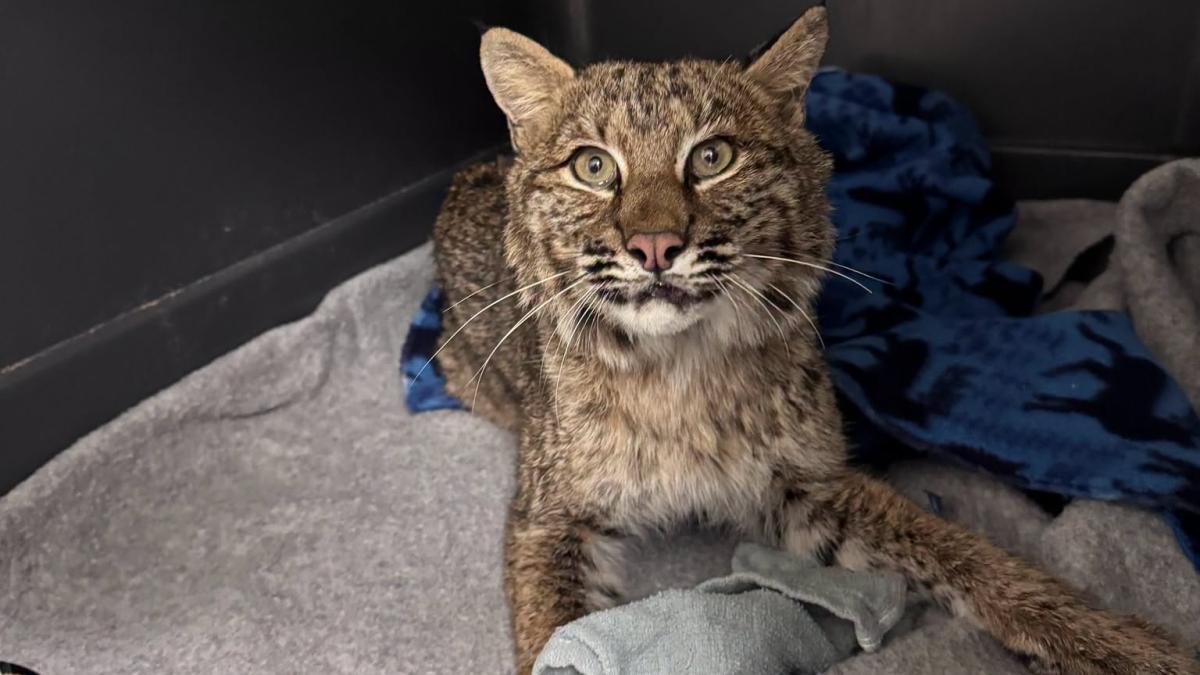 She might look like a house cat, but this young female bobcat is a fierce predator. (Courtesy DuPage Wildlife Conservation Center)
Collisions with cars don’t often end well for wildlife, but one lucky bobcat is recovering at DuPage Wildlife Conservation Center after a rescue involving multiple partners.
The saga started last week in Oregon, Ill., when a homeowner found a semi-conscious bobcat in her front yard, near a busy highway. She called a wildlife trapper, who brought the cat to Oaken Acres Wildlife Center in Sycamore, where rehabbers quickly realized the cat needed more help than they could provide.
The cat, a young female likely less than a year old, was “pretty gosh darn spicy” on arrival at Oaken Acres and “we were afraid we would either further injure the cat or one of our staff if we tried to remove it from the trap without sedation. We do not have those drugs available to us,” Oaken Acres staff shared on social media.
The cat was transported to DuPage Wildlife Conservation Center in Glen Ellyn — the first bobcat admitted to the center in eight years — where a team of veterinarians went to work.
An ultrasound, X-rays and blood work revealed some old injuries (already healed), mild internal bleeding and, most significantly, a badly fractured canine tooth.
Surgery to extract the tooth, which could have led to infection, was performed once the cat regained strength and was eating reliably.
“This large kitten is now on the road to recovery. We are hopeful for smooth sailing, but some of that will depend on how tolerant she is while in care,” DuPage Wildlife Conservation Center reported.
The goal is to limit handling as much as possible and allow the cat to recuperate in an outdoor enclosure, the center said. Meanwhile, Oaken Acres said it’s standing by to release the cat back into the wild once she’s ready.
Historically, bobcats (Lynx rufus) were widespread across prairie woodland complexes of the Midwest but were nearly extirpated from Illinois by the mid-1900s due to hunting and habitat loss, according to the Illinois Department of Natural Resources.
The population rebounded after the cats were listed as a protected threatened species in the state between 1977 and 1999. A regulated hunting season was introduced in 2016.
Though the cats are more commonly found in the southern third of Illinois, where there’s more of the dense forests they prefer, bobcats are dispersed throughout the state.
While it might be tempting to mistake bobcats for oversized house cats, they’re actually fierce predators capable of taking down deer.
Contact Patty Wetli: [email protected]