Politics
City Will Refinance Debt to Fill $85.1M Budget Gap, Johnson Says
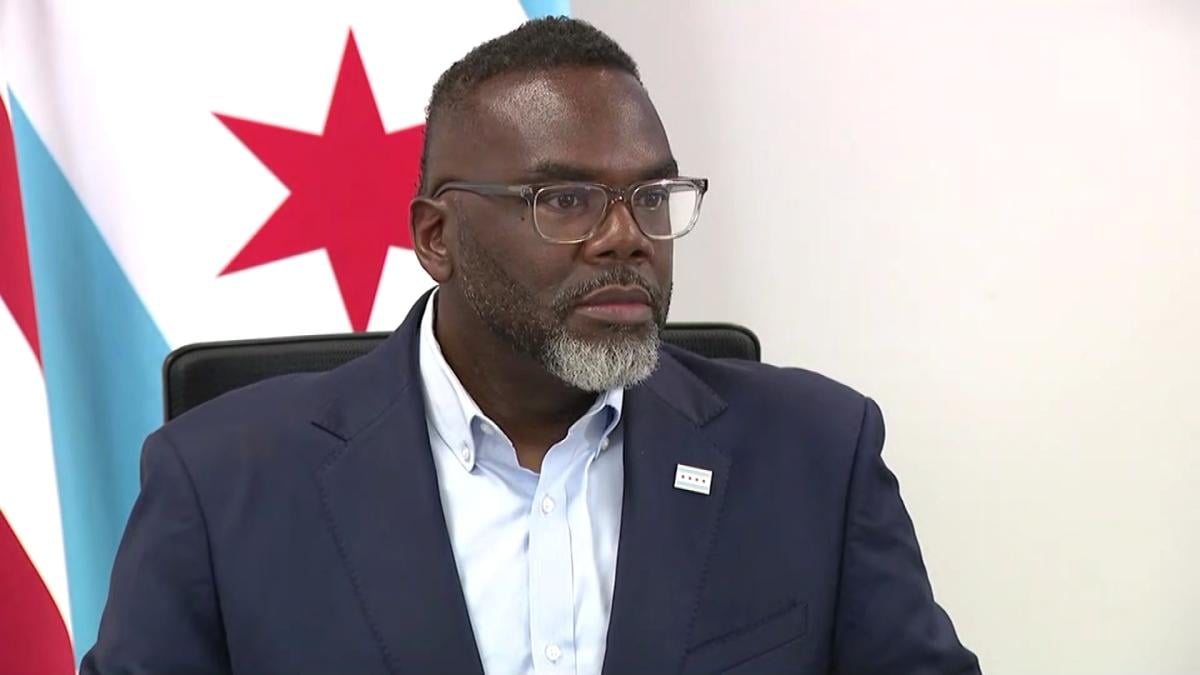 Mayor Brandon Johnson takes questions from the media on Aug. 25, 2026. (WTTW News)
Mayor Brandon Johnson said Tuesday that Chicago will refinance a chunk of its massive debt to fill a budget gap of $85.1 million after revenue baked into the city’s 2026 spending plan over his objection failed to materialize.
Johnson, who neither signed nor vetoed the $16.6 billion 2026 spending plan approved by the Chicago City Council, allowing it to take effect, said any remaining shortfall would be covered by using unspent federal aid designed to help the city recover from the COVID-19 pandemic.
Johnson told reporters at a City Hall news conference that he was doing everything possible to avoid layoffs or service cuts to bridge the gap that he blamed on members of the City Council who refused to levy new taxes on large firms, saying they had chosen to align themselves with corporations over the people of Chicago.
However, Johnson warned Chicago cannot continue to rely on one-time fixes to plug budget holes.
“We cannot continue to govern by searching for loose change in the couch, or every time that there’s a budget challenge, we revert back to proclivities that have caused tremendous harm to working people in this city,” Johnson said.
Chicago would have been better off if the City Council adopted his proposal to levy a $33 per month per employee tax on companies with 500 or more employees in order to generate between $82 million and $100 million, Johnson said.
Instead, the city will refinance at least $500 million, but no more than $525 million, in bonds backed by the city’s sales tax revenues that are at least 10 years old to generate between $65 million and $71 million, said Gregg Ross, a spokesperson for the Chicago Department of Finance.
Johnson said that refinancing will not add to the city debt service costs but did not explain how that would work to reporters.
The city has between $6 million and $10 million left from Chicago’s $1.9 billion share of the federal relief package known as the American Rescue Plan Act, or ARPA, Ross said.
Using those funds to fill the 2026 budget gap will not result in cuts to ongoing programs or initiatives, Johnson said.
If the city did not have to fill the budget gap created by his critics on the City Council, those funds could have been used to provide much-needed services to Chicagoans, Johnson said.
“Imagine the difference that these resources could be making,” Johnson said. “More resources to make our neighborhood safer, more support for local businesses and good paying jobs, more investment in affordable housing and critical infrastructure. More resources for our young people in Chicago’s incredibly bright future, and more progress towards stabilizing the pensions our retirees have earned.”
That gap is nearly entirely due to the fact the city has been unable to sell $1 billion in debt owed to the city by individuals, which the city’s spending plan relied on to generate $89.6 million in new revenue.
Johnson blocked medical debt owed to the city from being included in that attempted sale.
City officials asked 20 firms to purchase that debt, but only two firms expressed any level of interest, Johnson said. Both declined to complete the deal, with one bank concluding that it would only produce between $5 million and $10 million in revenue, he added.
In addition, only a handful of firms expressed interest in selling advertising spots on 3,000 city light poles, city vehicles and bridge houses, officials said. The city’s budget counted on $29.3 million from that proposal.
Nor has there been any interest in the “augmented reality” advertising licensing program created by the budget that would allow companies to impose videos and other content on city properties like Millennium Park or the Riverwalk that can be seen through a smartphone, virtual reality glasses or tablet. That proposal was expected to bring in $6 million, according to the city’s budget.
Video gambling in Chicago bars and restaurants has also failed to bring in any revenue. City officials have yet to green light the video gaming terminals, which was to have brought in $6.8 million this year.
After warning city officials for months that its move to green-light video gaming would kneecap the city’s permanent casino, Bally’s Corp. halted construction on the 34-story, 500-room hotel, concert venue and restaurants designed to make the city’s only casino into a destination for visitors and residents alike.
The casino is still scheduled to open early next year.
However, the group of alderpeople who crafted the spending plan again accused Johnson of “continuing to slow-walk implementing structural revenues and efficiencies designed to reduce our deficit and put Chicago on its best financial footing possible” contained in the spending plan approved by the City Council.
“Instead, (Johnson) has focused on finger-pointing to deflect from his failures and now is using accounting gimmicks that, in reality, won’t close our structural deficit, but it does repeat more harmful fiscal practices inflicted on taxpayers by this administration,” according to a statement from the coalition.
By comparison, Johnson said several new taxes he championed have brought in more revenue than expected, making the city’s dire financial situation slightly better. In January, Johnson warned the city was facing a $163 million gap.
The city has also generated 70% more than expected from a new tax on online sports gambling, Johnson said.
In addition, a new tax on social media companies has also generated 56% more than projected, even as it faces a legal challenge, Johnson said.
The back-and-forth between Johnson and his foes on the City Council signals the beginning of another tough debate over the city’s finances. Efforts to craft a spending plan for 2027 will be complicated by the fact that all 50 alderpeople — and the mayor — face reelection in less than a year.
Chicago faces a likely deficit of $1.16 billion in 2027, according to the city’s most recent budget forecast. A new forecast is due to be released by the end of September.
Contact Heather Cherone: @HeatherCherone | (773) 569-1863 | [email protected]