Crime & Law
Illinois Prison Officials Digitized Mail to Stop Contraband, But New Data Shows Little Results So Far
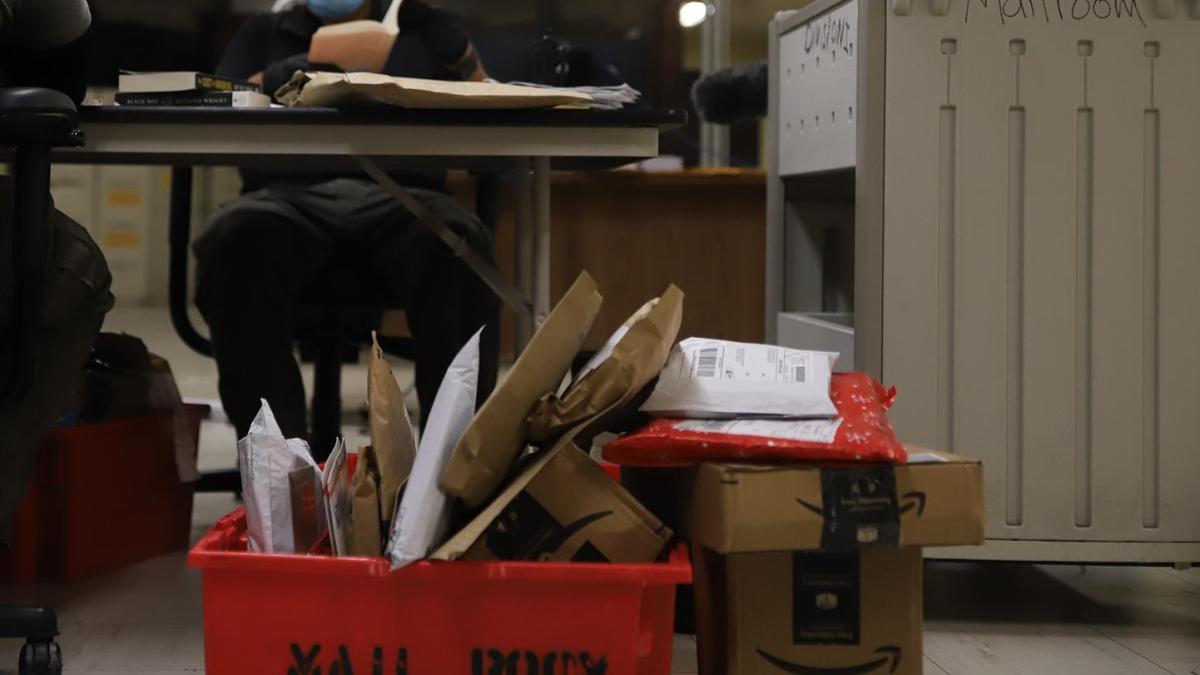 A group of jail personnel inspect stacks of letters and books in the mail room at Cook County Jail in a file photo. Illinois Department of Corrections will begin scanning mail in state prisons. (Cary Robbins / DePaul)
The switch to digitized mail for incarcerated people has had little impact on the drug exposures the policy sought to stop, according to new data from the Illinois Department of Corrections.
Instead, there was an increase in total drug discoveries between the six months prior to digitization and the six months after — 392 to 414, according to the report obtained by WTTW News.
On Tuesday, IDOC presented these numbers in a status update to the General Assembly’s Joint Committee on Administrative Rules on the recently adopted rule that allows the department to scan and digitize physical mail for incarcerated people. The rule came after corrections staff were exposed to drugs in facilities and hospitalized, and argued that digitization would improve safety.
Numbers on staff exposures were not included in the report. Incidents with individuals in custody did slightly decrease, from 133 to 128. Capital News Illinois was first to detail the report.
“The numbers just aren’t there to justify this amount of work and also keeping the actual mail away from the people who are in custody,” said State Rep. Dave Vella (D-Rockford).
Michael Crum, chief compliance officer for the department, said Tuesday it’s early on and he expects contraband numbers to decrease. He said there’s also a possibility that contraband existed prior to digitization, and it was found afterwards.
The figures show that mail scanning doesn’t appear to be an effective policy, said Jennifer Vollen-Katz, executive director of prison watchdog group the John Howard Association. She said she’s frustrated that the department moved forward with the policy without waiting for more data.
In July, the department will be required to collect and publish data relating to contraband due to a state law passed last year.
Vollen-Katz said these figures point to people being the main entryway for drugs into prisons, not mail.
“Until there are really serious interdiction efforts at the front gates, at the doors, where people enter and exit the facilities, this is going to continue to be an issue,” Vollen-Katz said.
Crum said the department is taking a “multifactored approach” and searches of visitors and staff is of the “utmost importance” as well.
Mail scanning has gone “better than expected so far” for the union that represents most correctional employees, AFSCME Council 31, said spokesperson Anders Lindall in a statement. He said mail scanning is just an important piece, “not a panacea,” and that it will take time for its benefits to be fully felt.
The department is searching for a third-party vendor to process incoming mail, where the mail would be sent offsite, scanned and sent to facilities for security review, then uploaded to tablets. Crum said he doesn’t expect this to impact those who use the service.
But further spending on a system with “very little evidence that it’s making a difference” is a concern for Vollen-Katz.
“It absolutely does not seem worth the investment to be doing this,” Vollen-Katz said.
Contact Blair Paddock: @blairpaddock.bsky.social | [email protected]