Crime & Law
A Chicago Man Was Charged With Murder Based on a ShotSpotter Alert. Now the City Will Pay Him $500K
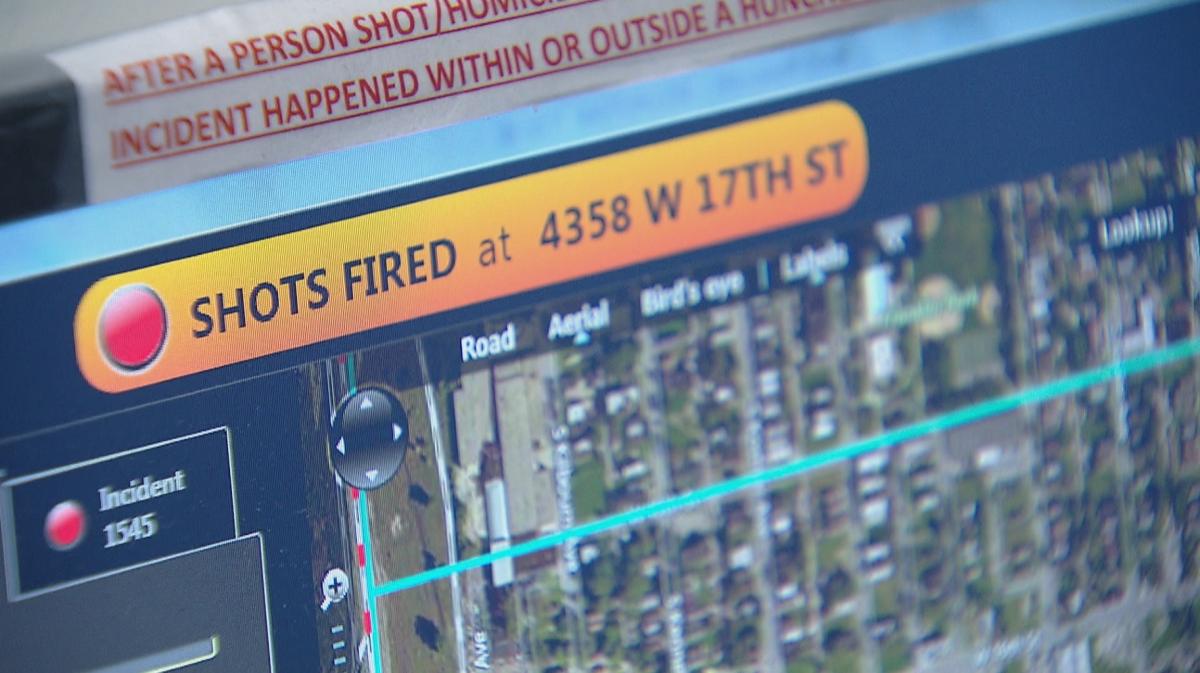 (WTTW News)
Chicago taxpayers will pay $500,000 to resolve a lawsuit filed by a man who was charged with a murder in 2020 based on an alert from the city’s now-defunct gunshot detection system, according to court records.
Michael Williams, then 65, spent nearly a year in jail after being charged with shooting his neighbor, 25-year-old Safarian Herring, on May 31, 2020, while giving him a ride as protests and unrest triggered by the police murder of George Floyd swept the city.
Using an alert from the city’s ShotSpotter system, Chicago police officers determined Williams shot Herring while the two rode in Williams’ car. Williams told police Herring had been struck by a bullet fired into his car through an open window, according to his lawsuit.
ShotSpotter’s now-ended contract with CPD warned officials that the technology could not be relied on in most cases to detect gunshots inside vehicles or buildings.
In July 2021, a Cook County judge dismissed the criminal charges against Williams at the request of the Cook County state’s attorney, who said prosecutors did not have enough evidence to proceed.
“Michael survived a double nightmare first by nearly being shot to death by a random act of violence and then being framed by CPD officers who he was supposed to be able to turn to for help,” said Jonathan Manes, a senior counsel at the MacArthur Justice Center, a nonprofit civil rights organization in Chicago, which represented Williams. “We are glad to get Michael some measure of justice.”
A spokesperson for SoundThinking said the company believes it “was responsible for Mr. Williams’s release from incarceration based on the unprecedented step to proactively reach out to prosecution.”
When ShotSpotter officials “learned that the prosecution’s theory depended on the assumption that the fatal shot was fired inside a car at extremely close range, we took the initiative to inform the Cook County State’s Attorney’s Office that ShotSpotter is not designed to detect gunfire within an enclosed vehicle, and that the prosecution’s in-car theory was not supported by the acoustic evidence,” the spokesperson said. To read SoundThinking’s full statement, click here.
The case was resolved after lawyers for the city of Chicago offered to pay $500,000 to Williams to resolve the lawsuit before a trial was held or a settlement agreement reached.
The Chicago City Council must approve all settlements of more than $100,000.
But because the case was resolved in an unusual manner, and approved by U.S. District Court Judge Georgia Alexakis, the payment does not need to be approved by the City Council.
The agreement was reached based on a provision of the Federal Rules of Civil Procedure, which allows plaintiffs to accept offers of judgment “made to avoid the uncertainty and risk of the outcome of litigation and the expense in time and money of further litigation and for the purpose of judicial economy” and resolve their cases, records show.
“The parties negotiated a resolution that brings conclusion to this matter,” said Kristen Cabanban, a spokesperson for the city’s Law Department. “The judgment does not include any finding that plaintiff’s claims were valid or that the city was responsible.”
Williams sued the city in July 2022 and asked a federal judge to ban Chicago from using SoundThinking’s ShotSpotter system. SoundThinking was not named as a defendant in Williams’ lawsuit.
City officials agreed to pay $90,000 in August to resolve a separate lawsuit filed by two men who alleged they were improperly stopped by CPD officers based on alerts from the gunshot-detection system.
“Canceling the ShotSpotter contract and compensating Mr. Williams were necessary steps in our push for justice around this surveillance technology,” said Freddy Martinez, executive director of Lucy Parsons Labs, a nonprofit organization that pushed officials to cancel the city’s ShotSpotter contract.
Mayor Brandon Johnson in September 2024 turned off the microphones that sent an alert to police officers every time the system picked up suspected gunfire, defying dire warnings that without ShotSpotter police would be unable to stop a wave of gun violence on the South and West sides.
Between Jan. 1 and Sept. 22, 2025, the first anniversary of the system being shut down, police beats that had ShotSpotter sensors saw an approximately 32% decrease in homicides, according to an analysis of Chicago crime data by Rob Vargas, a sociology professor at the University of Chicago who leads the UChicago Justice Project.
Since the start of the year, fatal shootings are down 12.5%, as compared with the first two months of 2025, according to city data. Fatal shootings dropped 32.7% last year, as compared with 2024, according to city data.
The Chicago City Council twice rebuked Johnson and demanded that he reverse his decision to scrap the system, which he has said led to the overpolicing of neighborhoods home to a majority of Black and Latino Chicagoans.
The City Council attempted to give Chicago Police Supt. Larry Snelling the power to bypass the mayor’s office and directly ink a contract with SoundThinking. Snelling supported the use of the system but did not openly defy the mayor, who appointed him and has the power to fire him.
Snelling and other supporters of the gunshot detection system said it helped officers save lives when shootings were not reported to emergency services.
ShotSpotter was never used to dispatch paramedics.
Johnson has repeatedly said there is “clear evidence (ShotSpotter) is unreliable and overly susceptible to human error.” He blamed the system for the death of 13-year-old Adam Toledo, who was shot and killed by a Chicago police officer responding to an alert from the system in March 2021.
There was no evidence that ShotSpotter lived up to promises that it would reduce gun violence, Johnson said, calling it no more than a “walkie talkie on a pole.”
Under pressure from the City Council, Johnson’s administration agreed to consider proposals from firms to use technology to “ensure quick response by law enforcement authorities in emergency situations.”
City officials required gunshot detection systems to cover the entire city of Chicago and be able to report “incidents” to police with positional data within 60 seconds, with 95% accuracy, to help the city “improve detection of violent crime, expedite response times, improve the likelihood of obtaining forensic evidence and speed up medical response and first aid for victims.”
The city’s 2026 budget includes $5 million for “software maintenance and licensing” as proposed by the mayor that could be used to fund another contract with SoundThinking or another firm to provide a gunshot detection system.
That is less than the $9 million the city set aside in its 2025 budget for a ShotSpotter replacement, records show. It is unclear whether a gunshot detection system exists that meets the city’s specifications.
Johnson said Feb. 18 he would not ink a new contract until officials could “find something that works” while continuing to focus on what he said has proven to reduce crime in Chicago, like reopening mental health clinics, building affordable homes, improving public education and helping detectives solve crimes and get illegal guns off the street.
“The things that are working, we’re going to double down those efforts,” Johnson said. “And then, of course, we’ll still have conversations about, you know, ways in which we can solidify their work along the edges.”
Note: This article was updated on March 5, 2026, with a statement from SoundThinking.
Contact Heather Cherone: @HeatherCherone | (773) 569-1863 | [email protected]
WTTW News coverage of policing and police reform is supported by The Joyce Foundation.